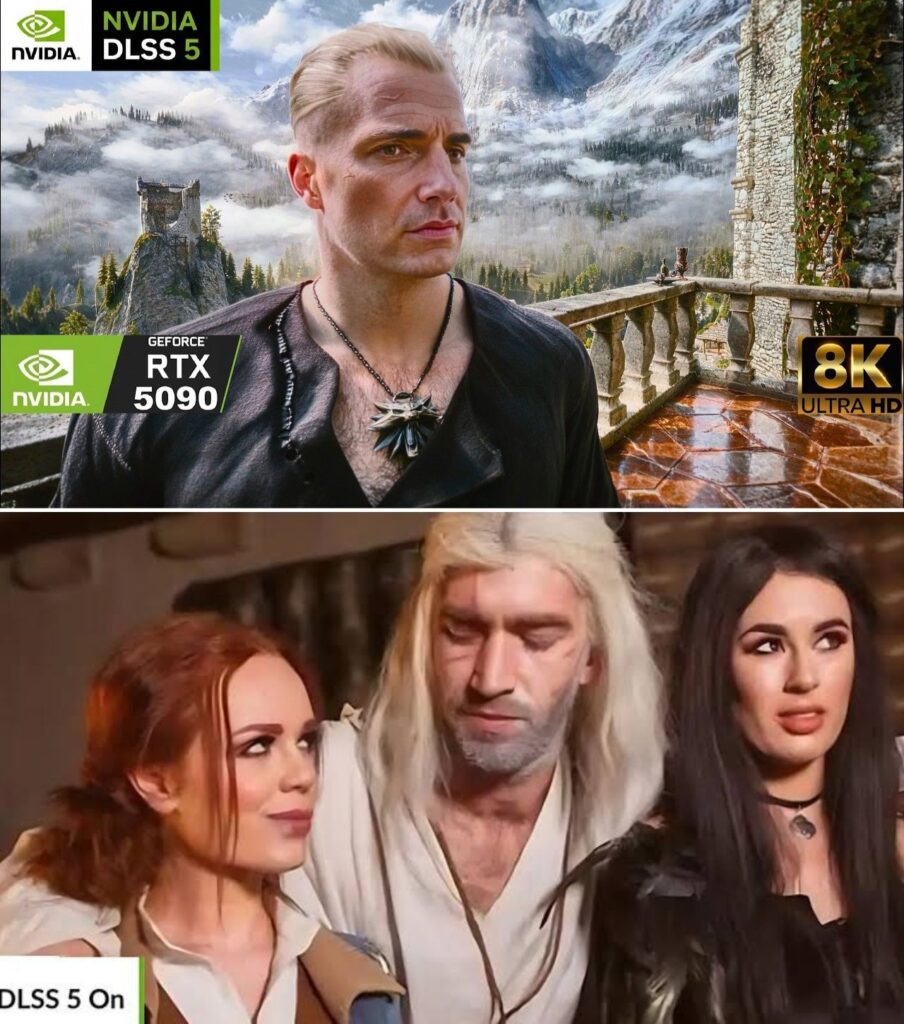



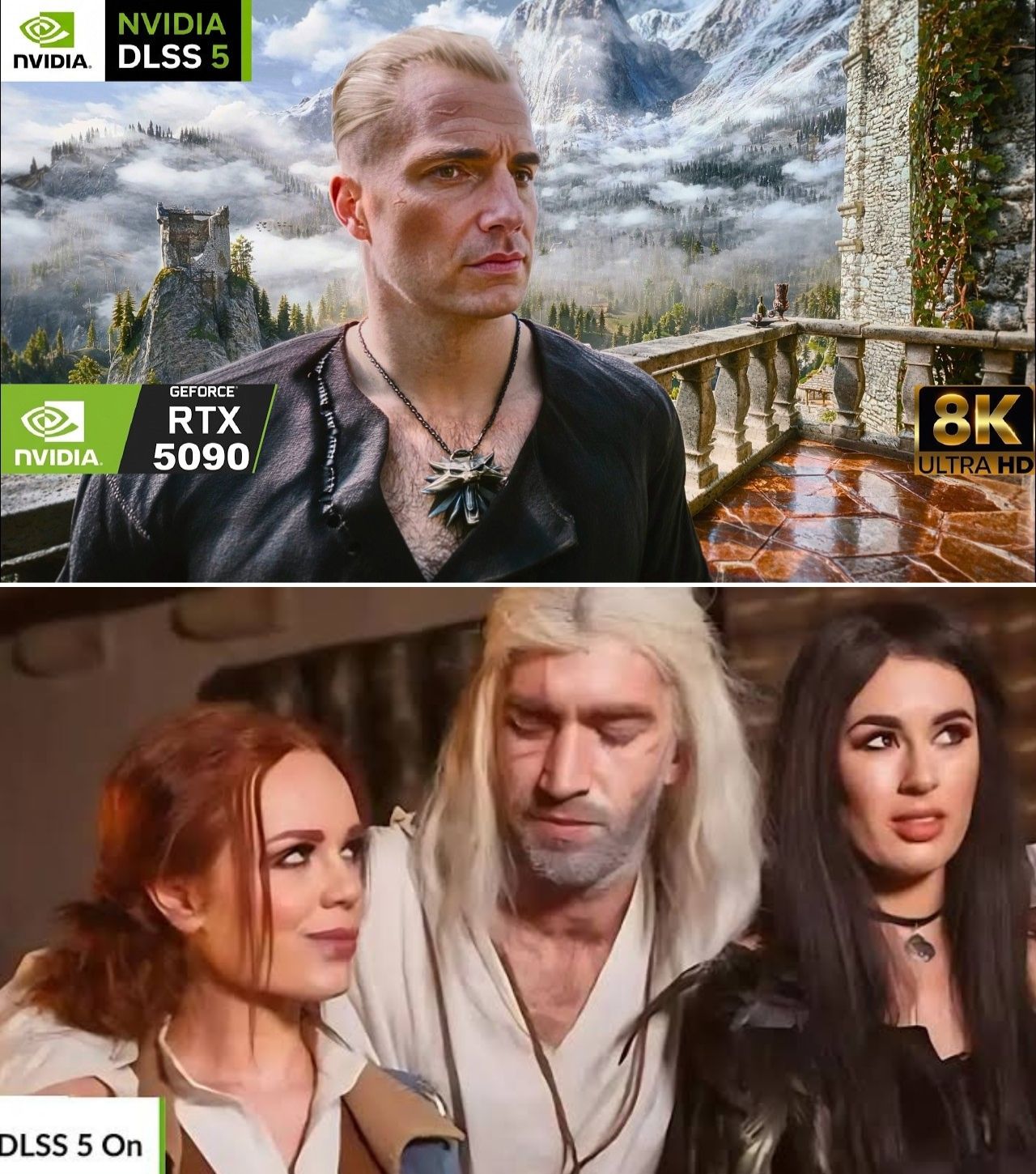
🚨 IS THIS ACTUALLY THE WITCHER 3 OR A LIVE-ACTION MOVIE?! 🤯
We all thought CD Projekt Red squeezed every drop of graphical fidelity out of the Continent when the Next-Gen Remaster dropped… but the modding community just completely shattered reality.
Running on a powerhouse RTX 5090 at mind-melting 8K resolution, paired with a custom Path Tracing Mod and advanced neural upscaling, Geralt’s journey through Velen and Novigrad looks more photorealistic than actual Hollywood cinema. Every single light bounce, wet cobblestone, and strand of hair rendered via Ray-Traced Path Tracing makes the original release look like a relic from the Stone Age.
But here is the wild part: while jaw-dropping graphic showcases are flooding social media, players are fiercely debating whether this level of visual fidelity is an absolute technical masterpiece—or an exclusive tech-demo flex that’s literally melting even the most expensive consumer hardware on the market. Some report buttery-smooth framerates with advanced frame generation, while others claim their systems are crashing into a black screen of death trying to push these settings to the absolute limit.
Is this peak next-gen gaming evolution, or has graphics optimization officially gone too far? 👇🔥
👉 Uncover the full breakdown of how this hyper-realistic setup runs and why the community is losing its mind right here:
More than a decade after its initial release in 2015, The Witcher 3: Wild Hunt refuses to fade into software obscurity. Thanks to CD Projekt Red’s official Next-Gen Remaster and an unrelenting, fiercely dedicated modding community, Geralt of Rivia’s sprawling open-world epic continues to serve as the ultimate benchmark for PC hardware capabilities. Yet, recent viral showcases featuring extreme 8K graphical configurations running on NVIDIA’s flagship GeForce RTX 5090 hardware have ignited a massive cross-platform controversy. At the center of this firestorm is a potent cocktail of advanced upscaling technology, path-tracing optimization mods, and an ongoing debate about accessibility versus raw graphical indulgence.
The Technical Marvel: Breaking Down the 8K Path-Tracing Phenomenon
The catalyst for the latest community uproar stems from high-end visual showcases—popularized by prominent tech and modding content creators—highlighting The Witcher 3 Remastered pushed to absolute extremes. Running at native 8K resolutions backed by custom lighting shader presets, the game achieves a level of visual realism previously thought impossible for an interactive title of its scale.
At the heart of this transformation is full Path Tracing (PT), replacing standard rasterized shadows and screen-space reflections with mathematically precise global illumination. Unlike traditional ray-tracing implementations that handle limited lighting effects, path tracing simulates every single ray of light as it bounces, diffuses, and refracts across surfaces. In The Witcher 3, this means moonlight naturally filters through the dense canopies of Velen, scattering realistic volumetric light shafts across muddy swamps, while torchlight in the claustrophobic alleys of Novigrad accurately bleeds color onto Geralt’s armor and surrounding brickwork.
However, running such a computational monster requires bleeding-edge hardware. Equipped with an NVIDIA GeForce RTX 5090, creators have leveraged cutting-edge neural rendering and multi-frame generation capabilities to sustain playable framerates. Community discussions on platforms like Reddit’s r/OptimizedGaming and Steam community hubs highlight how recent optimization utility mods—such as specialized configuration tools allowing granular control over light bounce multipliers and shadow cascades—have become mandatory toolkits for enthusiasts attempting to tame the performance penalty. By tweaking light bounces from the game’s default parameters down to optimized thresholds, players have reported performance recovery margins ranging from 15% in open wilderness to upwards of 45% in dense urban crowds.
The Community Divide: Masterpiece or Hardware Torture Test?
Despite the undeniable aesthetic brilliance of these hyper-realistic setups, the gaming community remains sharply polarized. On one side of the aisle, hardcore visual purists and long-time fans view the convergence of high-end upscaling and path tracing as the ultimate validation of PC gaming’s open ecosystem. For players with thousands of hours invested in the franchise, seeing the Continent rendered with such staggering fidelity breathes entirely new life into familiar quests.
Conversely, a vocal segment of the player base has expressed severe frustration, labeling the trend as “peak consumerism” and an unsustainable trajectory for modern game optimization. Forum threads detailing high-end rigs struggling to maintain steady framerates at 4K and 8K with full path tracing enabled have sparked fierce debates. Some users have reported catastrophic system instability, ranging from severe shader compilation stutters during initial cache building to complete black-screen lockups requiring hard reboots and driver updates.
Critics argue that when a game requires a multi-thousand-dollar GPU flagship running complex third-party injection mods just to achieve stable cinematic performance, the achievement borders on self-indulgence rather than practical gaming progress. Furthermore, purists note that aggressive upscaling settings can occasionally introduce visual artifacts, blurriness, or inconsistencies in how specific environmental lighting interactions behave during dynamic weather shifts—such as moonlight failing to properly illuminate shadowed interiors despite advanced path-tracing parameters.
Looking Ahead: The Enduring Legacy of the Continent
As hardware manufacturers push deeper into AI-driven frame generation and neural rendering architectures, The Witcher 3 continues to serve as the industry’s ultimate proving ground. What began as a 2015 dark fantasy masterpiece has evolved into an ever-shifting canvas for technological experimentation.
Whether these extreme 8K path-tracing showcases represent the sustainable future of digital art direction or simply an extravagant stress test for elite hardware remains a subject of intense discussion. Yet, one truth remains undisputed: as long as Geralt of Rivia rides across the digital plains of Velen, the global gaming community will find astonishing new ways to push the boundaries of what is visually possible.

Leave a Reply