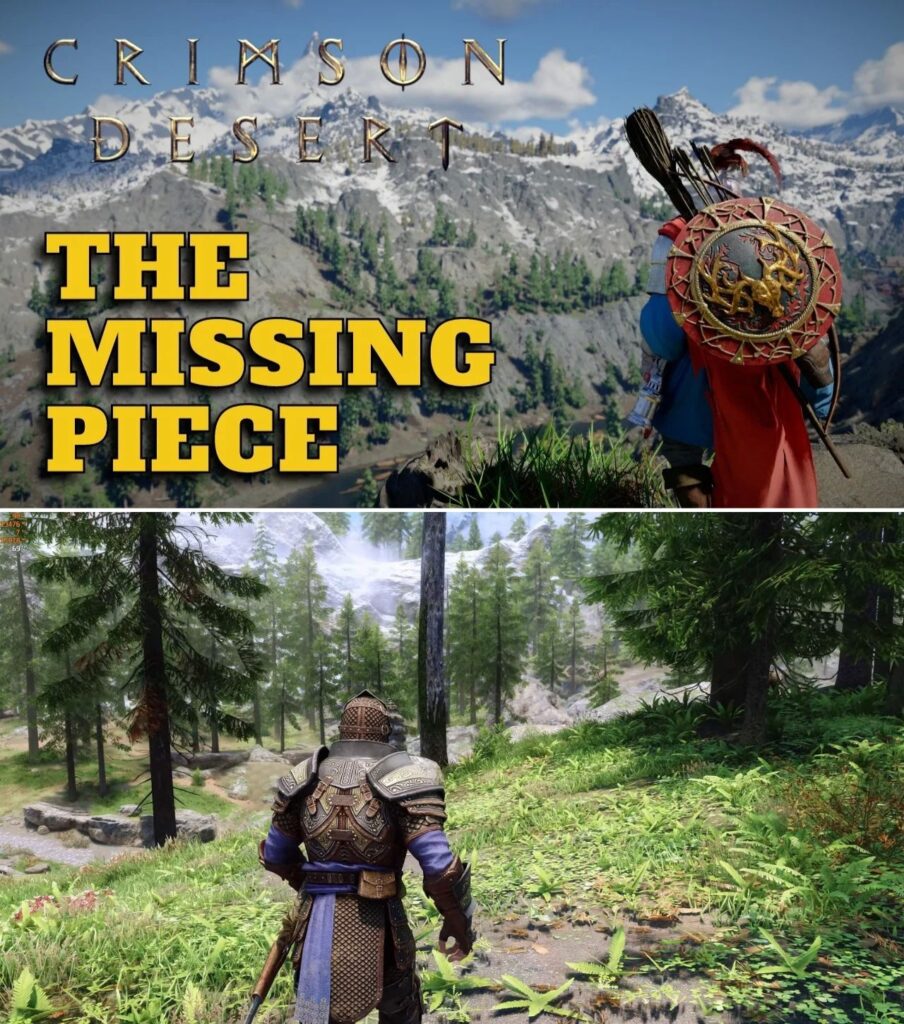



🚨 IS CRIMSON DESERT OFFICIALLY BETTER THAN SKYRIM? (WE NEED TO TALK ABOUT THIS!) 🚨
For months, players have hailed Crimson Desert as the modern-day Skyrim. It’s got a massive open world, bustling settlements, countless activities, and endless freedom across the continent of Pywel. But as incredible as Pearl Abyss’s masterpiece is—especially with the upcoming Charting the Unknown DLC dropping ship-building, underwater exploration, and fortress management—veteran RPG fans are pointing out that it’s still missing 7 crucial ingredients that made The Elder Scrolls V legendary.
From deep, labyrinthine underground dungeons akin to Blackreach and Elden Ring’s legacy zones, to dynamic random encounters, fully realized faction storylines with their own headquarters, and endless procedural radiant quests, the debate is raging across Reddit and Discord. Can Pearl Abyss take notes from Bethesda’s legendary playbook and create the ultimate sandbox RPG of our generation?
Are you team Skyrim nostalgia or team Crimson Desert evolution?
👉 Check out the 7 massive features Crimson Desert still needs to steal from Skyrim:
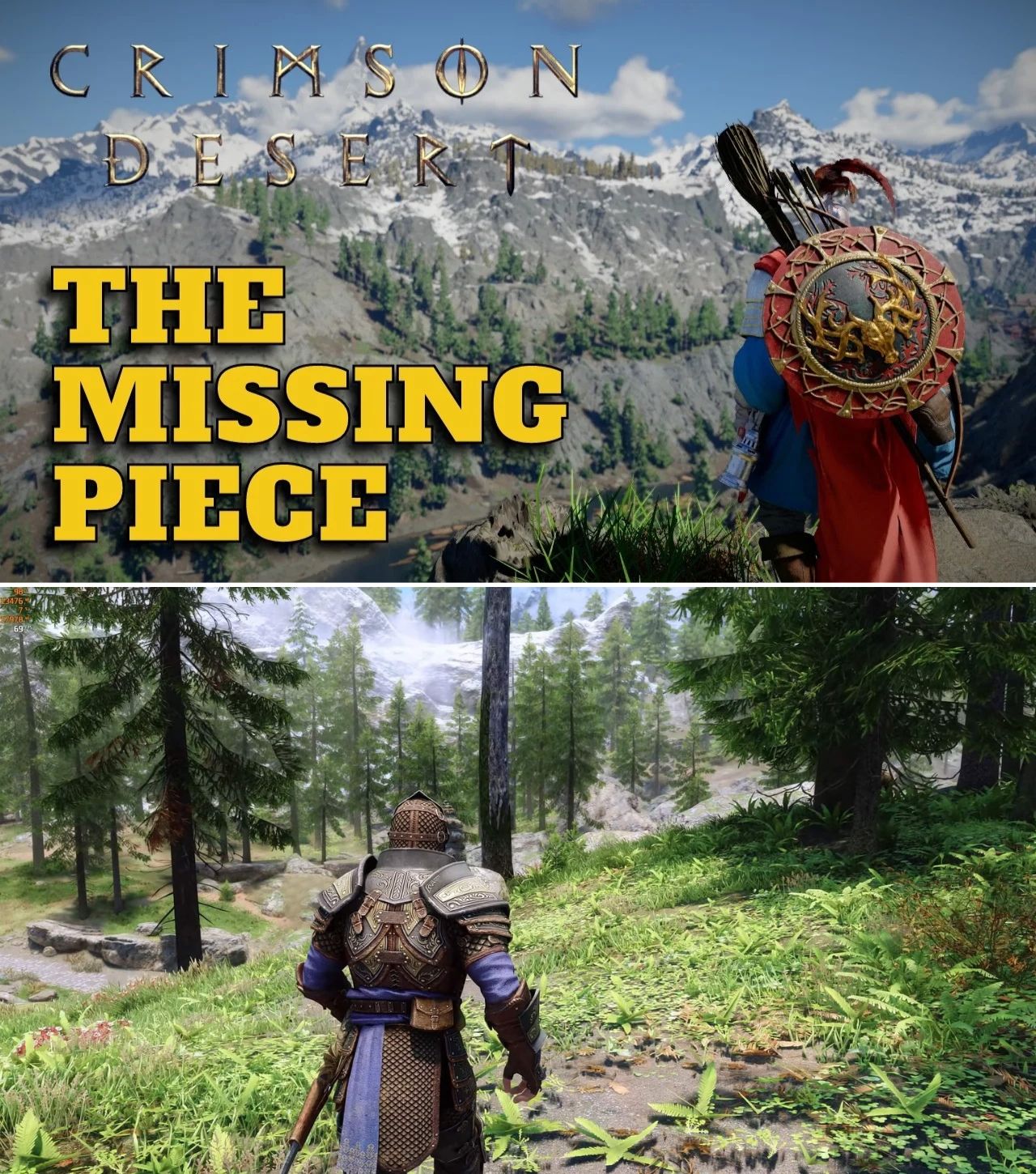
When Crimson Desert first burst onto the gaming scene, it didn’t take long for the community and industry critics alike to pin a heavy crown upon its head: the modern-day Skyrim. In many ways, the comparison was entirely justified. Pearl Abyss built an open-world behemoth that shared Bethesda’s legendary blueprint—a sprawling continent filled with countless side activities, bustling towns, gorgeous vistas, and an unyielding encouragement of self-directed exploration.
Yet, sharing a blueprint also means inheriting the exact same structural growing pains. Just as Skyrim faced critiques for its rigid quest mechanics and minimal handholding, Crimson Desert launched with a polarized narrative, generic side objectives in certain regions, and a sense that its massive sandbox occasionally lacked a beating heart.
However, as Pearl Abyss continues to push boundaries—most notably with the upcoming Charting the Unknown DLC, which introduces naval combat, underwater exploration, and robust fortress management—conversations within community hubs have evolved from basic performance praise to ambitious wishlist discussions. If Crimson Desert wants to transcend its status as a phenomenal action-RPG and claim an immortal legacy alongside The Elder Scrolls V, there are seven vital lessons it must learn from Skyrim and other genre titans.
1. Sprawling, Multi-Tiered Dungeons and Legacy Labyrinths
One of Skyrim’s most enduring magic tricks was its dungeon design. Spanning nearly 200 locations across eight distinct categories—ranging from ancient Nordic barrows and Dwemer cities to natural ice caves and subterranean sewers—Bethesda ensured that stumbling across a random cave entrance could turn into a two-hour underground expedition. Similarly, Elden Ring perfected this balance by introducing legacy dungeons that married environmental puzzles with intense boss encounters.
Currently, Crimson Desert approaches dungeons and exploration a bit differently. While the ethereal Abyss offers brilliant puzzle-solving and distinct biomes, terrestrial caves and ruins often end abruptly just as the atmosphere begins to peak. Integrating sprawling, multi-tiered underground complexes—complete with environmental storytelling notes, winding tunnels, and hidden bosses scattered across regions like Hernand and Pailune—would instantly elevate the thrill of surface-level wandering.
2. True Character Creation vs. Fixed Protagonists
A foundational dividing line in open-world RPG design is player agency versus cinematic storytelling. Skyrim, Fallout, and Dragon’s Dogma hand the reins entirely to the player, allowing custom builds, races, and backgrounds at the cost of personal narrative intimacy. Conversely, games like The Witcher 3 and Red Dead Redemption 2 anchor their worlds around tightly defined protagonists like Geralt or Arthur Morgan.
Crimson Desert currently sits in a fascinating middle ground. It locks players into three established protagonists—Kliff, Damian, and Unka—whose stories drive the main campaign. Yet, nearly 400 side quests, custom housing mechanics, farming loops, and pet customization options feel explicitly tailored for a blank-slate avatar. Introducing an optional custom character creator—allowing players to slot their own hero into the Greymane ranks alongside Kliff while keeping cinematic missions reserved for established characters—would grant the best of both worlds.
3. Meaningful Faction Guilds with Deep Progression
In Oblivion and Skyrim, joining factions like the Companions, the Thieves Guild, the Dark Brotherhood, or the College of Winterhold was never a trivial side errand. These groups featured dedicated quest lines, specialized gameplay loops, distinct philosophical identities, and, crucially, a physical home base where you earned your own quarters and rose through the ranks.
While Pywel boasts over a hundred named factions, the majority currently function as fleeting interaction hubs rather than immersive societies. Giving factions like the Gold Leaf merchants or the Scholar Stone Institute deep, multi-stage quest lines, specialized progression perks, and faction-specific quarters would give players compelling narrative reasons to immerse themselves in specific playstyles.
4. Spontaneous Regional Accommodation and Room Rentals
Skyrim mastered the illusion of a living world by forcing players to earn the trust of local citizenry before purchasing homes in Whiterun, Riften, or Solitude, while also offering simple creature comforts like renting a warm room at an inn for the night.
Despite Crimson Desert featuring an advanced home-building and regional trust system, property ownership remains strictly anchored to your primary Greymane camp. As the upcoming DLC expands housing and room editing, opening up purchasable properties, townhouses, and apartments across major cities like Deminis and Varnia—alongside functional tavern room rentals—would deepen immersion and give players tangible local milestones to chase.
5. Vast Underground Worlds (The Blackreach Effect)
Few gaming memories rival the sheer awe of stumbling upon Blackreach in Skyrim—a massive, luminous subterranean cavern hidden beneath the surface containing its own ecosystem, ruins, and settlements. Subsequent masterpieces like Elden Ring (Siofra River/Nokron) and The Legend of Zelda: Tears of the Kingdom (The Depths) proved that verticality downwards is just as crucial as verticality upwards.
While Crimson Desert has conquered the skies with the Abyss and is currently diving deep into the great ocean with its latest maritime expansion, a truly massive, interconnected underground continent remains absent. Allowing Pearl Abyss’s environmental artists to craft a subterranean world filled with lost civilizations would complete the trifecta of exploration.
6. Dynamic, Organic Random Encounters
Pywel is undeniably gorgeous, but its world can occasionally feel static. Enemies occupy designated patrol zones, boss arenas are strictly fenced off, and spontaneous chaos rarely finds the player unless actively sought out.
Contrasting this with Skyrim’s unpredictable wilderness—where dragons descend mid-journey, rival mercenaries ambush you on mountain passes, and orcs demand honorable duels—highlights the power of dynamic simulation. Letting creatures roam freely across regional borders and allowing faction patrols to collide organically would ensure that simply riding a horse across the map becomes an unscripted adventure.
7. Radiant, Endless Procedural Quests
Perhaps the greatest secret to Skyrim’s fifteen-year longevity is its radiant quest system. While handcrafted narratives form the soul of the game, procedurally generated bounties, theft contracts, and guild assignments ensure that players always have a reason to venture out, clear out a forgotten ruin, or return to a town they haven’t visited in hours.
Crimson Desert already features robust gameplay loops—bounty hunting, livestock ranching, crop farming, and trade transport. However, once initial scripted objectives are exhausted, these systems risk sitting idle. Injecting an endless, clearly labeled stream of radiant procedural contracts tied to these mechanics would transform side activities into an infinite engine for adventure.
Conclusion: Reaching for Immortal Status
Asking a developer to add even more features to a game that is already redefining post-launch expansions might seem audacious. Yet, the rapid iteration speed and fearless ambition displayed by Pearl Abyss suggest that nothing is truly out of reach.
By borrowing foundational design principles from Skyrim—richer dungeons, deeper factions, dynamic encounters, and endless radiant systems—Crimson Desert can evolve past the label of a modern challenger. If Pearl Abyss bridges these final gaps, they won’t just equal the legacy of the past; they will craft an open-world masterpiece that stands alone at the summit of modern gaming.

Leave a Reply