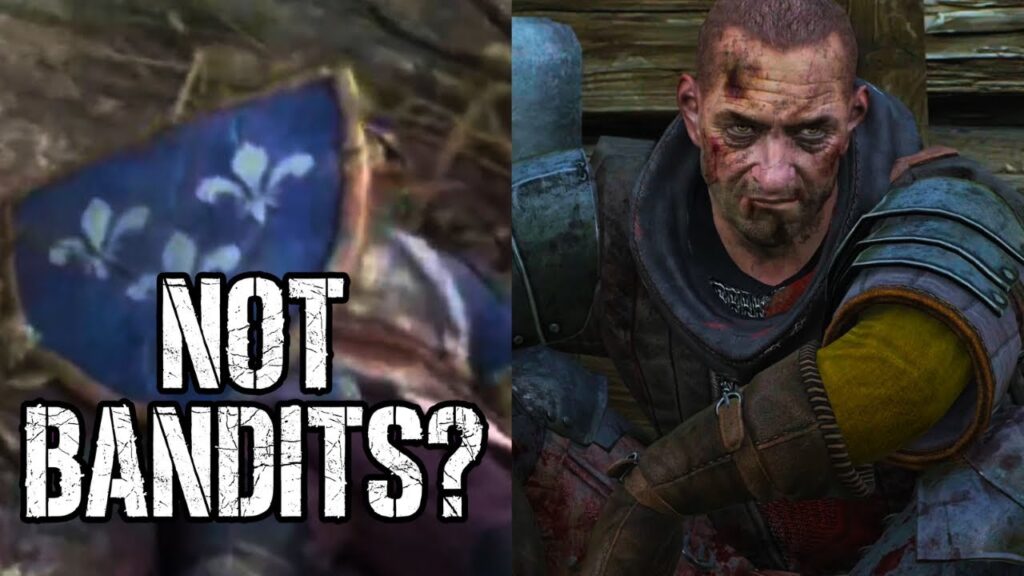



🚨 THE WITCHER 3 LIED TO US ABOUT WHITE ORCHARD… AND WE MISSED THE TRUTH FOR 11 YEARS! 🚨
When you first stepped foot into White Orchard, you probably thought those question marks scattered across the map were just standard open-world filler—lazy Ubisoft towers designed to grind you up to level four before fighting the royal griffin. You thought you were clearing out generic “bandit camps,” grabbing some loot, and moving on.
You couldn’t have been more wrong.
A chilling deep-dive into White Orchard’s hidden notes and environmental storytelling reveals that every single “bandit camp” isn’t a camp of outlaws at all—they are bloody crime scenes filled with Temerian soldiers who deserted their posts. When your commanding officer orders you to shit on command while artillery shells and ballista bolts rain down, becoming a desperate bush-ranger in the swamp starts looking like a promotion.
From flower-painted shields used by terrified recruits to identify each other in the mud, to underwater chests hiding failed noble evacuations and high-ranking military orders prioritizing rich aristocrats over human lives, White Orchard isn’t a tutorial zone. It is a mass grave of a collapsing kingdom.
…BUT why did starving deserters completely ignore the ancient Places of Power sitting right next to their camps?
👇 Uncover the dark, tragic secret behind White Orchard’s question marks right here:
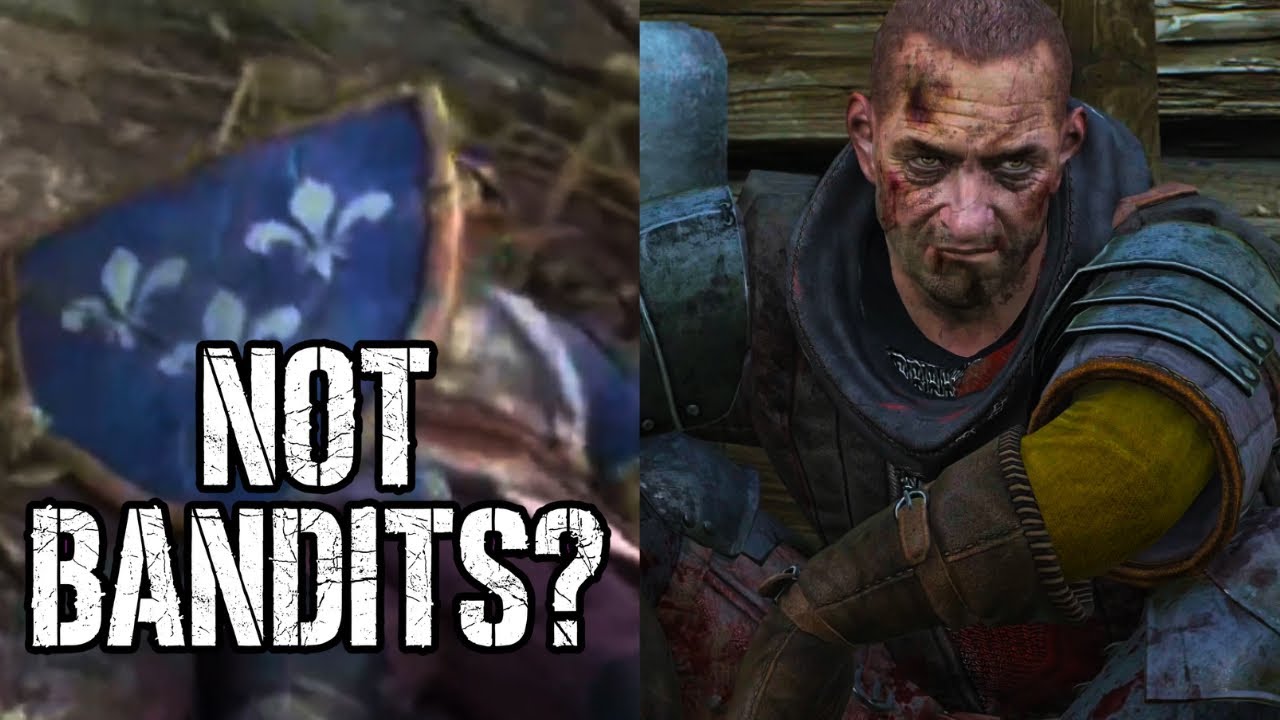
When players first launch The Witcher 3: Wild Hunt and step into the war-torn prologue region of White Orchard, the open-world design language feels instantly familiar. The map is dotted with question marks: bandit camps, guarded treasures, hidden stashes, and places of power. To the casual eye—and particularly to veterans accustomed to modern open-world tropes—it is easy to write these markers off as administrative busywork, mechanical filler designed to level Geralt up before his fateful confrontation with the Royal Griffin.
However, a closer, forensic examination of the environmental storytelling, discarded notes, and riverbeds reveals a staggering revelation: The Witcher 3 lied to you about those bandit camps. They are not outlaws. They are the spectral remains of the Temerian army.
Layer One: The Anatomy of Desertion
When Geralt clears out the various encampments scattered across White Orchard, the game labels the combatants as “bandits.” But a closer look at the physical evidence tells a completely different story.
At a camp near the river, players who bother to inspect the surroundings will find Temerian lily shields discarded on the ground. Looting the tents yields desperate field notes written by men who were recently soldiers. One recovered document reads: “Things are better for us. We’ve pitched camp in the heart of… at least we get something to fill our bellies and to pay… We’ll take our own pay now. It’s still less than when we were charging the Nilfgaardians at Matalis’s orders.”
This is not the voice of a hardened highwayman; it is the desperate rationalization of a Temerian foot soldier who chose desertion over death. When an army is collapsing under the relentless advance of the Nilfgaardian Empire, and officers demand humiliating compliance under active artillery fire, becoming a bush-ranger in the swamps begins to look like a viable career pivot. Every single “bandit camp” in White Orchard is, in reality, a deserter camp. The game calls them bandits because traumatized, starving former soldiers trying to survive do not fit neatly into a heroic narrative.
This institutional rot is further exposed in the optional quest “Missing in Action.” In it, a local named Dune searches for his missing brother, Bastion, who fought for Temeria. When Geralt tracks him down to an isolated hut, Bastion is found severely wounded, resting alongside an injured Nilfgaardian soldier named Rosson. Both men had crawled off a bloody battlefield where they were ordered to kill each other—one blind, one crippled—dragging each other to safety. When Dune insists that the “black one” must be left behind or executed, the tragic reality sets in: both sides are bleeding out, and the deserters from both armies face identical fates at the end of a military tribunal’s noose.
Layer Two: Flower Shields and the Orbituaries of War
The tragedy of White Orchard’s common soldiers is immortalized in small, heartbreaking details. Before the battle at Matalis, local recruits from White Orchard painted small flowers onto their wooden shields so they could identify each other in the chaotic, mud-soaked slaughter.
Scattered across the battlefield and near burnt corpses, these flower shields serve as silent headstones. Many soldiers did not drop their shields to run from the enemy; they dropped them to shed the army itself. The ones who found shelter survived as outlaws in the woods; the ones who did not ended up hanging from the ominous oak tree near Crow’s Perch or rotting anonymously in the ditches.
This theme of institutional abandonment is punctuated by a document retrieved from the riverbed west of the mill: Blood-Soaked Military Orders. Recovered from a locked chest after looting a Temerian Lily key from a drowned corpse, the dispatch from Legion Commander Randall Wittenberg reveals the true priorities of the upper command.
As Nilfgaardian forces burn villages and slaughter peasants, Temeria’s final official order is not to hold the line or protect civilians. Instead, it commands soldiers to securely escort wealthy, nobleborn Temerians north to the Redanian border post at Oxenfurt, ensuring their private property and family heirlooms remain entirely intact under threat of accelerated military tribunals. The aristocratic class was busy buying safe passage to safety, abandoning the common soldier to the slaughter. The heavy chests of Temerian valuables found hidden in cellars at the bottom of riverbeds were never delivered; they were stolen by guards who realized that loyalty to a dying crown pays in corpses.
The Places of Power: Where Magic Ignores Man
Amidst the wreckage of human suffering, White Orchard’s Places of Power stand in silent, unmoving defiance. Across the region, six ancient sources of infinite magical energy hum with power, offering Geralt vital skill-point enhancements.
Fascinatingly, none of these magical nexuses are ever occupied by bandits or deserters. A starving soldier hiding from a military tribunal, scraping by on stale bread and stolen water, cares nothing for enhanced Aard or Quen intensity. Magic is useless when your stomach is empty.
This juxtaposition exposes the brilliant dual-layered architecture of White Orchard’s map:
-
The Modern War Map: Comprising deserter camps, lost supply convoys, sunken treasure chests, hanged corpses, and abandoned settlements—representing the rapid collapse of civilization under contemporary geopolitical conflict.
-
The Ancient Map: Comprising places of power, ancient monster nests, and primordial wilderness—forces of nature and magic that existed long before Temeria and Nilfgaard ever marched to war, and which will endure long after both empires turn to dust.
Geralt ultimately requires the timeless wisdom of the ancient map (Layer 2) to clean up the catastrophic mess left behind by the modern war (Layer 1). The Royal Griffin itself is only terrorizing the local villagers because the war destroyed its natural habitat and slaughtered its mate.
The Verdict: Open-World Design as Historical Obituary
What first appears to be routine open-world checklist padding reveals itself, upon closer inspection, to be an intricate historical timeline of societal collapse.
-
Phase 1: Soldiers desert their posts, establishing hidden camps in the woods.
-
Phase 2: Supply lines fracture, leaving guarded treasure troves in the mud.
-
Phase 3: Panicking nobles toss their family fortunes into rivers, creating hidden underwater stashes.
-
Phase 4: Summary executions litter the trees with corpses, marking the spoils of war.
-
Phase 5: Villages empty out entirely, becoming abandoned ghost towns.
The Witcher 3 did not pad White Orchard with meaningless filler. It populated the prologue with obituaries. The question marks are not gameplay chores; they are the final resting places of a kingdom that ate its own children, leaving behind only flower-painted shields, sunken gold, and a haunting reminder that while empires rise and fall, the magic of the Continent remains entirely indifferent to human folly.

Leave a Reply