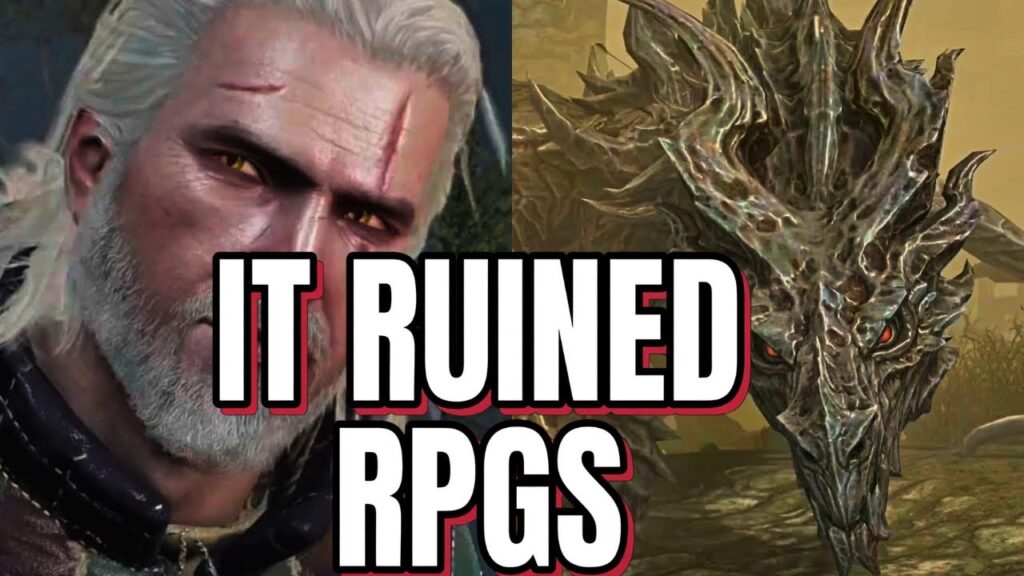



🚨 THE WITCHER 3 LIED TO US ABOUT BEING AN RPG… AND IT RUINED EVERY OTHER GAME FOREVER! 🚨
For years, we thought we knew what an RPG was. We chased damage numbers, hoarded legendary gear sets, grinded out materials, and dumped hundreds of hours into games like Skyrim and JRPGs just to see our stats climb. We played sandbox heroes, shouting dragons out of the sky while ignoring the shallow political squabbles of the Nords because, at the end of the day, we were the walking main character.
Then The Witcher 3: Wild Hunt came along and completely pulled the rug out from under us.
It tricked us with standard loot systems and stat screens, but deep down, it wasn’t about the numbers at all. It didn’t care if you swapped your silver sword every 30 minutes for a random blue-stats rusty blade. It trapped you with something far more dangerous: a world so painfully alive, writing in the bestiary so deeply empathetic, and storytelling so devastating that an early-game Griffin hunt in White Orchard made us feel more awe than taking down Alduin the World-Eater after 500 hours of grinding.
It made us stop skipping text, stop ignoring lore books, and care about the tragic, broken lives of peasants who died before we even arrived.
…BUT why does every other modern open-world game still think we want empty checklists and bigger maps instead of gut-punch narratives?
👇 Find out why The Witcher 3 permanently ruined modern RPGs right here:
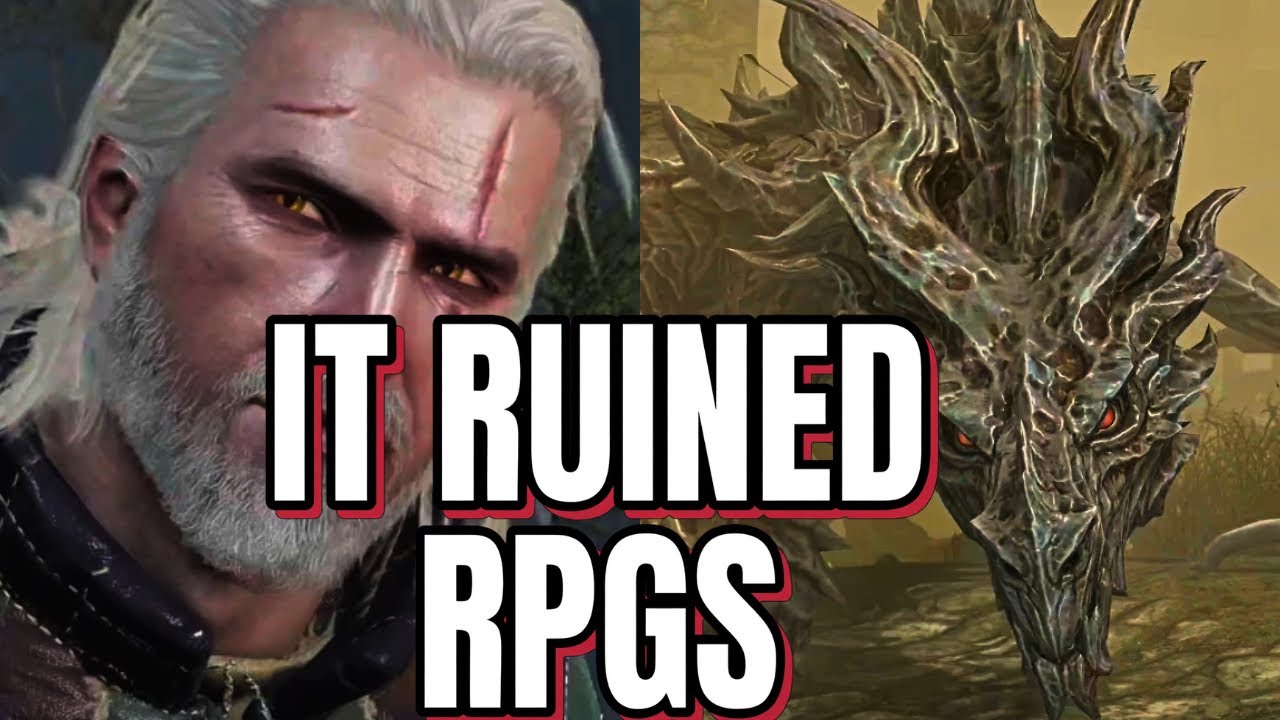
Every veteran gamer has a benchmark, a point of reference against which all future digital experiences are measured. For millions, that benchmark was The Skyrim Loop—the intoxicating cycle of creating a character, ignoring the main narrative, grinding out levels, crafting overpowered gear, and eventually one-shotting legendary dragons from a mountaintop. For others, it was the dopamine rush of JRPGs, watching damage numbers soar higher with every upgraded weapon and mastered material slot.
For years, The Witcher 3: Wild Hunt wore the outward skin of these traditional role-playing games. It featured inventory screens, weapon stats, armor tiers, crafting stations, and progression trees. But beneath that familiar mechanical wrapper lay a subversive truth: The Witcher 3 was never really an RPG in the traditional sense. It was an immersive literary tragedy wearing an RPG’s clothes, and in doing so, it permanently ruined the genre for anyone who played it.
The Illusion of Loot: Why Stats Stopped Mattering
In a traditional role-playing game like The Skyrim or classic Final Fantasy entries, loot is the lifeblood of the experience. Finding a rare piece of Elven armor or unlocking an ultimate weapon changes how your character looks, feels, and performs in combat. Identity is tied directly to gear progression.
The Witcher 3 completely shatters this psychological loop. Across a standard playthrough, players constantly swap out silver and steel swords every thirty minutes, abandoning beautifully crafted relic weapons simply because a random bandit in Velen dropped a rusty blade with slightly higher green numbers. For the majority of players running normal or blood-and-broken-bones difficulties, complex alchemy, oils, and bombs can often be entirely ignored; keeping Quen active and striking with the pointy end is enough to survive. There was no true transmog system for most of the game’s lifespan, meaning players frequently ran around looking like mismatched patchwork soldiers.
By all traditional metrics of game design, an RPG where gear stats feel arbitrary and loot ultimately doesn’t matter should be heavily penalized by critics. Yet, The Witcher 3 received universal acclaim. Why? Because the loot was never the point. The inventory screen was merely a trojan horse designed to keep players engaged long enough to realize they were trapped inside a masterpiece of human storytelling.
From Skipping Text to Reading the Bestiary
Ask any seasoned open-world veteran how many lore books, codex entries, or journal notes they actually read across hundreds of hours of gameplay. In titles like The Elder Scrolls, in-game literature—from The Lusty Argonian Maid to dusty historical tomes—frequently serves as little more than inventory clutter, eventually sold off for a handful of gold coins or left sitting unread in a chest.
The Witcher 3 achieved the impossible: it made players want to read.
For many players, the turning point arrived early, during the contract for “The Devil by the Well.” Forced by the mechanics of a ghost investigation to consult the game’s bestiary, players expected dry, mechanical data detailing monster weaknesses and stat vulnerabilities. Instead, they found prose dripping with melancholy and empathy. The entry did not read like a clinical Wikipedia page; it read like the journal of a weary professional who understood the tragic, human agony behind the curse.
Geralt’s notes did not view monsters as walking XP bags. They viewed them as victims of circumstance—betrayed brides, grieving mothers, and tortured souls trapped in unending pain. This literary shift transformed the bestiary from a homework assignment into a compulsive page-turner. CD Projekt Red accomplished what few studios ever manage: they made players care about a creature before putting a silver sword through its heart.
The Scaling of Awe: Skyrim’s Dragon vs. White Orchard’s Griffin
The disparity between traditional sandbox RPGs and The Witcher 3 becomes starkest when examining moments of genuine narrative awe.
Consider Skyrim. After hundreds of hours spent exploring caves, collecting dragon claws, and grinding archery skills, the final confrontation against Alduin the World-Eater often culminates in a surprisingly hollow victory. For an over-leveled conjuration archer, the ultimate boss of the game can be dispatched in mere seconds. When Alduin falls, the emotional resonance is frequently nonexistent; the player feels no profound catharsis, only the robotic satisfaction of checking off another achievement toward a Platinum trophy.
Contrast that with the opening hours of The Witcher 3. At level 3, armed with meager potions and a crossbow that barely scratches paint, Geralt tracks the Royal Griffin across the war-scarred fields of White Orchard. Backed by Vesemir’s gravelly warnings, navigating a tense encounter with local hunters, and setting a trap in a blooming field, the ensuing boss fight commands total psychological absorption.
The battle against the Griffin in a humble prologue zone evokes more raw, cinematic awe than the ultimate climax of a 500-hour fantasy epic. It proves conclusively that emotional scale is not a product of map size or level caps; it is a product of narrative stakes and direction.
Being the Main Character vs. Witnessing a World
In Skyrim, the player is the story. As the Dragonborn, the chosen hero gifted with the Voice, the entire universe revolves around your actions. You decide the fate of empires, shouting monarchs off thrones while local NPCs remain static window dressing offering repetitive, transactional dialogue.
In The Witcher 3, neither Geralt nor the player is the story. The world is the story.
CD Projekt Red built a setting that feels agonizingly authentic, capturing the complex, brutal realities of occupation, displacement, and survival. Players find themselves researching real-world history and wartime sociology just to understand why a village like White Orchard looks the way it does—why children still sing and play games in dusty streets while corpses hang silently from gallows just a mile down the road.
In Skyrim, choosing between the Stormcloaks and the Imperial Legion often boils down to a superficial color choice (blue versus red) that alters a few guards in Whiterun. In The Witcher 3, players grieve for people they never even met—reading blood-soaked letters left on fallen soldiers, discovering abandoned wooden toys in burnt-out cellars, and understanding the crushing weight of a war lost long before the Witcher ever arrived.
The Verdict: The Standard That Can’t Be Unseen
The Witcher 3: Wild Hunt committed a profound betrayal against traditional game design. It promised a standard open-world fantasy RPG packed with loot, levels, and checklists, only to deliver an intimate, devastating human drama that completely rewired what players expect from interactive media.
It proved that players do not need infinite procedural maps or endless stat-grinding to stay engaged. They need characters with a point of view, bestiary entries written with empathy, and a world that remembers your choices long after the credits roll. For anyone who has walked the Path, looking back at generic open-world design is impossible. The Witcher 3 lied about being an RPG—and in doing so, it became something infinitely greater.

Leave a Reply