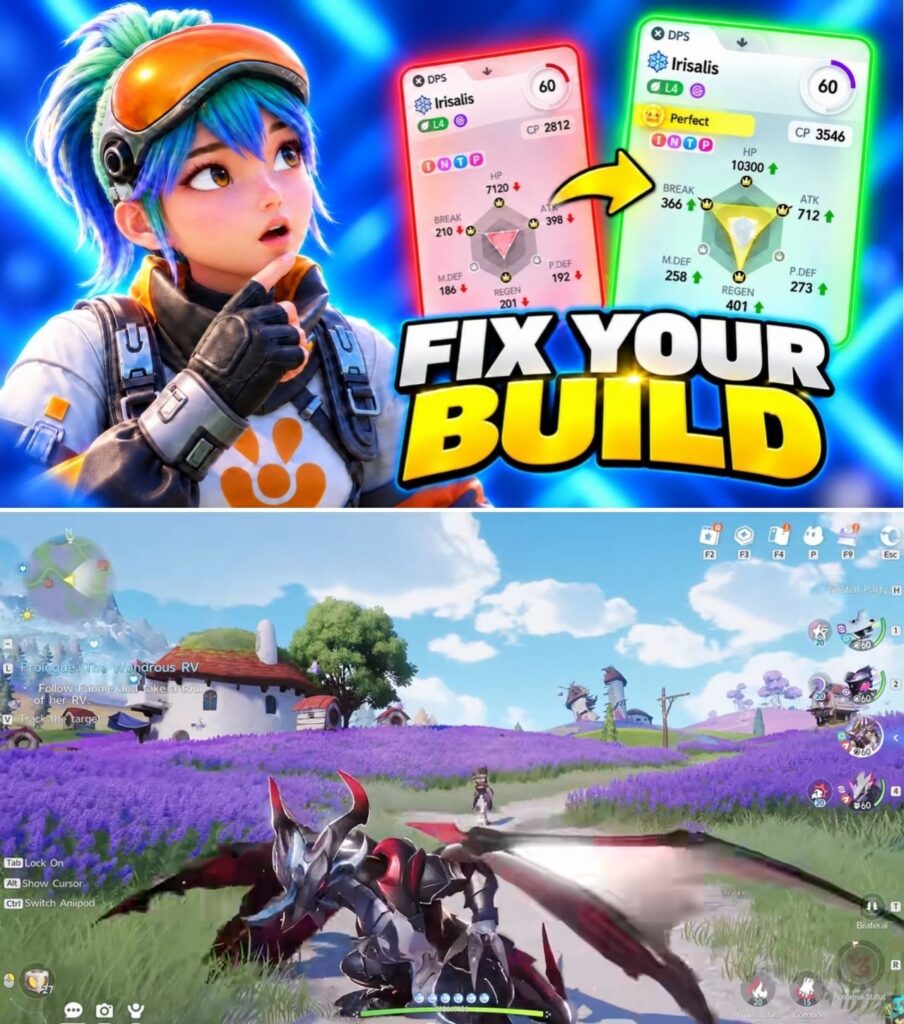
Stop bricking your 10/10 Prismana! 🚨 The top 1% of players are keeping this core mechanic a total secret, and it explains why your level 50 Aniimo is getting completely annihilated in Egg Heist.
Most players are burning through thousands of Glimmer and rare nurturing items thinking IV rolls are everything… but they’re missing the exact sequence that doubles stat multipliers BEFORE touching Contracts or Inheritance. If you’ve been randomly fusing skills or slapping on Held Items without checking your unit’s hidden Resonance threshold, you’ve already ruined your account’s potential.
There is a single step in the build path that turns any trash-tier catch into an endgame beast—and missing it ruins your entire build permanently.
The full step-by-step breakdown is right here 👇🔥
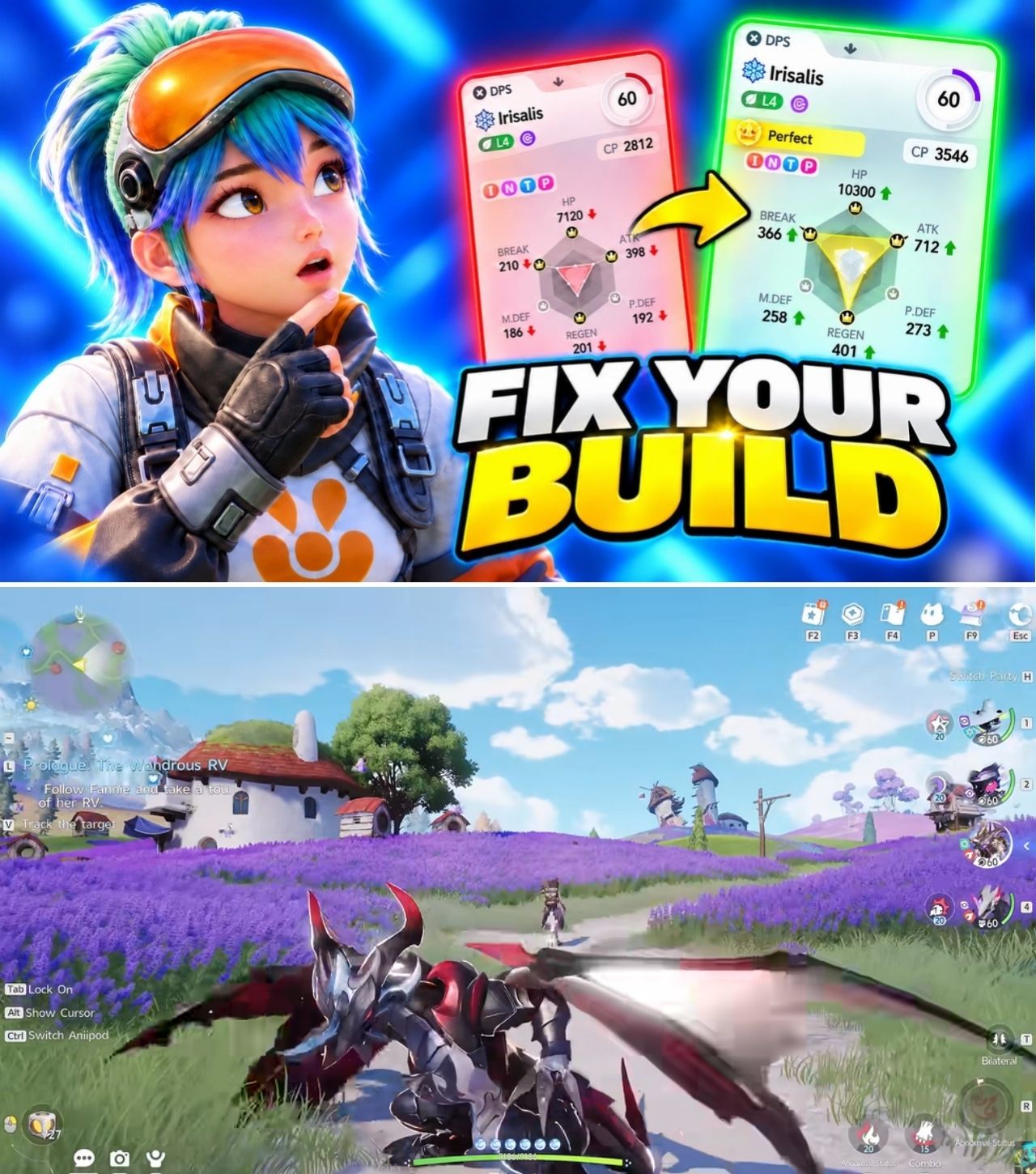
The competitive landscape of Pawprint Studio’s mega-hit creature-taming RPG, Aniimo, has descended into complete chaos following player discoveries surrounding the game’s intricate optimization mechanics. What was initially marketed as a casual, open-world monster-collection experience following its multi-platform debut in late September 2026 has quickly transformed into an unforgiving numbers game. Tens of thousands of players across YouTube, Discord, and Reddit are now realizing they have spent weeks “bricking” their most prized creatures due to a profound misunderstanding of how stats, skills, and inheritance systems interact.
At the center of the storm is a growing divide between casual collectors and hardcore theorycrafters over the exact method required to build an endgame-ready Aniimo. While casuals have been hunting obsessively for rare “Prismana” and “Umbrabo” visual variants, expert creators are blowing the whistle on a brutal reality: high raw potential numbers mean virtually nothing if the progression sequence is handled incorrectly.
THE GENESIS OF THE CRISIS: POTENTIAL VS. EXECUTION
When Aniimo launched globally across PC, PlayStation 5, Xbox Series X|S, and mobile platforms, it introduced a deep character progression system centered around Innate Potential, Acquired Potential, Resonance, and Skill Inheritance.
For the first fortnight of the game’s release, the global community focused almost entirely on securing creatures with perfect “10/10” Innate Potential rolls—the game’s equivalent of individual values (IVs). High-profile streamers showcased screen captures of maxed-out stat screens, leading the broader player base to assume that catching or hatching a high-potential creature was 90% of the battle.
However, content creator ZakkuVerse exposed the systemic flaws in this popular approach through a detailed technical breakdown video titled “How to Build ANY Aniimo the RIGHT WAY”, triggering an immediate breakdown in the meta consensus.
“People are treating this like traditional creature battlers where you just catch a shiny, level it up, and throw on the strongest move,” noted one top-ranking player on the official Aniimo Community Discord. “In reality, if you feed your Aniimo skill contracts or unlock Acquired Potential out of order, you lock yourself out of key multiplier scaling. The game does not warn you about this, and players are flushing dozens of hours of grinding down the toilet.”
DECONSTRUCTING THE METRICS: THE ANATOMY OF A BUILD
To understand why so many accounts are currently crippled, one must look at the mechanical architecture built by developer Pawprint Studio. Building a top-tier Aniimo is divided into six distinct, non-negotiable phases:
1. Innate Potential & Perfect Rolls
Every wild Aniimo or hatched egg rolls with randomized Innate Potential across core offensive, defensive, and utility attributes. While players aggressively chase “Perfect” or “10/10” designations, hard data shows that natural stat distributions frequently outweigh raw numerical ratings. An Aniimo with a 7/10 rating optimized for Attack can easily outperform an unoptimized 10/10 unit whose potential points are diluted into irrelevant attributes like flat Mana Pool or non-scaling Defenses.
2. Acquired Potential & Resonance Thresholds
Unlike innate stats, Acquired Potential represents trainable stats unlocked through battle experience and specialized training items. The friction in the community stems from Resonance—a hidden power curve unlocked when specific thresholds of Acquired Potential are met alongside matching Personality archetypes. Upgrading Acquired Potential without securing the target Personality first results in suboptimal stat distributions that cost exorbitant amounts of rare currency to reset.
3. Personality Matching & Held Item Synergy
Each Aniimo possesses a Personality profile that applies percentage-based modifiers to core attributes while impacting reaction speeds in fast-paced real-time modes such as Egg Heist (PvEvP). Pairing an aggressive Personality with defensive-oriented Held Items creates anti-synergy, effectively canceling out passive stat boosts that are essential for high-tier Lost Sanctum clears.
4. Core Skills & The Contract Economy
Skills in Aniimo are split into native Core Skills and teachable Contracts. A widespread blunder among intermediate players is cluttering a unit’s skill slots with high-cost ultimate Contracts before establishing a low-cost, spammable elemental rotation. Because skill memory slots are strictly capped, overwriting foundational abilities with misaligned Contracts permanently consumes rare items without providing structural utility.
5. The Inheritance System (The Point of No Return)
The most treacherous aspect of the build pipeline is the Inheritance System, which allows players to transfer passive traits and specialized abilities from one Aniimo to another. Performing an Inheritance fusion without maxing out the parent unit’s tier level permanently caps the passive scaling potential on the recipient. Millions of players have unknowingly sacrificed rare secondary Aniimo to transfer mid-tier passives, permanently locking their primary units out of max-rank trait status.
COMMUNITY BACKLASH AND TIKTOK PANIC
The revelation that optimal builds require strict step-by-step sequencing has sent shockwaves through social platforms. On Reddit, threads discussing “ruined accounts” have amassed thousands of upvotes, with players venting frustration over the lack of in-game clarity regarding the irreversible nature of early-game Inheritance decisions.
-
“I spent two weeks grinding for a Prismana Emberpup, immediately used my best Skill Contracts on it, and now I find out its Personality ruins its damage scaling,” wrote one user on r/Aniimo. “The game never explicitly tells you that Inheritance passives don’t retroactively scale if you upgrade the parent later. I essentially have a shiny paperweight.”
Over on TikTok and X, short-form creators have amplified the drama, circulating panic-inducing warnings advising new players not to touch the Hatchinator or engage with the Inheritance System until reaching endgame level caps. The phenomenon has led to widespread progression paralysis, where casual players refuse to invest resources into their starter units out of fear of making an unfixable mistake.
COMPETITIVE IMPLICATIONS: EGG HEIST AND WILD SURGE METAS
The fallout reaches far beyond single-player progression. In Aniimo’s flagship competitive PvEvP mode, Egg Heist, the difference between an haphazardly leveled unit and a sequence-optimized unit is night and day. Unoptimized 10/10 units are consistently getting wiped by mid-tier units built with proper Personality-Held Item resonance and correct Contract rotations.
Competitive guilds competing in Wild Surge leaderboard events are now instituting mandatory build audits before allowing members into high-stakes raids. Players found with misaligned passive inheritances are being benched, further fueling tribalism within the community between “theorycrafters” and “casual collectors.”
LOOKING AHEAD: WILL PAWPRINT STUDIO INTERVENE?
As community uproar continues to mount across Discord and official forums, pressure is building on publisher FunPlus and developer Pawprint Studio to introduce QoL (Quality of Life) recalibration tools. Currently, resetting an Aniimo’s Acquired Potential or wiping misaligned Inherited Traits requires significant time investments or premium resource expenditure.
Industry analysts predict that upcoming patch cycles may introduce “Stat Realignment Tokens” or streamline the Inheritance preview UI to prevent accidental account bricking. However, until such features are officially implemented, the burden of knowledge falls squarely on the player base.
For now, the consensus among top-tier strategists remains absolute: stop blindly chasing high-tier Prismana catches, hold off on high-level Skill Contracts, and strictly adhere to the fundamental build pipeline before locking in endgame investments.

Leave a Reply