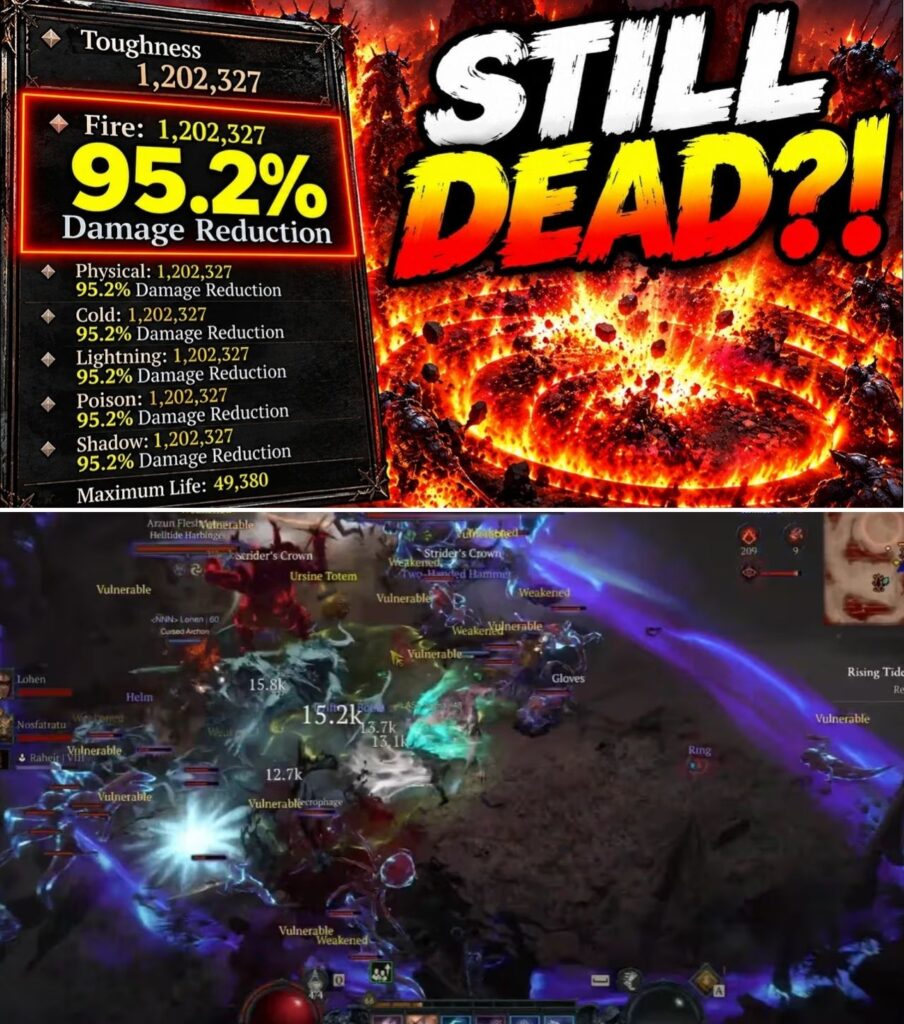



🚨 TIRED OF GETTING ANNIHILATED IN 0.1 SECONDS WITH MAXED-OUT TOUGHNESS IN DIABLO 4? 🔥
Why are top-tier players with massive health pools and supposedly “god-tier” defense still getting instantly vaporized in high-tier Torment content? 😡
Hardcore ARPG veterans have just broken down the math behind Sanctuary’s most frustrating killer: the hidden trap of damage reduction percentages. Discover why moving from 95% to 97% damage reduction actually cuts incoming damage by a massive 40%, how blind spots in elemental resistances leave you completely exposed, and why standing still for even a split second over loot or ground pools is a death sentence! 💀
Is your character sheet lying to you about your actual survivability? 🤯
👇 The complete defensive blueprint to finally stop getting one-shot is right here. Click before your next hardcore run ends in disaster! 👇
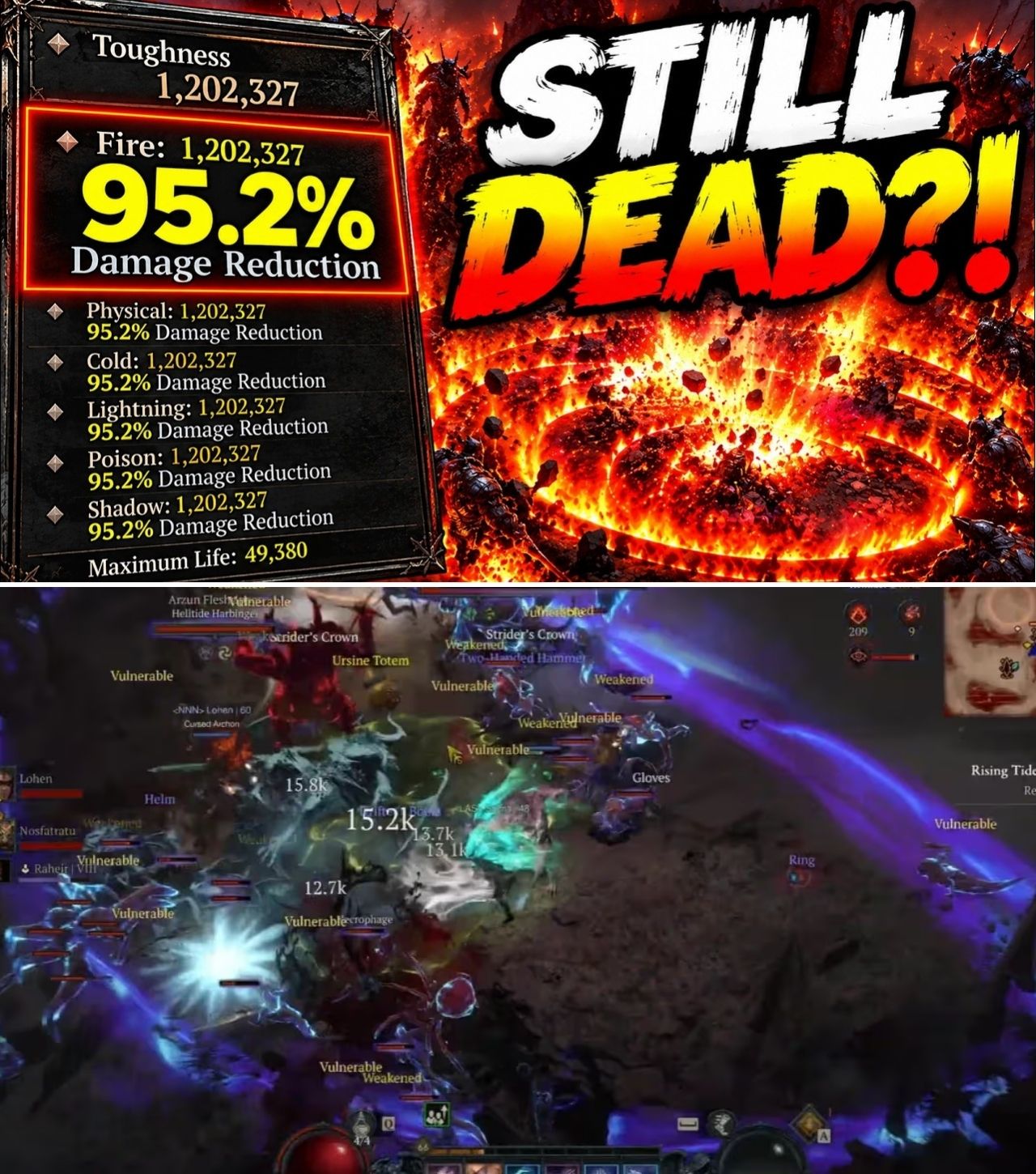
Introduction: The Agony of the Unseen One-Shot
In the punishing endgame ecosystem of Diablo IV, few experiences induce more controller-shattering rage than the sudden, unexplained “one-shot.” You enter a Torment 12 dungeon or high-tier Pit run feeling invincible, flanked by a towering toughness metric and a health bar glowing with safety. A split second later, your character disintegrates into a pile of ash before you can even register the incoming attack.
When frustrated players flood community forums complaining that they built maximum defense and still got deleted, veteran theorycrafters offer a sobering reality check: Your character sheet is lying to you. To understand why high-end characters continue to suffer catastrophic deaths, we have to look past inflated stats and examine the unforgiving mathematics of endgame mitigation.
The Math of Mitigation: Why 95% Defense Isn’t Enough
The most common trap for players pushing high-tier content is looking at damage reduction percentages as linear scales when they are actually exponential life savers.
Consider a standard scenario in high-end Torment tiers: an enemy strikes your character for 1,000,000 raw damage.
-
At 95% damage reduction with a 50,000 health pool, that incoming hit is reduced down to 50,000 damage. Your health bar hits absolute zero instantly.
-
At 96% damage reduction, the incoming damage drops to 40,000.
-
At 97% damage reduction, the incoming damage plummets to 30,000.
Casual observers often make the fatal mistake of assuming that jumping from 95% to 97% is “only a 2% increase.” In reality, against that exact same million-damage hit, you are taking 40% less damage at 97% than you were at 95%. Those final two or three percentage points represent the literal dividing line between instant death and surviving to pop a healing potion. When pushing Tier 125 and beyond, settling for 95% resistance or mitigation across your damage types is a guaranteed ticket to the respawn screen.
The Elemental Blind Spot: Why Stone of Jordan Remains King
Another hidden culprit behind unexpected deaths is uneven elemental protection. Players often achieve massive overall toughness ratings while leaving a single elemental damage type—such as lightning or poison—dangerously under-capped.
You can feel completely immortal fighting standard physical mobs, only to wander into a pack of elite monsters casting a neglected damage type that tears right through your defenses like paper. This exact vulnerability explains why items like the Stone of Jordan remain staples for high-end builds: they don’t just inflate raw stats; they smooth out defensive profiles, ensuring players don’t harbor fatal elemental blind spots. Until secondary gear and charms are fully optimized to cover every damage type equally, specialized defensive rings remain vital safety nets.
Lethal Complacency: Movement, Ground Effects, and Loot Greed
Even with mathematically airtight defenses and capped resistances, Diablo IV features high-end mechanics that are simply not designed to be face-tanked. Unseen ground hazards, overlapping elite affixes (such as fire-enchanted explosions, plague bearers, and corrupted orbs), and lingering death effects can easily bypass player barriers when screens descend into visual chaos.
Veterans emphasize two golden rules for survival in high-tier content:
-
The Attack-Move Rhythm: Even builds designed around stationary channeling or casting must adopt an aggressive stutter-step cadence. Attack, reposition, attack, reposition. Never anchor yourself in place.
-
Leave the Loot Behind: One of the most common causes of unforced deaths is the instinct to stand still over a fresh drop pile, admiring legendary loot while elite on-death explosions charge beneath your feet. Move away, let the carnage settle, and return for your rewards once the screen is clear.
Conclusion: Establishing Your Defensive Floor
In the eternal race between offense and defense, modern ARPG players naturally gravitate toward massive damage multipliers and screen-clearing critical strikes. However, true progression consistency belongs to those who build from the ground up.
By establishing a robust defensive floor—maximizing true damage reduction percentages, eliminating elemental blind spots, and respecting high-end enemy mechanics through disciplined movement—you transform your character from a fragile glass cannon into an unyielding juggernaut. In Sanctuary, the secret isn’t learning how to survive everything; it’s learning how to build enough mitigation to survive what you must take, and moving away from everything else.

Leave a Reply