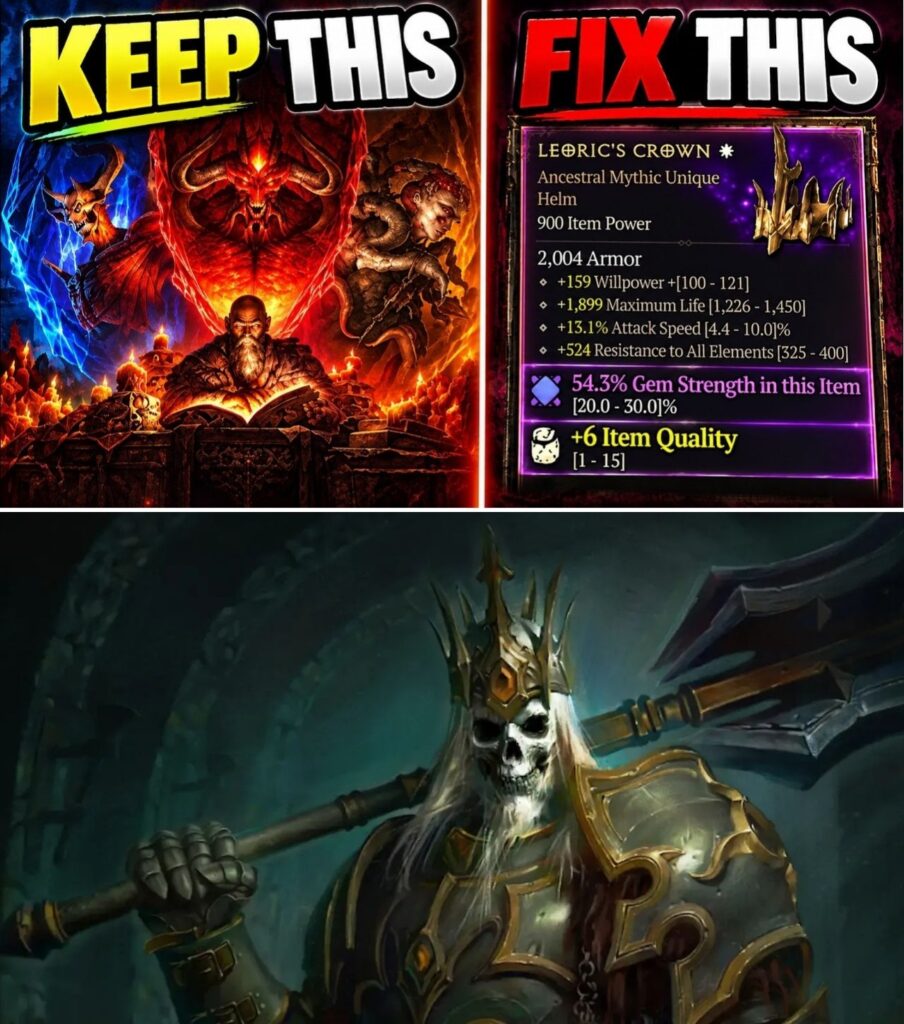



🚨 BLIZZARD IS SLEEPING WHILE DIABLO 4 ENDGAME IS BURNING?! 🔥
Season 15 has been an absolute blast, but beneath the hype, a toxic rot of game-breaking exploits, broken itemization RNG, and unexplained “one-shots” is driving top players to the absolute breaking point! 😡
Why are sweaty exploiters abusing multi-charm bugs and alt-F4 Uber Tristram farms to dominate leaderboards while legitimate ARPG veterans suffer? Why are we still dying in 0.1 seconds with maxed-out armor and resistances with zero combat log to explain what just annihilated us?! 💀
Hardcore veterans and high-tier competitive players are demanding 8 massive changes before Season 16 drops on the PTR—and Blizzard’s silence is deafening. Are we playing an actual ARPG skill-based game, or just pulling a rigged slot machine lever? 🎰
👇 The full truth about what’s destroying Diablo 4’s competitive integrity is right here. Click to read before Blizzard pulls the page! 👇
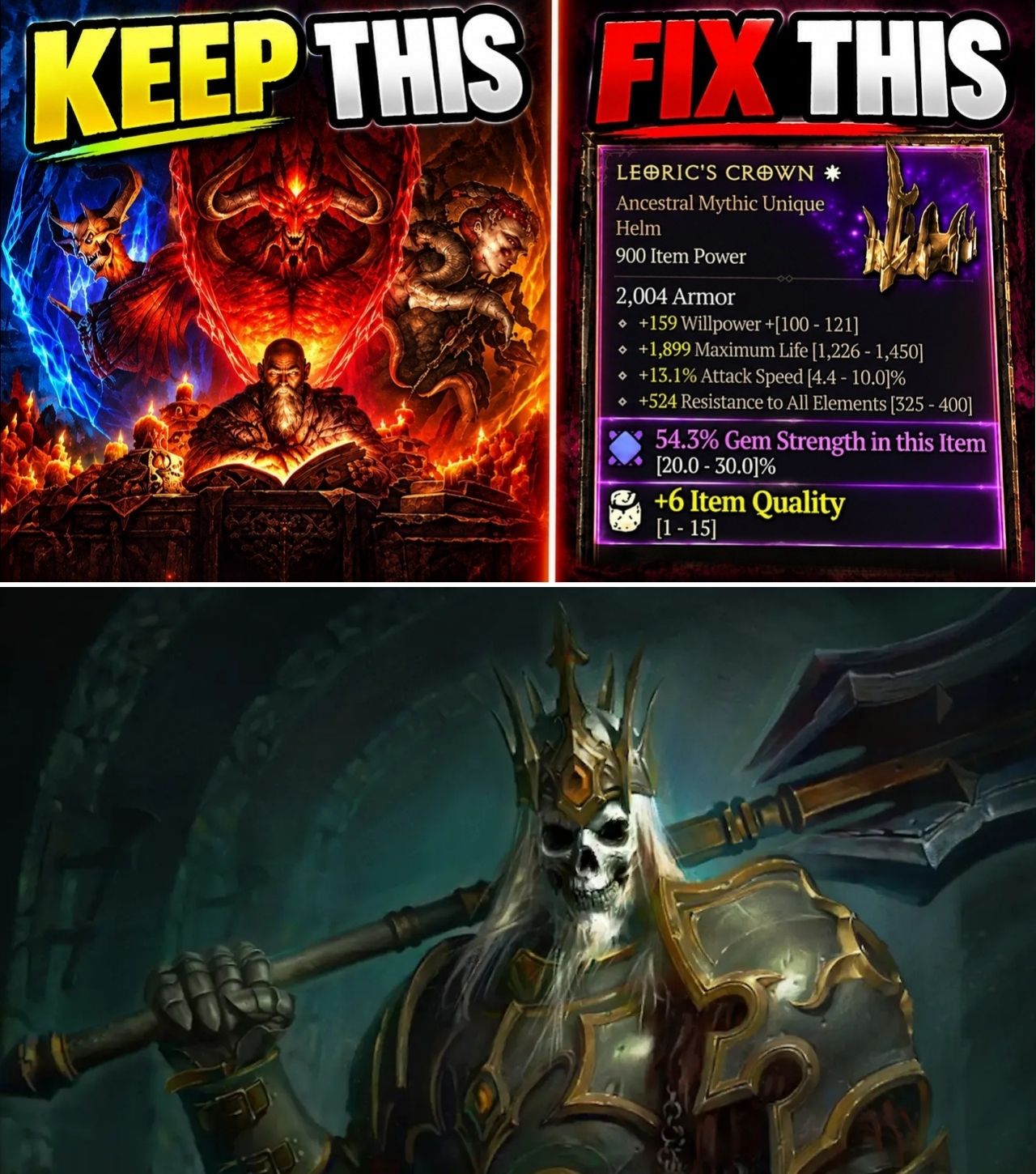
As the community counts down to the Season 16 PTR, prominent ARPG creators and veteran players are calling out Blizzard’s most glaring endgame failures—demanding an end to rampant leaderboard exploits, opaque one-shot mechanics, and oppressive itemization RNG.
Introduction: The Double-Edged Sword of Season 15
For many hardcore fans, Diablo IV’s current seasonal cycle has felt closer to the nostalgic roots of the franchise than ever before. With dense systems, engaging rune words, primeval boss encounters, and diverse gameplay loops, community engagement has hit notable highs. Yet, beneath the veneer of high-tier dungeon crawling and frantic gear optimization, a deep fissure is widening within the Sanctuary.
While the season has offered some of the most visceral combat experiences in recent memory, it has simultaneously exposed severe structural vulnerabilities. Prominent community figures and content creators have begun sounding the alarm, pointing out that unchecked bugs, exploitative mechanics, and frustrating endgame design choices are systematically eroding the competitive integrity of the game. As the community looks ahead to the upcoming Season 16 Public Test Realm (PTR), a passionate debate has ignited across Reddit, X (formerly Twitter), and Discord: Is Diablo IV evolving into a refined masterclass of action-RPG design, or is it slowly devolving into an unrewarding game of chance where exploiters rule the leaderboards?
The Exploit Epidemic: When Cheating Becomes the Meta
At the very top of the community’s grievance list is the alarming speed—or lack thereof—with which Blizzard addresses game-breaking exploits. During recent high-end progression cycles, players uncovered unintended workarounds in major encounters like the Uber Tristram boss fights, allowing participants to reset encounters repeatedly and farm high-tier drops like the Hellfire Torch with impunity. Compounding the issue was the infamous multi-charm exploit, a bug that directly impacted character power scaling and competitive leaderboard placements.
The common apologist defense—“Well, everyone can just do it, so it’s fine”—has been fiercely rejected by veteran players. For those attempting to push difficult end-game content legitimately, watching exploiters abuse unintended interactions to secure massive advantages destroys the fundamental purpose of competition.
When an exploit remains live long enough, it stops being an anomaly and becomes the expected baseline meta. For many dedicated players, this dynamic completely drains the motivation to push higher tiers. After all, what value does a leaderboard rank hold if participants are not playing under the same intended rules? The community consensus is clear: bugs are inevitable in a complex ecosystem featuring thousands of interacting systems, but response time is everything. If an exploit breaks progression or competitive integrity, the community demands swift disabling, hotfixing, and moving forward—not prolonged inaction that normalizes cheating.
The Mystery of the One-Shot: Why Diablo 4 Desperately Needs a Combat Log
Another persistent frustration dominating community forums involves defensive scaling and the notorious, unexplained “one-shot” phenomenon. Players routinely build characters featuring massive maximum life pools, capped elemental resistances, heavy damage reduction modifiers, and layered defensive aspects, only to disintegrate instantly against high-tier pack mobs or bosses without warning.
The community’s most requested quality-of-life feature remains remarkably simple: Give us a combat log.
In a game built entirely around complex mathematical scaling, armor thresholds, elemental resistances, and conditional multipliers, players are left completely in the dark when catastrophic damage occurs. If a character transitions from full health to the respawn screen in a single frame, the game should clearly communicate the exact mechanics: What specific enemy struck the player? What attack did they use? What damage type was dealt, and how much mitigation was bypassed?
Furthermore, this transparency is desperately needed on the offensive side as well. Testing new builds, legendary aspects, and damage-bucket interactions currently relies heavily on dummy testing or guesswork. Games like World of Warcraft have utilized combat logging for decades. If Blizzard expects players to master Diablo IV’s intricate statistical architecture, providing the necessary data tools is no longer optional—it is essential.
Preserving the Good: Why Season 15’s Content Should Stay
Amidst the criticisms, veterans are quick to highlight what Blizzard got right, issuing a clear warning: Do not throw the baby out with the bathwater when the season concludes.
While temporary seasonal mechanics like soul splinters are expected to cycle out of the permanent game, core additions such as rune words, primeval bosses, interactive portals, and expanded map activities added a much-needed variety to the endgame loop. Historically, major ARPG updates risk suffering from cyclical burnout when every new patch completely wipes the slate clean.
The community argument moving forward is additive rather than reductive. When players grew tired of running repetitive dungeons in Season 15, alternative activities provided a welcome palette cleanser. Blizzard must embrace a philosophy of permanent expansion—retaining what makes the game fun, trimming away unbalanced seasonal borrowed power, and continuing to build upon proven content frameworks.
Reinventing Boss Encounters: Moving Away from Altar Grinding
Boss farming has long been a staple of the Diablo franchise, but the modern execution has grown stale. Walking into a static room, consuming summoning materials, deleting a boss in seconds, collecting loot, and repeating the exact same interaction ad nauseam is undeniably efficient—but is it actually fun?
A compelling proposal gaining traction within the community involves eliminating direct boss summoning costs and replacing them with short, focused micro-dungeons or dynamic combat encounters leading up to the lair. Rather than running through empty, sprawling corridors, players would engage in a few minutes of intense monster-slaying and minor objective completion before reaching the boss arena.
Naturally, this structural shift would reduce the total number of boss kills per hour. To compensate, drop rates would need to be rebalanced so that individual kills feel profoundly more rewarding. Trading 30 mindless, repetitive kills for a smaller number of high-stakes, engaging boss encounters represents a much healthier, more immersive gameplay loop for the franchise.
Itemization & Crafting: Escaping the Slot-Machine Nightmare
Itemization remains one of the most contentious battlegrounds in the endgame economy. Practices such as repeatedly transfiguring the same item (such as abusing mechanics on iconic gear like Leoric’s Crown) highlight how desperate players are to bypass oppressive RNG walls. Even those who successfully utilized these systems argue that turning endgame progression into an endless slot-machine pull—where players funnel resources hoping RNG eventually lines up—destructively undermines long-term engagement.
Instead of removing such mechanics without a safety net, the community advocates for player agency, suggesting that underutilized late-game currencies—such as Entropic Tuning Prisms—be integrated into a true crafting and mitigation system.
Key itemization demands for Season 16 include:
-
Controlled Mythic Crafting: Allowing players to combine Resplendent Sparks with large quantities of Tuning Prisms to dictate or narrow down possible affix pools on crafted Mythic Uniques. While RNG should still govern exact rolls and ensure items remain imperfect, players want a long-term deterministic path toward their desired gear rather than surrendering entirely to luck.
-
Slightly Adjusted Mythic Drop Rates: Balancing out extreme randomness by giving players slightly more frequent opportunities to find Mythic items, ensuring that even “bad” drops can be salvaged into Sparks to fuel progressive crafting pathways.
-
Removal of Crafted Item Restrictions: Dismantling punitive limitations on upgraded or crafted gear, allowing dedicated players to continuously invest resources and materials into perfecting their ultimate loadouts without running into arbitrary roadblocks.
Conclusion: The Road to Season 16
As the community looks toward the horizon, the sentiment among veterans is not one of rejection, but of passionate investment. Players do not want Diablo IV to become an easier game, nor do they expect flawless, frictionless progression handed to them on a silver platter.
What the player base desires is agency, transparency, and respect for their time. By cracking down swiftly on leaderboard exploits, integrating robust combat logging, preserving successful endgame activities, and transforming item crafting from pure gambling into a rewarding long-term journey, Blizzard has a golden opportunity to elevate Diablo IV from a great ARPG into a generational masterwork.
All eyes now turn to the Season 16 PTR—where players will discover whether the development team listened to the trenches of Sanctuary or left the endgame’s deepest flaws unaddressed.

Leave a Reply