


The ultimate gaming verdict is in, and the ranking of the 7 Most Ambitious Video Games That Actually Delivered on Their Promise is sparking an absolute civil war across the internet! 🎮🚀
We’ve all seen over-hyped games promise the moon only to drop a bug-ridden disaster at launch. But when visionaries actually pull off the impossible—creating massive simulated universes, branching narratives with thousands of outcomes, or seamless star-system travel—it changes video game history forever.
A massive new community consensus just officially ranked the 7 titles that aimed for absolute madness and somehow succeeded, but the debate over the #1 spot is setting Reddit and Twitter on fire.
While everyone expected legendary open-world juggernauts and historical RPG masterclasses to feature heavily, the fight between a 100-hour fantasy epic, a space simulation comeback for the ages, and a hyper-complex living world pushed several fan-favorite titles out of the top ranks.
Is the most ambitious game that actually delivered a massive choices-matter RPG with infinite possibilities, a procedural universe that pulled off the greatest redemption arc in history, or the photorealistic cowboy simulator that redefined detailed open worlds? The full breakdown of the top 7 ranking will restore your faith in game developers…
See which title officially claimed the crown as the ultimate ambitious masterpiece 👇🔥
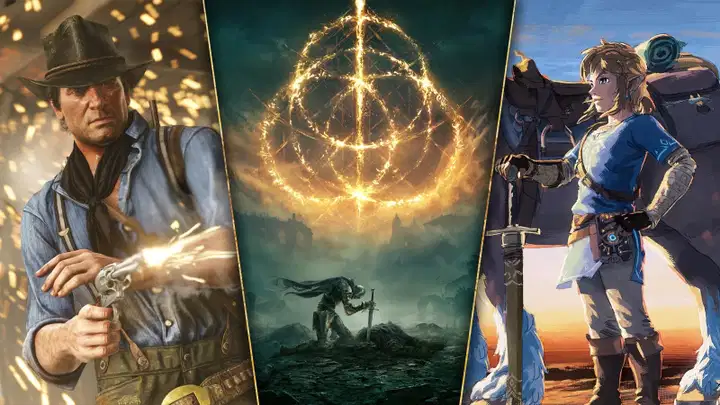
In the modern video game industry, ambition is a double-edged sword. For every studio that promises groundbreaking mechanics, living worlds, and revolutionary player choice, dozens collapse under the weight of their own feature creep. The gaming graveyard is littered with over-promised, under-delivered titles that fell victim to marketing hype and premature launch dates.
Yet, when a studio sets an impossibly high bar and actually reaches it, the result is nothing short of historic. These rare titles don’t just entertain; they push technological boundaries, redefine game genres, and establish new standards for what interactive media can accomplish.
Across gaming subreddits like r/gaming, r/pcgaming, and r/Games, debates frequently flare up over which developers turned seemingly impossible promises into undisputed masterpieces. We analyzed technological scale, narrative complexity, post-launch execution, and cultural legacy to rank the 7 most ambitious video games that actually delivered on their promise.
7. Kingdom Come: Deliverance II — The Medieval Reality Machine
When Warhorse Studios set out to build a hyper-realistic historical RPG set in 15th-century Bohemia, critics questioned whether a mid-sized studio could simulate historical accuracy without sacrificing player engagement. With Kingdom Come: Deliverance II, they didn’t just deliver—they perfected the formula.
The Promise vs. The Execution
Warhorse promised a living, breathing medieval society without magic, dragons, or fantasy tropes. The game delivers an unprecedented level of historical simulation: combat requires genuine martial sword technique, NPCs follow strict daily economic and personal schedules, and your social standing fluctuates based on how recently you’ve bathed or the quality of your blood-stained armor.
Why It Belongs on This List
Building a massive medieval world that reacts dynamically to historical physics, realistic alchemy, and social stratification is a developer’s nightmare. Deliverance II succeeds by seamlessly blending deep historical immersion with a compelling personal story of revenge and political intrigue, proving that hardcore realism can command massive mainstream appeal.
Community Footprint
“Warhorse promised an authentic medieval simulator and gave us one of the most immersive RPGs ever made,” noted a popular breakdown on r/RPG_Gaming. “It respects the player’s intelligence in a way few AAA titles dare to do.”
6. No Man’s Sky — The Greatest Redemption in Gaming History
It is impossible to discuss game ambition without mentioning Hello Games’ sci-fi epic, No Man’s Sky. While its 2016 launch became infamous for missing features, the game’s multi-year transformation stands as the single greatest comeback story in interactive media.
The Promise vs. The Execution
Developer Sean Murray initially promised an infinite, procedurally generated universe containing 18 quintillion planets with seamless space-to-surface travel, distinct ecosystems, and cosmic exploration. While launch fell short, Hello Games spent years pouring dozens of massive, free content updates into the game—eventually delivering multiplayer, base building, VR support, fleet management, and deep planetary lore.
Why It Belongs on This List
Today, No Man’s Sky stands as a triumphant realization of its original sci-fi dream. Players can seamlessly board a starship, blast off from a tropical planet’s atmosphere, jump into hyperspace, and land on a distant, undiscovered alien world—all without a single loading screen.
Community Footprint
Across r/NoMansSkyTheGame and broader gaming forums, Hello Games is revered for its unwavering dedication. The game’s journey from public pariah to beloved sci-fi gold standard remains a masterclass in studio accountability and long-term ambition.
5. Dwarf Fortress — The Infinite Living World Engine
Created by brothers Tarn and Zach Adams (Bay 12 Games), Dwarf Fortress is arguably the most complex simulation game ever programmed. What began as a text-based ASCII passion project evolved into a computational marvel that inspired Minecraft and the modern management genre.
The Promise vs. The Execution
The goal of Dwarf Fortress was simple to state but absurd to execute: simulate every organ, history, climate system, emotion, and physical interaction of a generated fantasy world in real time. The game simulates individual fingernails, subterranean aquiferous pressure, historical grudges spanning centuries, and the psychological trauma of dwarves witnessing terrible events.
Why It Belongs on This List
With its steam graphical overhaul and UI modernization, Dwarf Fortress proved that its unbelievable procedural depth could be made accessible to the masses without losing an ounce of its legendary complexity. It stands as a feat of indie game engineering that larger corporate studios wouldn’t dare attempt.
Community Footprint
“Dwarf Fortress doesn’t just generate a map; it generates a living, breathing history book that reacts to physics and biology,” reads a top-voted thread on r/pcgaming. “There is nothing else like it in existence.”
4. The Legend of Zelda: Breath of the Wild — The Physics-Driven Revolution
When Nintendo announced it was taking the venerable Zelda franchise into a fully open-world format, skepticism ran high. Nintendo didn’t just meet expectations; they dismantled and reinvented open-world design for the entire industry.
The Promise vs. The Execution
Nintendo promised absolute freedom—a world where if you could see a mountain, you could climb it, and where environmental physics dictated how problems were solved. Through the integration of the “Chemistry Engine” (governing fire, wind, water, and electricity), Breath of the Wild allowed players to solve puzzles using pure logic and creative experimentation rather than rigid developer scripting.
Why It Belongs on This List
By replacing map-marker clutter with player curiosity and emergent physics interactions, Nintendo fulfilled the long-standing promise of true open-world agency. It remains a landmark title that reshaped game design across the globe.
Community Footprint
“Breath of the Wild proved that open worlds don’t need checklist icons to be engaging,” wrote an enthusiast on r/gaming. “It trusted player curiosity, and that trust revolutionized modern game design.”
3. Grand Theft Auto V — The Multi-Protagonist Masterpiece
When Rockstar Games announced that 2013’s Grand Theft Auto V would feature three interconnected, playable protagonists across a massive, living simulation of Southern California, industry analysts doubted it could run smoothly on aging console hardware.
The Promise vs. The Execution
Rockstar promised a vast metropolitan and countryside map (Los Santos and Blaine County) where players could switch seamlessly between three distinct criminals—Michael, Franklin, and Trevor—living their own lives in real time. The game delivered a sprawling narrative, incredible satire, and an unprecedented level of urban density.
Why It Belongs on This List
Beyond its critically acclaimed single-player story, GTA V laid the foundation for GTA Online, an evolving multiplayer juggernaut that sustained active player communities across three console generations. Its structural ambition and technical optimization set records that took a decade to challenge.
Community Footprint
With over 190 million copies sold worldwide, GTA V’s seamless character-switching dynamic and living-city ecosystem remain a gold standard for open-world urban games.
2. Red Dead Redemption 2 — The Peak of Environmental Detail
If GTA V proved Rockstar’s ability to build massive living cities, 2018’s Red Dead Redemption 2 proved they could construct a hyper-detailed, emotionally resonant living wilderness.
The Promise vs. The Execution
Rockstar set out to create the most detailed western open world ever conceived, where every animal species had a realistic ecosystem, every town NPC remembered your actions, and environmental interactions carried incredible physical weight. From dynamic mud accumulation to thousands of unique NPC dialogue scripts, the level of craftsmanship is staggering.
Why It Belongs on This List
Red Dead Redemption 2 delivered a cinematic narrative that matched the staggering detail of its world. It did not compromise on its slow, deliberate pacing, forcing players to truly live inside its dying frontier world alongside Arthur Morgan and the Van der Linde gang.
Community Footprint
“Six years later, no studio has come close to matching the sheer level of detail in RDR2,” stated a top video essay on r/Games. “It is the absolute peak of AAA environmental world-building.”
1. Baldur’s Gate 3 — The Infinite Choice Miracle
Taking the undisputed #1 spot as the most ambitious video game that actually delivered on its promise is Larian Studios’ RPG masterpiece, Baldur’s Gate 3.
The Promise vs. The Execution
Larian promised to translate the reactive, choice-driven tabletop magic of Dungeons & Dragons 5e into a fully voiced, AAA cinematic video game. They promised that every player decision, skill roll, companion relationship, and creative combat strategy would organically shape a narrative with thousands of distinct ending variations.
Why It Takes the Top Spot
Baldur’s Gate 3 did what most game designers thought was impossible: it delivered an immense CRPG with AAA cinematic presentation where no two play-throughs are identical. Whether stacking crates to jump over castle walls, speaking with dead NPCs to unlock hidden questlines, or completely breaking quest sequences through creative spellcasting, the game anticipates and rewards player agency at every turn.
Community Footprint
Winning Game of the Year across every major awarding body, Baldur’s Gate 3 blew open expectations for the entire gaming industry. Across r/BaldursGate3 and r/gaming, it is universally hailed as a generational masterpiece that restored faith in what passionate developers can achieve when given time, freedom, and vision.
The Verdict: When Vision Meets Mastery
The success of these 7 titles proves a vital truth in game development: true ambition isn’t about marketing buzzwords—it is about execution. Whether through the reactive narrative freedom of Baldur’s Gate 3, the detailed world of Red Dead Redemption 2, or the infinite universe of No Man’s Sky, these games delivered on their promises and earned their places in video game history.

Leave a Reply