🚨 THEY ARE LOSING THEIR MINDS OVER A 28-YEAR-OLD REVEAL. 🚨
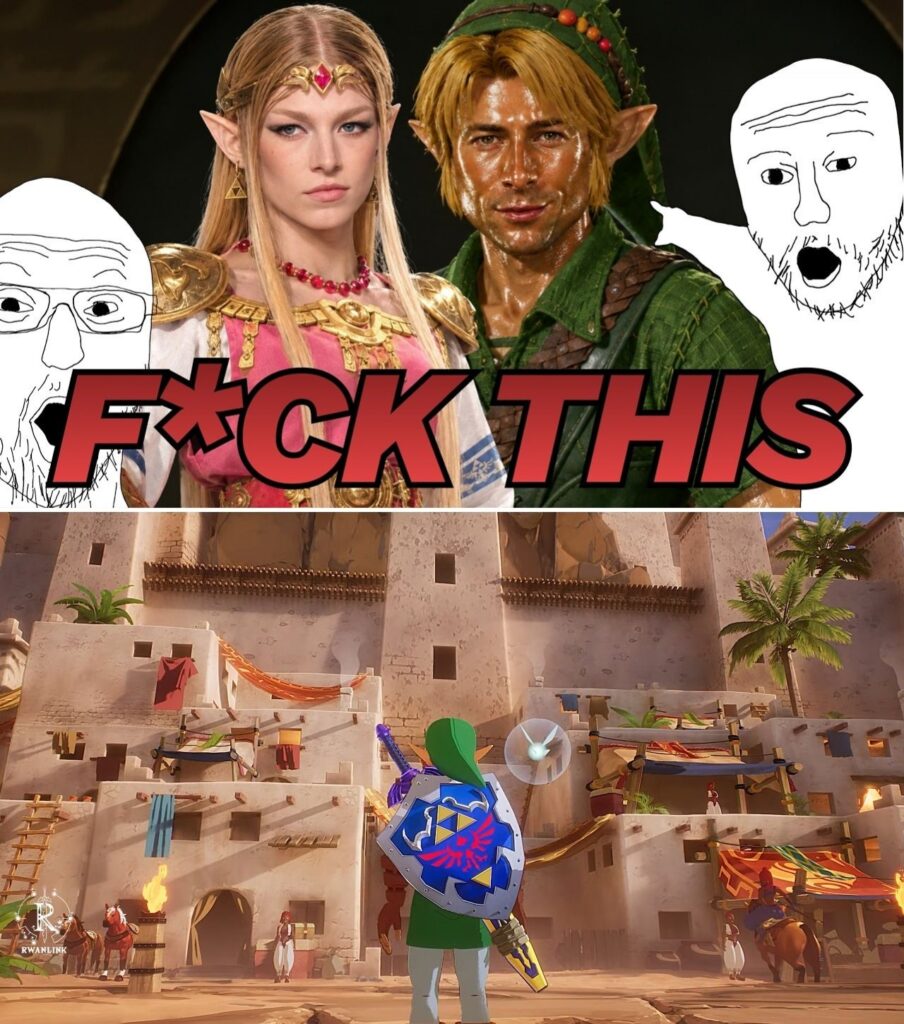
Nintendo finally unveiled the official The Legend of Zelda: Ocarina of Time Remake, but instead of celebrating one of the greatest games in history, the internet just erupted into an absolute ALL-OUT WAR. 💥
The target of the outrage? Sheik’s new character redesign.
A vocal subset of modern online activists is genuinely FURIOUS that Nintendo gave Sheik a more feminine silhouette and visible blonde hair—complaining that Nintendo “erased a gender-fluid trans icon” and ruined the “androgynous aesthetic.”
Never mind the fact that Sheik has literally been Princess Zelda in a ninja disguise escaping Ganondorf since 1998! Even Shigeru Miyamoto previously confirmed there was no magical gender-transformation involved—just cross-dressing for survival.
While ideological activists spark gender discourse on BlueSky and X, long-time gaming fans are battling over $60 price tags, “plastic-looking” Unreal Engine graphics, and simplified “journalism-mode” hand-holding features.
Is this a stunning modern revival or an “unnecessary corporate museum exhibit” that completely ruined our childhood nostalgia?
The arguments are getting wildly unhinged—see the viral redesign and read the full meltdown breakdown here 👇 🔥 Read the full drama report:
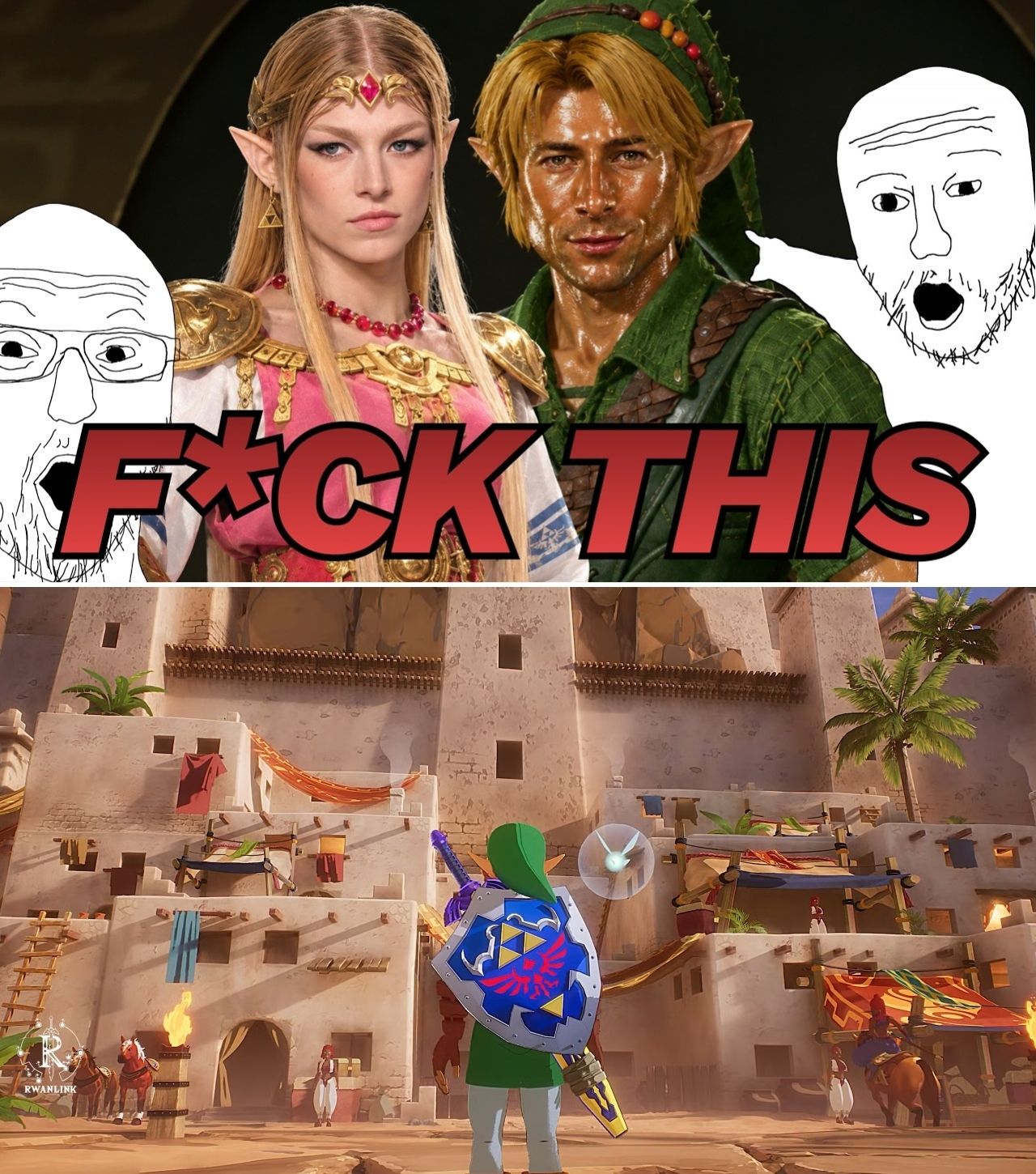
When Nintendo officially announced the long-rumored full remake of The Legend of Zelda: Ocarina of Time, the gaming world was expected to erupt in unanimous celebration. Released in 1998 for the Nintendo 64, Ocarina of Time is widely regarded by critics and gamers alike as one of the most influential, ground-breaking video games ever created. It defined 3D action-adventure game design for an entire generation.
Yet, within hours of the first-look presentation during the Legend of Zelda 40th Anniversary Direct, the collective nostalgia quickly dissolved into an intense, multi-front internet culture war.
Rather than uniting the community, the remake revealed deep fractures across the modern gaming ecosystem. On one side, classic gamers and original fans expressed skepticism over “soulless” hyper-realistic visuals, shortened maps, and hand-holding features designed to accommodate casual play. On another front, mainstream gaming outlets like Kotaku traded barbs with veteran developers over aesthetic choices.
Most dramatically, social media platforms—including X (formerly Twitter), BlueSky, Reddit, and YouTube—were engulfed in a fierce ideological war surrounding the character design of Sheik, with online activists clashing with long-time lore purists over gender identity, disguise mechanics, and canon history.
Part I: The Visual Debate — “Uncanny Valley” vs. Modern Fidelity
The first flashpoint centered around the remake’s updated aesthetic engine. While original N64 graphics relied on low-polygon character models and heavily stylized textures due to 1990s hardware constraints, the remake introduces high-density shaders, advanced dynamic lighting, and detailed character models.
For a significant segment of the player base, the transition into near-photorealistic territory stripped the title of its iconic charm.
“Link looks like he got hit with the AI slopification beam,” wrote gaming outlet Kotaku in a widely cited commentary piece by writer Ash Parish. The article argued that while non-human characters like Princess Ruto, the Great Fairy, and various Hyrule monsters translated reasonably well into high fidelity, young Link suffered from a “slick, plasticky look” that pushed him straight into the uncanny valley.
+-----------------------------------------------------------------------------------+
|                        THE GRAPHICAL DEBATE AT A GLANCE                           |
+--------------------------+--------------------------------------------------------+
| Original N64 Aesthetic   | Sharp polygonal angles, low-res textures, artistic     |
|                          | ambiguity enforced by hardware limitations.            |
+--------------------------+--------------------------------------------------------+
| Remake Visual Direction  | High-density shaders, realistic liquid effects,        |
|                          | smooth plasticky skin tones, cinematic lighting.       |
+--------------------------+--------------------------------------------------------+
| Player Backlash Slogan   | "Pretty pixels, zero soul — turning childhood          |
|                          | nostalgia into a sterile museum exhibit."              |
+--------------------------+--------------------------------------------------------+
Reactions on social media echoed these concerns. Viral posts on X compared the game’s environmental render to fan-made Unreal Engine demos from the early 2010s, questioning whether hyper-realism suits a franchise historically celebrated for expressive art direction like The Wind Waker or Breath of the Wild.
“It feels like tourist porn in Unreal Engine,” tweeted one viral commentator. “Pretty pixels, zero soul. Nintendo is turning nostalgia into a sterile museum exhibit.”
However, defenders pointed out that similar aesthetic controversies surrounded almost every major Zelda transition—including the initial backlash against Wind Waker‘s cell-shaded “Toon Link” in 2002 and Twilight Princess‘s muted, darker palette in 2006.
Part II: Hand-Holding and “Journalist Mode” — Modernizing a Classic
Beyond pure visuals, the Ocarina of Time Remake sparked debates regarding quality-of-life adjustments and mechanical simplifications.
The original 1998 title was infamous for demanding spatial awareness and puzzle-solving patience—most notably in the notorious Water Temple, which required tedious equipment swapping and back-tracking.
To streamline the experience for modern audiences, Nintendo introduced several overhaul features:
-
Dedicated Movement Mechanics: Manual jump controls, dedicated sprint options, and reworked swimming mechanics.
-
Enhanced Navigation Tracking: A new UI feature dubbed “Threads of Time”, acting as an in-game quest log and directional indicator.
-
Built-in Guidance Systems: Interactive “Gossip” areas in Hyrule Castle Town providing explicit puzzle hints.
-
Fully Voiced Cutscenes: Replacing the classic text-box audio chimes with full voice acting.
While younger players welcomed these additions, veteran gamers and creators labeled them as “yellow-paint hand-holding”—referencing the modern industry trend of painting ledges yellow to visually instruct players where to climb.
“They’ve essentially added a built-in game journal mode,” noted streamer Minimal Effort Live during a commentary breakdown. “It feels like they built features specifically so game reviewers wouldn’t get lost in Hyrule Field. Part of what made Ocarina legendary was figuring out the world without a GPS marker guiding your every step.”
Concerns were also raised regarding Hyrule Field’s physical size. While massive by N64 standards in 1998, the map remains relatively compact when compared to modern open-world titles. Fans worry that keeping a near 1:1 map layout without expanding the territory will make the world feel sparse and claustrophobic on current-generation hardware.
Part III: The Sheik Redesign Warfare — Disguise vs. Identity
While graphic fidelity and gameplay changes drew typical gaming discourse, the true explosion occurred over the redesign of Sheik—the mysterious Sheikah warrior who guides Link throughout his adult journey.
In the original game, Sheik was visually ambiguous, wearing full bandages, a face cover, and loose ninja-style clothing. In 1998, players were shocked when late-game cutscenes revealed that Sheik was actually Princess Zelda in disguise, using the persona to hide from Ganondorf after the fall of Hyrule Kingdom.
In the new remake, Nintendo updated Sheik’s model to feature a subtle feminine silhouette, refined shoulder contours, and a visible, long blonde braid tucked beneath the cloth wrap.
The visual change immediately triggered a massive political and ideological battle on social media platforms.
+-----------------------------------------------------------------------------------+
|                     THE GREAT SHEIK CULTURE WAR DISCOURSE                         |
+--------------------------+--------------------------------------------------------+
| Activist / Queer Theory  | Sheik must remain strictly androgynous/masculine;      |
| Perspective              | claims the feminized redesign erases a "queer/trans    |
|                          | non-binary icon" from retro gaming history.            |
+--------------------------+--------------------------------------------------------+
| Lore Purist / Nintendo   | Sheik was always Princess Zelda cross-dressing to      |
| Official Position        | evade capture; Miyamoto confirmed no magical body      |
|                          | transformation or gender-fluidity ever occurred.       |
+--------------------------+--------------------------------------------------------+
The Outrage: Claims of “Erasing a Gender-Fluid Icon”
On BlueSky and progressive gaming forums, vocal users expressed intense anger over the redesign, claiming Nintendo had “cowardly feminized” a character who served as an early gender-nonconforming icon.
“Genuinely can’t get over how dog-shit the new Sheik design looks,” wrote one viral user. “He was referred to as a guy in the original game, looked hella androgynous, and had short hair. Now it’s just obviously Zelda in a costume and that’s so lame.”
Another viral thread argued: “Sheik’s redesign is genuinely awful, fundamentally cowardly, and regressive. The long hair, the more feminine figure… he’s supposed to read as a mysterious, beautiful man (Bishōnen). They deliberately feminized the design to erase the androgyny.”
Some posts went as far as analyzing the “psychological relationship” Zelda had with cross-dressing, asserting that Sheik should be officially canonized as a trans-masculine or gender-fluid representation.
The Response: Canon Lore and the Reality of Disguise
On the opposing side of the debate, lore purists, veteran gamers, and commentary channels labeled the outrage as “unhinged revisionist history,” pointing out basic facts regarding the game’s 28-year-old plot line.
“People are losing their minds over Princess Zelda wearing a ponytail,” countered commentator Black Sage on X. “Sheik isn’t a standalone character with gender-identity issues; Sheik is Princess Zelda hiding from a genocidal dictator trying to steal the Triforce of Wisdom. She cross-dressed as a ninja. That’s literally the entire plot.”
Game historians quickly brought up official statements from Nintendo creators. Years prior, The Legend of Zelda creator Shigeru Miyamoto and series producer Eiji Aonuma officially confirmed that Zelda did not use magic to alter her biological sex or transform into a male while acting as Sheik. The character was simply wearing physical bandages and heavy clothing to conceal her royal identity.
“It is utterly bizarre to watch modern internet culture try to project 2026 gender discourse onto a 1998 plot point about a princess in hiding,” stated one popular Reddit thread on r/Zelda. “Sheik was referred to as ‘he’ in 1998 because Link—and the player—were supposed to be fooled by the disguise. Once the disguise was lifted, the secret was out.”
Part IV: Media FEUD — Kotaku, Nintendo, and Blacklist Politics
Adding fuel to the fire was the ongoing feud between Nintendo and major gaming outlets—specifically Kotaku.
During the commentary storm, numerous fans pointed out that Kotaku’s hostile coverage of the remake came from a platform that has been officially blacklisted by Nintendo for years.
In late 2021, Kotaku published articles providing explicit instructions on how readers could pirate and emulate Metroid Dread on PC prior to its official retail release. When Nintendo issued requests to remove the piracy guides, Kotaku refused, citing journalistic independence. Consequently, Nintendo cut off all press access, review codes, and event invitations to the outlet.
“Every time you read a snarky, overly aggressive anti-Nintendo hit piece on Kotaku, remember that they are permanently blacklisted,” noted gaming analyst Manabyte on X. “They don’t get review codes, they don’t get developer interviews, and their writers routinely source their takes from insular echo-chambers on BlueSky.”
This media dynamic has created a rift in how gaming news is consumed. While corporate gaming sites publish critiques attacking character models and art direction, independent YouTube commentators and Twitch streamers often frame those same articles as out-of-touch corporate media posturing.
Part V: The Financial Reality — A $60 Price Tag in an $80 Era
Amidst the graphical controversies and social media gender wars, one unexpected aspect of the Ocarina of Time Remake received cautious praise: its retail pricing.
In an era where major AAA publishers like Sony, EA, and Ubisoft have normalized $70 to $80 base prices for new releases and remakes, Nintendo confirmed the Ocarina of Time Remake will launch at a lower price point of $60.
| Industry Metric | Standard Modern AAA Release | Ocarina of Time Remake |
| Base Price | $70.00 – $80.00 USD | $60.00 USD |
| Microtransactions | Battle Passes, Cosmetics, Boosts | None |
| Audio Format | Fully Voiced Cinematic Audio | Fully Voiced Cutscenes |
| Quality of Life | Live-Service Updates / Post-Launch Patches | Complete at Launch / Built-in Hints |
For budget-conscious gamers, the $60 price point served as a rare positive highlight in an otherwise chaotic release cycle. However, critics argue that charging $60 for a game with a fundamentally unchanged 1998 layout and map scale remains a steep ask—especially when competing against massive original titles and cheaper indie masterpieces.
Conclusion: Can Nostalgia Survive Modern Internet Warfare?
The explosive reaction to the The Legend of Zelda: Ocarina of Time Remake proves one undeniable truth about modern entertainment: Nostalgia is a double-edged sword.
When a publisher touches a beloved cultural milestone, they are not merely updating polygons and audio files; they are stepping into a minefield of childhood memories, media politics, and conflicting audience expectations.
For modern activists, every character redesign is viewed through the lens of identity representation. For corporate media, every visual update provides fuel for rage-bait engagement metrics. And for long-time gamers, every added quest marker or smoothed-out polygon feels like an erosion of the challenging, mysterious magic that made gaming special in 1998.
As the November release date approaches, Nintendo faces a divided gaming public:
-
The Nostalgia Purists: Who prefer the original N64 polygon aesthetic and feel remakes inherently lack “soul.”
-
The Modern Casuals: Who welcome voice acting, smooth controls, and guiding markers.
-
The Ideological Combatants: Who will continue fighting over Sheik’s braid and gender identity long after the end credits roll.
Ocarina of Time originally succeeded because it brought players together in awe of a revolutionary virtual world. Decades later, its remake stands as a stark reflection of the modern internet—noisy, deeply divided, and incapable of agreeing even on the identity of a princess in disguise.

Leave a Reply