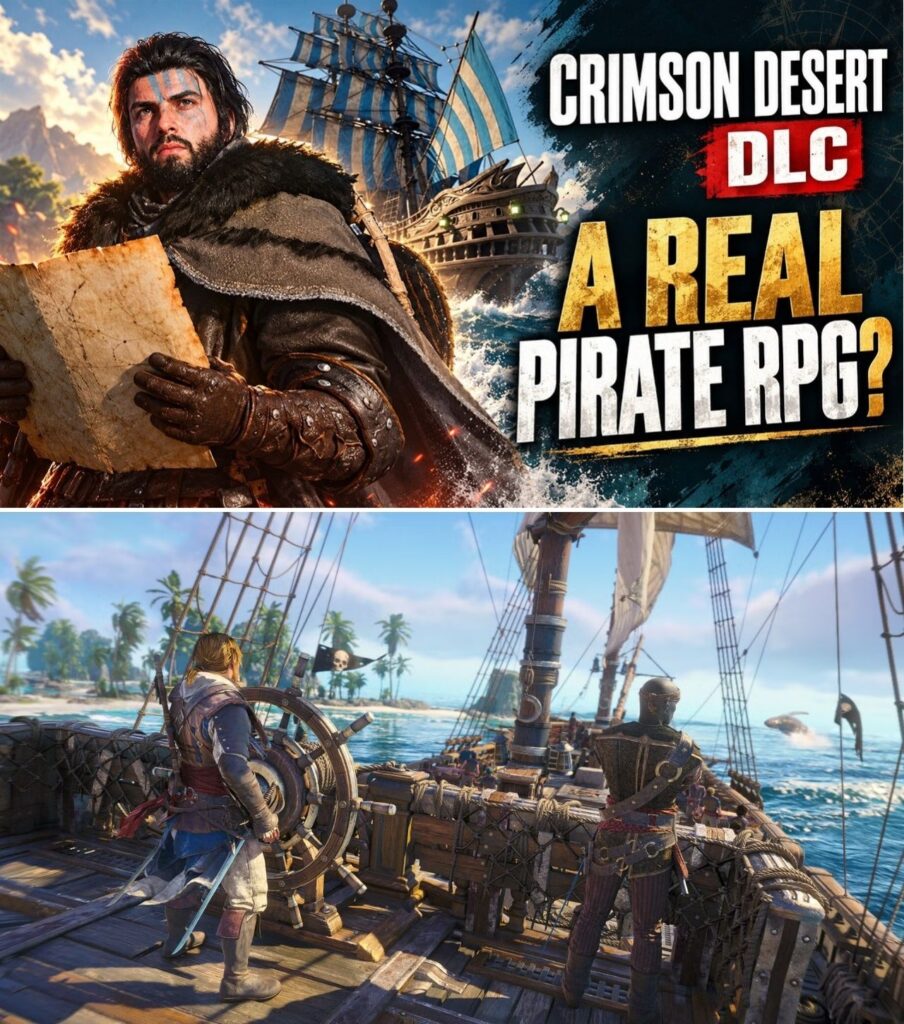



🚨 CRIMSON DESERT PIRATE DLC: Is Pearl Abyss creating the ultimate Black Flag successor, or a complete ILLUSION? 😱🔥
Gamers, set sail and brace yourselves! With Crimson Desert’s massive expansion, “Charting the Unknown”, officially delayed to October 29th for final polish, the community is locked in a fierce battle over one burning question: Can this expansion REALLY deliver the dream Pirate RPG we’ve been begging for? 🏴☠️🥊👀
Pearl Abyss promises modular ship building, real-time naval warfare, underwater sunken ruins, island takeovers, and deep-sea diving… but is your custom ship an actual living, breathing home base you can upgrade and care for, or just a glorified, fancy loading screen between missions? 🤯💥
Why are fans comparing this to Assassin’s Creed IV: Black Flag, and where might overhyped community expectations crash hard against the reality of what’s actually confirmed? What happens to the narrative arcs of Cliff, Damian, and Unka when political unrest clashes with ancient sea mysteries? 👁️👁️💣
The line between absolute maritime masterpiece and overpromised disappointment is razor-thin… 🫣⚡
Do NOT get left behind on this crucial pre-launch breakdown—see the unfiltered analysis right now! 👇🚨
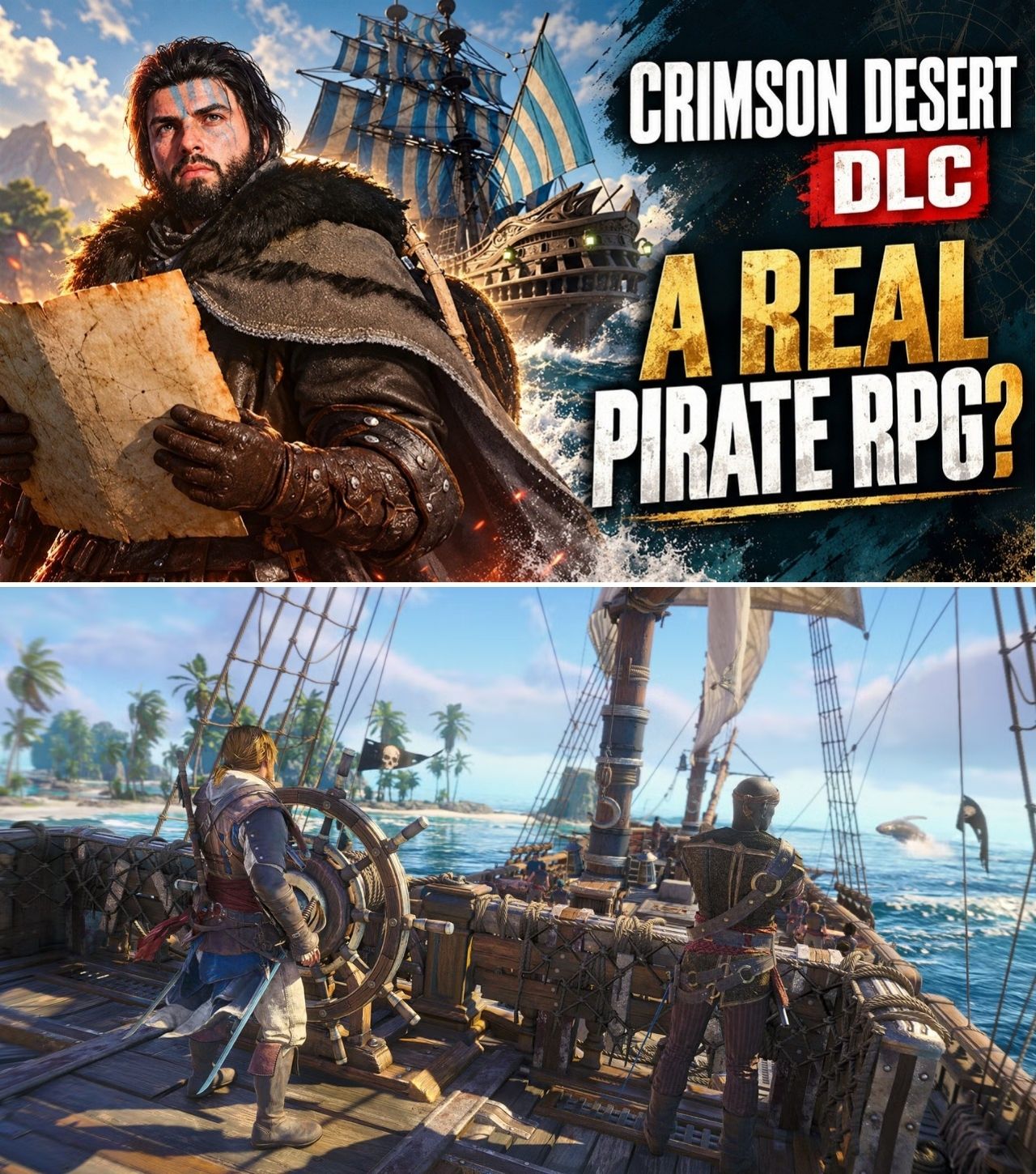
Ever since Pearl Abyss announced that its upcoming expansion for Crimson Desert—titled “Charting the Unknown”—would introduce open-ocean navigation, offshore island strongholds, deep-sea diving, and real-time naval combat, the gaming community’s collective imagination went into overdrive. For millions of RPG enthusiasts, the promotional footage conjured memories of genre-defining maritime classics, most notably Assassin’s Creed IV: Black Flag.
However, following a brief two-week delay pushing the release date to October 29th for final polish and performance stabilization, critical discussions across Reddit, Discord, and specialized gaming channels have shifted toward a more sober, analytical question: Is Pearl Abyss actually crafting a dedicated Pirate RPG, or are community expectations running far ahead of reality?
While taking the wheel of a fully customized vessel and setting sail into uncharted fantasy waters sounds like the ultimate gaming fantasy, the line between a genuinely connected maritime adventure and a collection of superficial minigames is razor-thin. As launch day approaches, dissecting what the expansion actually promises—and where its potential pitfalls lie—is essential to understanding the true scope of Crimson Desert’s evolving ecosystem.
1. The Black Flag Benchmark: Ship as a Home versus Ship as Transit
To understand why the “Pirate RPG” label carries so much weight, one must examine how ships function in open-world game design. In titles like Black Flag, Edward Kenway’s ship, the Jackdaw, was not merely a transport mechanism between story waypoints; it was a living, breathing extension of the player’s progress. Players attacked merchant convoys, boarded rival vessels, harvested lumber and metal, and continuously funneled resources back into upgrading their ship’s hull, cannons, and ram. Over time, the vessel reflected the captain’s journey, transforming every voyage into an investment with tangible consequences.
Crimson Desert has the potential to recreate this satisfying loop in its own unique, high-fantasy framework. The expansion promises modular ship building—including high-tech steam-engine options—as well as naval combat where players can ram enemy midsections or dislodge structural debris with cannon fire.
However, industry analysts warn against assuming unconfirmed features such as complex crew recruitment systems, ship boarding mechanics, or elaborate outlaw reputation meters are automatically included. If sailing across Pywel’s vast oceans yields meaningful rewards that feed into land-based strongholds, character gear, or manor customization, the ship becomes a true HQ. If, on the other hand, voyages feel disconnected from the main campaign’s progression, the vessel risks feeling like nothing more than an elaborate, slow-moving way to mask loading screens.
2. Navigating the Open Sea: Pacing, Distance, and Meaningful Choice
One of the greatest design hurdles in any maritime game is handling open water. Unlike land exploration—where forests, caves, and roadside encounters constantly catch the player’s eye—the open sea consists of vast expanses of empty space.
If traveling between offshore islands simply requires holding down a directional control for several minutes, boredom sets in quickly. Conversely, if players are bombarded by ocean predators or pirate ambushes every 30 seconds, simple navigation becomes a tedious chore.
The success of “Charting the Unknown” hinges on introducing meaningful navigational choices:
-
Approach Vectors: Deciding whether to take a high-risk, narrow rocky passage to reach an island faster, or opting for a safer, longer open-water route.
-
Ship Weight and Physics: Feeling the tangible momentum of a heavy vessel, where lining up a proper turn or beaching near an uncharted shore requires skill and understanding of naval controls.
-
Spontaneous Discovery: Spotting an unusual atmospheric anomaly or a subtle silhouette on the horizon that encourages the player to alter their planned route voluntarily, rather than following a rigid quest marker.
3. Sunken Secrets: Underwater Ruins and Environmental Storytelling
Beyond the surface, deep-sea diving represents one of the most intriguing additions to the expansion. The footage showcases subaquatic exploration in ancient, submerged ruins and cavernous reefs, requiring specialized diving suits and mechanical companions to navigate.
For underwater exploration to succeed, it must rely on compelling environmental storytelling rather than repetitive, copy-paste layouts. Spotting a submerged archway, navigating dark, narrow corridors with dynamic lighting, and unearthing ancient lore or rare crafting materials (such as ether-touched crystals) can make a 10-minute dive feel like a standalone expedition.
However, subaquatic mechanics present inherent risks regarding camera controls and spatial navigation. If players find themselves constantly fighting the camera angle or struggling to identify passable entryways, the novelty of deep-sea exploration can rapidly degrade into frustration. A concise, well-designed underwater site with a memorable visual payoff is infinitely more valuable than vast, maze-like ruins that yield generic loot.
4. Patch History, Base Game Stability, and the Narrative Anchor
Importantly, “Charting the Unknown” does not exist in a vacuum; it sits atop a base game that Pearl Abyss has been aggressively polishing. Recent post-launch patches—such as version 2.03.02 released in late September—specifically targeted critical progression blockers, missing map icons, and abyss interaction bugs, while earlier updates refined movement abilities like Water Stride and expanded story cutscenes.
This ongoing stewardship is vital context for the expansion’s October 29th release. A maritime RPG loop requires absolute systemic reliability: if an NPC fails to spawn at a newly discovered harbor or a power core interaction fails deep inside an underwater ruin, the illusion of an interconnected fantasy world shatters instantly.
Furthermore, the expansion builds upon the established narrative trajectories of Cliff, Damian, and Unka. Integrating political unrest in urban centers like Deinis with mysterious ancient threats beneath the sea ensures that setting sail feels like an organic continuation of their mercenary journey, rather than a jarring detour into an unrelated genre.
Conclusion: Managing Expectations for October 29th
When “Charting the Unknown” launches on October 29th, its success should not be judged solely by whether it completely replicates a dedicated, standalone pirate simulator. Instead, it should be measured by how seamlessly its ocean voyages, castle ownership options, and subaquatic discoveries integrate into the broader fabric of Pywel.
If Pearl Abyss can deliver engaging ship controls, meaningful destinations, and rewards that resonate across both land and sea, Crimson Desert will have achieved something truly remarkable: expanding a gritty action-RPG into a multidimensional fantasy sandbox that offers the freedom of the high seas without losing its core identity.

Leave a Reply