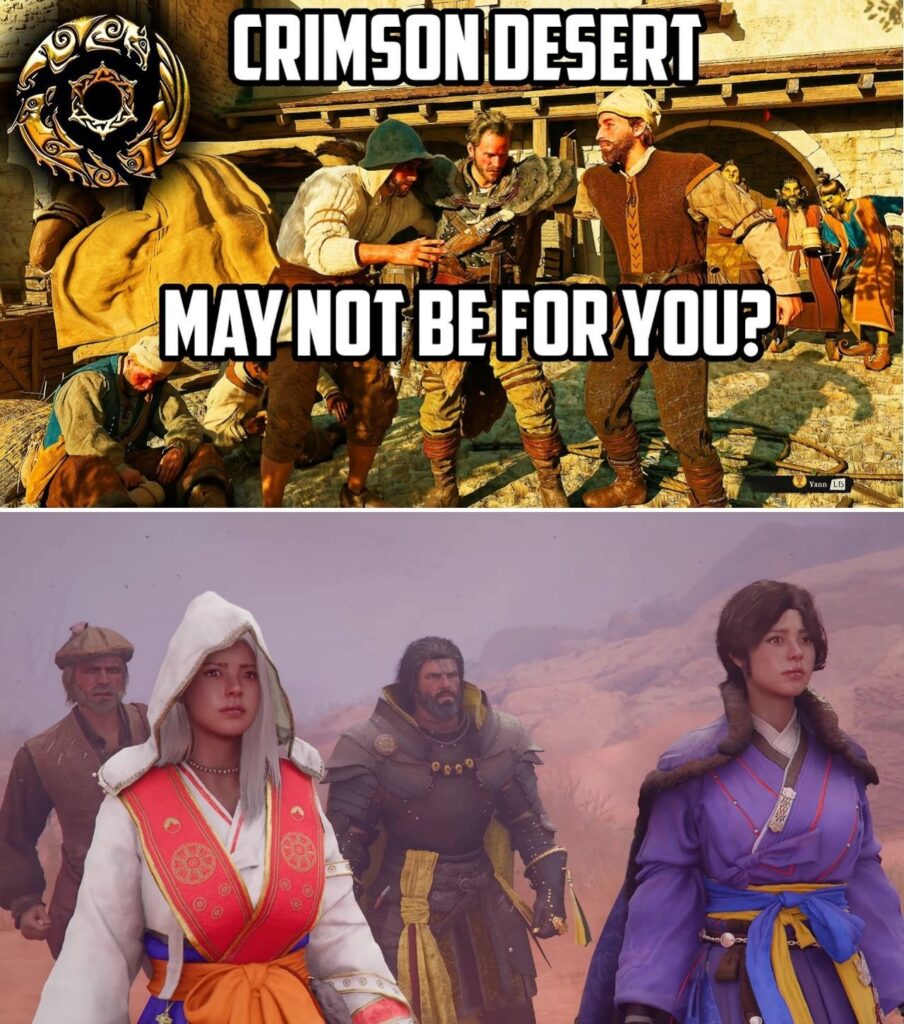



🚨 CRIMSON DESERT WARNING: This game will completely RUIN every other open-world RPG for you forever! 😱🔥
Gamers, listen up. If you love masterpieces like Skyrim, The Witcher 3, or Elden Ring, you might think you’ve seen it all. But warning: Crimson Desert might genuinely not be for you… because once you play it, past and future games will look like absolute trash! 🥊👀
We are talking about a photorealistic, infinitely dense open world that makes Skyrim look like a sandbox toy. Every single object has physics, structures collapse under your feet, dynamic weather and wind rule the land, and the upcoming DLC is adding naval combat, castle building, and NPC romance! 🤯💥
Why are hardcore immersion fans calling this the greatest open-world adventure ever made? And why are veteran players terrified that no developer will ever top what Pearl Abyss pulled off? 👁️👁️💣
The ultimate gaming truth bomb is waiting for you… 🫣⚡
Do NOT get left behind on this industry-shaking revelation—see the full unfiltered breakdown right now! 👇🚨
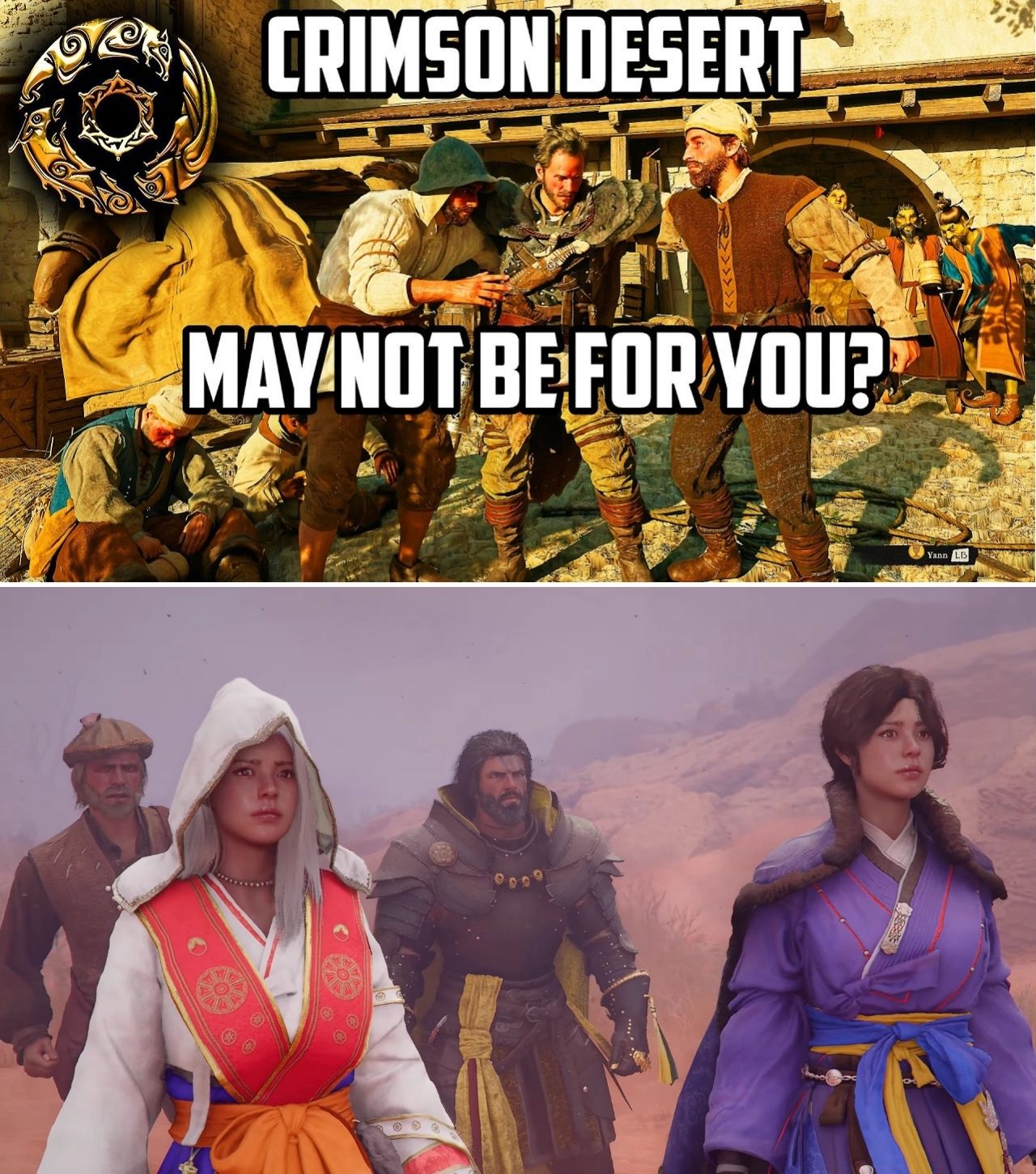
In the history of video games, certain titles arrive once a decade to completely redefine the boundaries of interactive entertainment. Games like The Elder Scrolls V: Skyrim, The Witcher 3: Wild Hunt, and Elden Ring established the golden standards for open-world exploration, player freedom, and atmospheric immersion. For years, players assumed these masterpieces represented the absolute ceiling of what developer ambition could achieve.
Then came Crimson Desert.
As community discussions reach a fever pitch ahead of its upcoming October expansion, a provocative sentiment is echoing across gaming forums and content creation channels: Crimson Desert may not be for you.
Not because the game is flawed or unapproachable, but because its staggering technical fidelity, obsessive environmental density, and unprecedented systemic depth are so overwhelming that they risk ruining every other open-world game—past, present, and future—for anyone who steps into its world.
1. Visual Fidelity Meets Immersive Density: Redefining Scale
To understand why Crimson Desert is prompting such hyperbolic praise from veterans, one must first examine its technical and geographical scope. Evolving from its early roots into a premier single-player epic centered around the mercenary protagonist Cliff, Pearl Abyss has engineered a world that dwarfs traditional benchmarks. Compared to the map of Skyrim—long held as the staple of open-world design—Pywel is exponentially vaster, yet it completely avoids the dreaded “empty space” syndrome that plagues many modern sprawling landscapes.
What truly sets the title apart is its microscopic density. Nearly everything a player encounters is tied to a reactive physical system. Structures dynamically react and collapse under heavy footfall; advanced water physics create realistic currents; and dynamic wind and weather systems drastically alter the tactical reality of traversal and combat.
When paired with near-photorealistic visual fidelity, the game creates an illusion of a living, breathing ecosystem that few developers have ever managed to emulate. NPCs possess independent routines—such as reacting angrily when players knock items from their hands, or allowing players to build standing through targeted gifting—injecting a layer of granular interaction usually reserved for hardcore simulation titles.
2. The Danger of Being “Spoiled”: Why Perfection Can Breed Dissatisfaction
The core argument behind the “it may not be for you” philosophy is rooted in psychological spoilage. For players whose primary gaming diet consists of deep role-playing, unscripted exploration, and absolute freedom, Crimson Desert operates almost too well.
Once a player becomes accustomed to seamless combat transitions, rich armor dyeing and customization options, deep Greymane camp management, and a world where curiosity is constantly rewarded with tangible environmental storytelling, returning to older, more rigid RPG frameworks can feel jarring. Mechanics that once felt groundbreaking in previous generation titles suddenly appear hollow by comparison.
For linear story-driven purists or gamers who prefer strict, regimented rails without overwhelming systemic choices, the sheer breadth of Crimson Desert can feel intimidating. Yet, for true sandbox enthusiasts, the experience acts as an irreversible watershed moment.
3. Expanding the Horizon: The Imminent Impact of the Upcoming DLC
As if the base game’s sprawling continent wasn’t already enough to satisfy the most demanding explorers, Pearl Abyss is doubling down with its upcoming October expansion, “Charting the Unknown.”
By introducing modular ship building, real-time naval combat against eerie ghost ships, deep-sea diving in sunken ruins, custom stronghold and castle ownership, and a full NPC romance and marriage system, the developers are injecting an entirely new tier of complexity into an already staggering ecosystem. For a price point that community members consider a steal for the sheer volume of content added, the expansion cements the title’s reputation as a relentless, ever-evolving juggernaut.
Conclusion: Do You Deserve the Ultimate Open-World?
Ultimately, the assertion that Crimson Desert may not be for everyone serves as both a warning and an invitation. It challenges players to examine what they truly want from a virtual world: a comfortable, familiar linear ride, or an unbridled, uncompromising masterpiece that sets a dangerous new benchmark for the entire industry.
For those willing to break through the fence of hesitation, dive into the abyss, and lose themselves in the blood-soaked, breathtaking plains of Pywel, Crimson Desert isn’t just another game to check off a list. It is an unforgettable experience that proves modern open-world design still has the power to astonish.

Leave a Reply