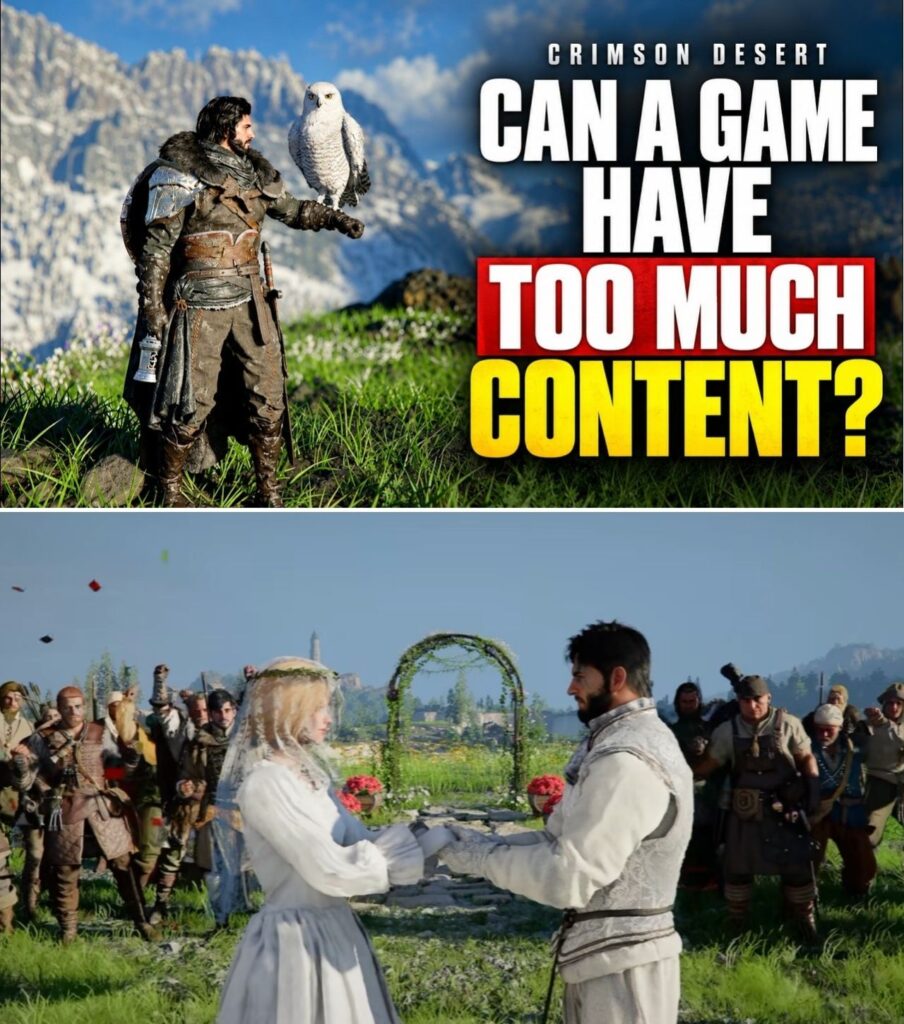



🚨 Is Crimson Desert’s massive scale ruining the game? Gamers are asking the ultimate question! 😱🔥
Gamers, we need to talk about the elephant in the room. Is Crimson Desert simply too big for its own good? 🥊👀
While Pearl Abyss keeps stacking endless features—from naval battles and island takeovers to deep-sea diving and crafting loops—players are hitting a profound psychological wall. When does an expansive open-world stop feeling like an epic adventure and start feeling like an unpaid second job? 🤯💥
Why are veterans staring at their map after a 4-hour session, completely paralyzed by how much content is left, wondering if they will ever see the credits? Is raw size killing the magic of discovery, or is this the ultimate sandbox test of our generation? 👁️👁️💣
The debate dividing the entire gaming community right now is absolute madness… 🫣⚡
Do NOT get left behind on this crucial industry discussion—see the full philosophical and community breakdown right now! 👇🚨
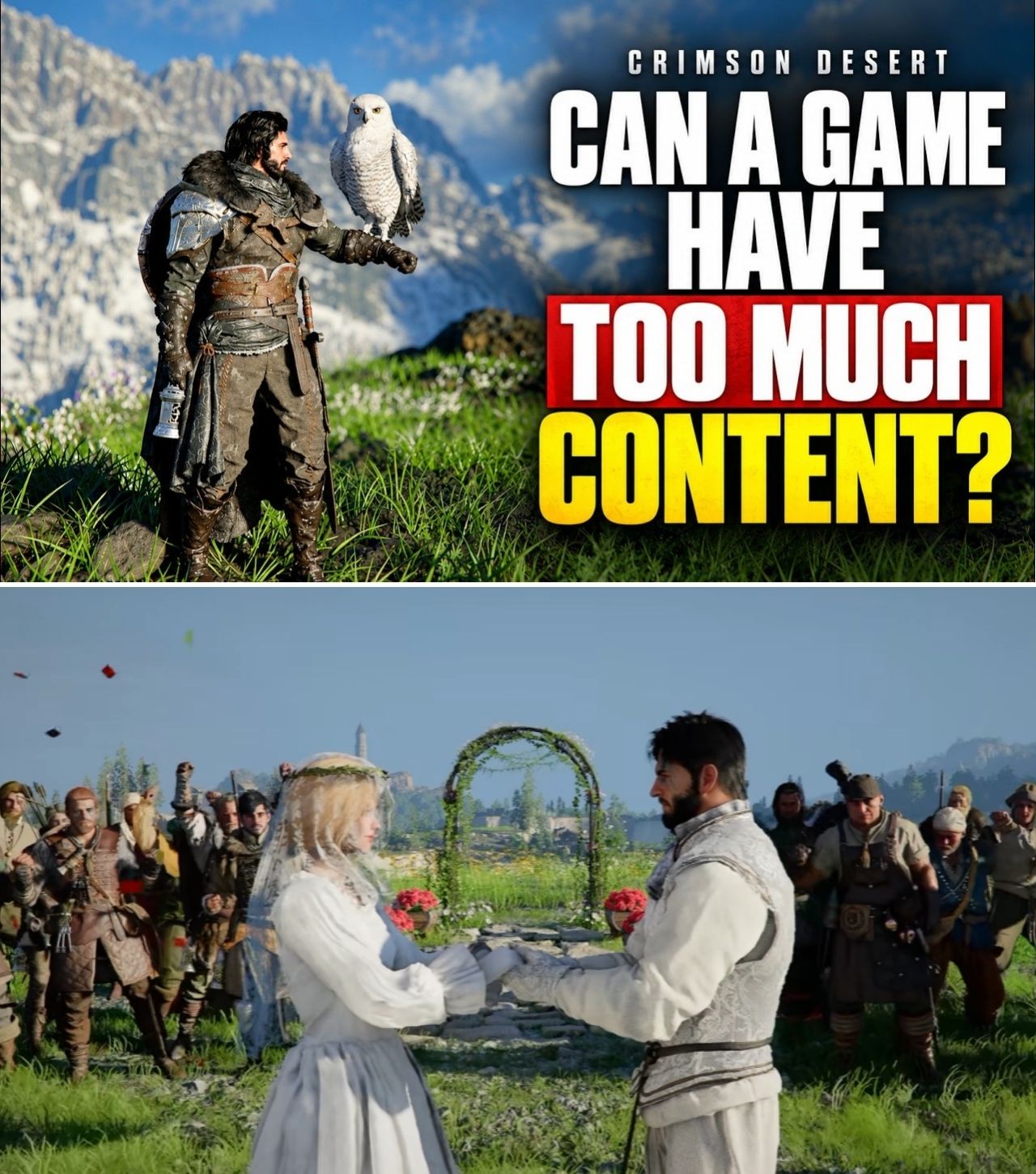
Imagine closing Crimson Desert after an intensive evening session across the continent of Pywel. You fought an imposing foe, stumbled into an uncharted valley, picked up a fresh side objective, and noticed three new points of interest looming on the horizon. Yet, when you check your map, the world somehow feels larger—and more intimidating—than it did when you started.
For some players, this endless horizon is the pinnacle of role-playing freedom. For others, it triggers a quiet dread: Will I ever actually finish this game?
As Pearl Abyss prepares to launch its massive “Charting the Unknown” expansion—bringing naval combat, ship building, manor management, and NPC romance into the fold—the gaming community is grappling with a fundamental question: Can an open world have too much content? And at what point does the very trait that makes a game extraordinary begin to work against the player’s enjoyment?
1. The Allure and Agony of Pywel’s Geography
To critique the scale of Crimson Desert is to challenge a core pillar of modern video game marketing. For decades, studios have equated physical square kilometers and lengthier completion times with ambition and value. Standing on a high ridge in Pywel, looking down at distant settlements, winding forests, and intersecting mountain ranges, the visual payoff is undeniable. Distance creates genuine anticipation; traveling across distinct regions alters weather patterns, enemy tiers, and environmental context, making arrival feel earned.
However, a sprawling map introduces a psychological shift. The problem begins when the promise of exploration curdles into an obligation. Instead of asking, “Where do I want to go tonight?” the player starts asking, “How much unfinished business is hanging over my head?”
When every distant mountain transforms into a reminder of uncollected resources, unmapped caves, and unlearned crafting loops, the landscape stops inspiring adventure and starts imposing pressure. The boundary between a liberating sandbox and an exhausting checklist begins to blur.
2. Systems, Friction, and the Cost of Variety
Crimson Desert does not merely rely on geographical scale; it stacks complex gameplay systems vertically. From combat builds and elemental mechanics to camp management, fishing, cooking, and Greymane merchant logistics, the game offers breathtaking variety.
Yet, variety carries an entry cost. Before any activity can feel relaxing or satisfying, the player must decode its operational rules: What do these specific materials unlock? Which items should be stored? Is this upgrade vital now, or can it be safely ignored?
When players set out with a simple objective—such as preparing for a difficult boss encounter—the interconnected nature of Pywel’s systems often hijacks the session. Gathering supplies leads to a side quest, which exposes a crafting dependency back at camp, which in turn spawns three new questions. Individually, these are well-designed mechanics; collectively, they bury the original intent under layers of administrative friction.
As community analysts frequently point out, the real enemy of long-term retention isn’t a lack of content—it’s unresolved ambiguity. When players cannot gauge the cost of ignoring a system (e.g., worrying that their character feels weak because they skipped a confusing progression loop), experimentation turns into anxious guesswork.
3. Continuity, Narrative Anchors, and the Adult Gamer Dilemma
As games grow exponentially in size, narrative continuity becomes the vital glue holding the experience together. When players take a few days off due to real-life work or family responsibilities, returning to an enormous open world can feel disorienting.
If the primary memory of the last session is a coherent emotional thread tied to Cliff, Damian, or the rebuilding of the Greymane camp, re-engaging takes minutes. But if the memory is merely a cluttered quest log of disparate errands, restarting one’s own interest becomes the hardest task of the evening.
This friction hits adult gamers the hardest. For individuals with limited free time, a game that demands hours of administrative upkeep just to get oriented can become prohibitive. While hardcore enthusiasts revel in a virtual home they can inhabit for years, casual veterans often find themselves admiring Crimson Desert from the sidelines—watching YouTube breakdowns and community leaks rather than subjecting themselves to the daunting startup cost of a fresh session.
Conclusion: Redefining Success Beyond the Playtime Counter
The ongoing debate surrounding Crimson Desert proves that playtime is an increasingly flawed metric for quality. A 200-hour runtime means little if half of those hours are spent second-guessing inventory management or navigating overwhelming map clutter.
Pearl Abyss has demonstrated a commendable willingness to listen and adapt, rolling out quality-of-life updates, inventory tab overhauls, and narrative enhancements. Yet, as the October 29th expansion looms, the core challenge remains unchanged: balancing monumental ambition with structural clarity.
Ultimately, Crimson Desert stands as a magnificent monument to open-world design—a world so rich and expansive that it tests the limits of what players can consume. Whether its sheer size is a triumph of design or a warning against excess depends entirely on whether a player views the horizon as an invitation, or a mountain they no longer have the strength to climb.

Leave a Reply