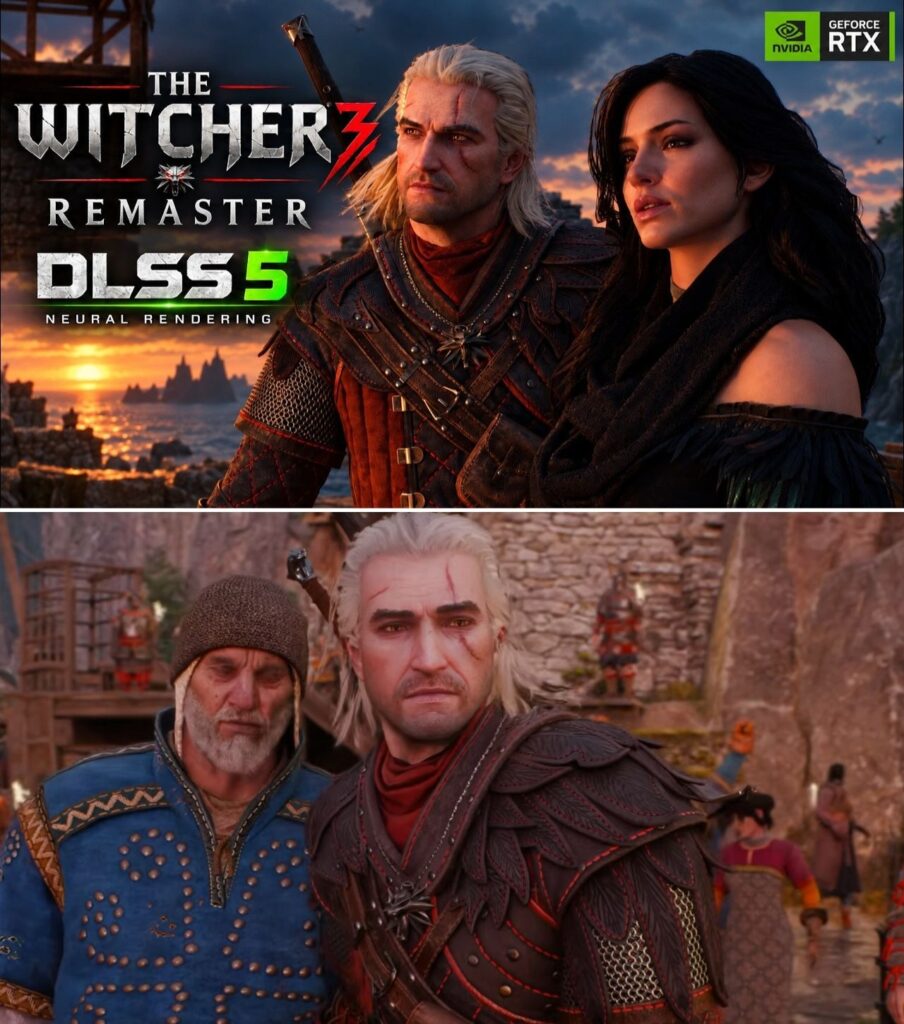



🚨 IS THIS REALLY SKELLIGE OR ACTUAL REALITY?! THE WITCHER 3 JUST BROKE THE MATRIX! 🤯
Gamers and tech nerds are having absolute meltdowns over the latest community showcases, and honestly, you won’t believe your eyes. Running The Witcher 3 Remastered with cutting-edge DLSS 5 Neural Rendering transforms Kaer Trolde and the icy shores of Ard Skellig into something straight out of a Hollywood blockbuster.
Every single ray of light refracting off Yennefer’s silk dress during King Bran’s funeral [02:28], every drop of mist rolling across the stormy ocean, and every individual hair strand rendered with impossible photorealism makes CD Projekt Red’s next-gen update look dated by comparison.
But here is where the controversy explodes: while visual purists are hailing neural rendering as the ultimate holy grail of gaming fidelity, hardware enthusiasts are waging all-out internet wars. Rumors and community rants are flooding Discord and Reddit over whether this level of AI-driven visual wizardry is a miraculous performance saver—or a heavy-handed graphics trick that completely alters the original artistic atmosphere of the Continent.
Is AI neural rendering the undisputed future of RPGs, or are we losing the raw soul of classic gaming to algorithm-generated eye candy? 👇🔥
👉 Uncover the mind-blowing visual breakdown and why the entire gaming community is split right here:
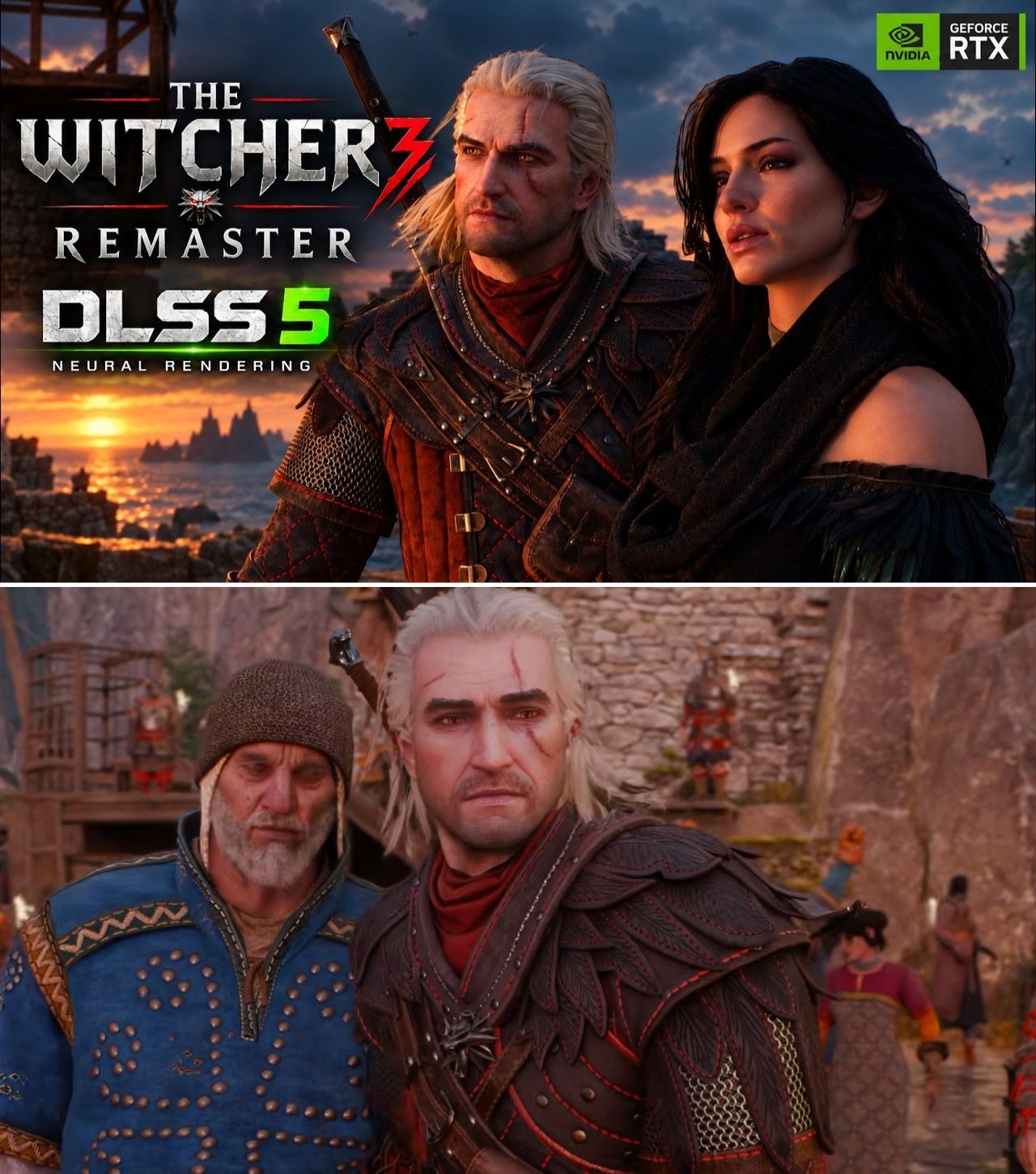
More than a decade after its initial release, The Witcher 3: Wild Hunt continues to refuse its place in gaming history as a static artifact. Through CD Projekt Red’s official Next-Gen Remaster and an unrelenting, fiercely creative modding ecosystem, the Continent has repeatedly transformed into an experimental testing ground for bleeding-edge graphics technology. Yet, nothing has prepared the community for the latest wave of visual showcases leveraging advanced neural rendering frameworks—colloquially termed DLSS 5 configurations—to push Geralt of Rivia’s adventures into uncharted photorealistic territory.
At the center of this technological revolution is a potent mix of deep-learning upscaling, neural texture synthesis, and real-time lighting recreation. But as breathtaking as these custom showcases appear during iconic narrative sequences—such as the somber gatherings at Kaer Trolde during King Bran’s funeral [02:28]—they have simultaneously sparked fierce debates across Reddit, X, and Discord regarding artistic integrity, hardware dependency, and the ethical implications of AI-driven graphics manipulation in classic video games.
The Technical Evolution: From Traditional Rasterization to Neural Synthesis
To understand the magnitude of the recent community discourse, one must examine how rendering technology has evolved over the lifespan of The Witcher 3. When the game launched in 2015, it relied heavily on traditional rasterization techniques, pre-baked lighting maps, and screen-space reflections to construct its sprawling open world of Velen, Novigrad, and Skellige.
The subsequent Next-Gen Update introduced native hardware-accelerated ray tracing, overhauling global illumination and ambient occlusion. However, these features came with a staggering performance penalty, forcing players to rely on early iterations of temporal upscaling (DLSS and FSR) to maintain playable framerates.
The advent of experimental neural rendering configurations represents a monumental paradigm shift. Rather than relying solely on traditional geometry shaders and hand-crafted textures, neural rendering models utilize deep learning algorithms to dynamically synthesize pixels, reconstruct fine environmental details, and predict complex lighting interactions in real-time. In practice, walking through the rugged cliffs of Ard Skellig or engaging in dialogue sequences—such as Geralt and Yennefer discussing the mysterious magical anomaly on Art Skellige [06:09]—reveals an astonishing leap in visual fidelity. Facial skin textures, microscopic fabric threads on historical doublets, and volumetric fog interactions exhibit a level of organic cohesion previously reserved for pre-rendered cinematic CGI.
The Community Firestorm: Technological Triumph vs. Artistic Preservation
Despite the undeniable jaw-dropping aesthetic of neural-rendered showcases, the gaming community remains deeply fractured. On one side of the ideological divide, tech enthusiasts and modding purists champion these advancements as the ultimate evolution of PC gaming. For veterans with thousands of hours logged in the franchise, seeing familiar locations rendered with hyper-realistic clarity breathes invigorating new life into timeless quests. Proponents argue that harnessing modern AI architectures ensures that classic masterpieces can continually match contemporary visual standards without requiring complete ground-up remakes.
Conversely, a vocal faction of artists, purists, and long-time fans have raised serious ethical and aesthetic concerns. Critics argue that aggressive neural reconstruction algorithms can occasionally introduce uncanny valley artifacts, over-sharpened geometry, or subtle alterations to the original art direction established by CD Projekt Red. In certain high-contrast lighting scenarios, AI upscalers have been observed smoothing out gritty environmental imperfections, replacing the bleak, atmospheric grimdark aesthetic of Northern Realms with an overly polished, plastic sheen.
Furthermore, economic and hardware accessibility remains a persistent flashpoint in community forums. Discussions on platforms like r/pcgaming frequently highlight how running these experimental neural rendering pipelines requires ultra-high-end flagship GPUs equipped with massive tensor core capabilities. For the average player operating on mainstream hardware, these hyper-realistic showcases can feel less like an achievable upgrade and more like an exclusive tech-demo flex designed to alienate standard consumers.
Looking Toward the Horizon of Interactive Storytelling
As the boundaries between real-time rendering and cinematic CGI continue to blur, The Witcher 3 Remastered remains the undisputed barometer for PC graphics innovation. What began as a dark fantasy epic in 2015 has evolved into an ever-expanding canvas where cutting-edge artificial intelligence meets legendary game design.
Whether neural rendering tools become the standardized backbone of future open-world RPG development or remain the exclusive playground of elite hardware modders, one reality is certain: Geralt of Rivia’s journey across the Continent will continue to challenge our perceptions of what is digitally possible. As players dissect every frame of these advanced visual showcases, the debate over technology versus art ensures that the White Wolf’s legacy will endure for generations to come.

Leave a Reply