


BOOK PURISTS ARE FURIOUS… but they have it ALL WRONG about Cathy! 😱📜🔥
Netflix’s new blockbuster period drama East of Eden is being brutally slammed online for “ruining” one of the most evil villains in literary history. Critics claim Florence Pugh’s performance made Cathy Ames “too human” and “too sympathetic”—completely altering John Steinbeck’s iconic masterpiece!
But here’s the mind-blowing detail hidden deep within Steinbeck’s original 1952 text that completely turns this internet war on its head… 🤐👀
Was Cathy really born as a heartless “monster,” or did fans completely miss Steinbeck’s subtle, tragic clues about her true psychological breakdown?
Reddit threads are exploding and TikTok literary creators are locked in a ruthless debate! You won’t believe what creator Zoe Kazan just exposed about Chapter 13… 👇🔥
🔥 Uncover the shocking book vs. show truth & read the full breakdown here:
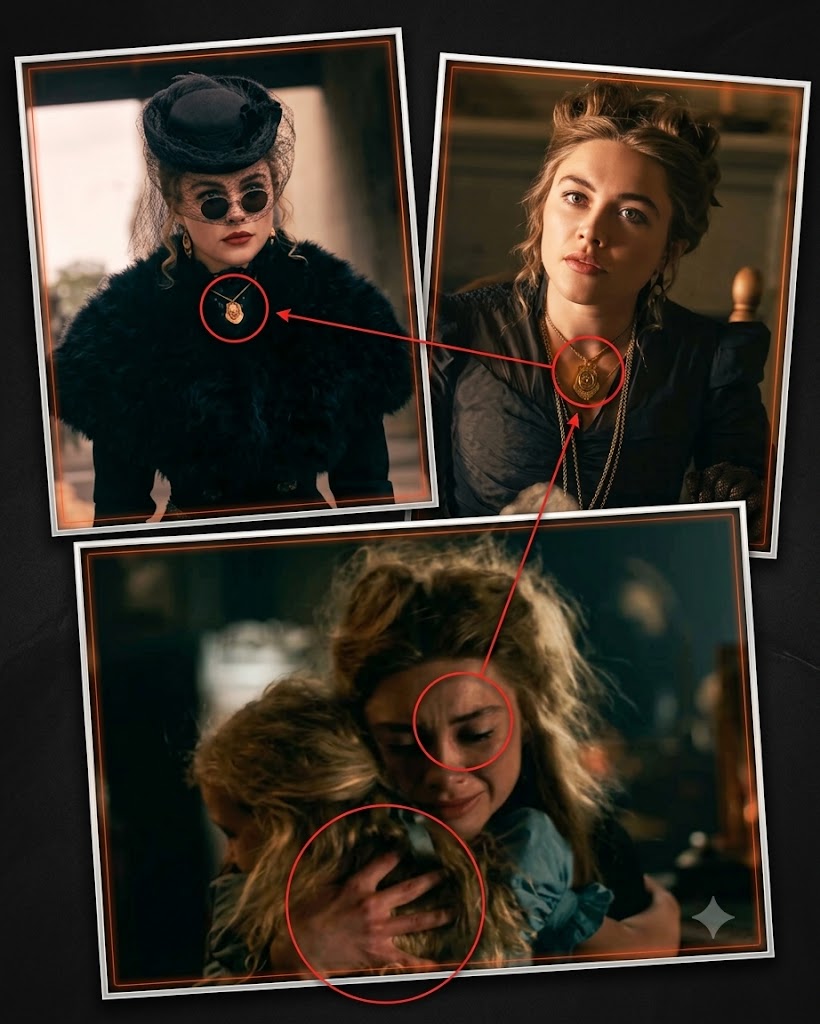
Few characters in 20th-century American literature evoke as much immediate revulsion, intrigue, and debate as Cathy Ames. In John Steinbeck’s 1952 magnum opus East of Eden, Cathy is introduced with an unflinching assertion: she is a “psychic monster,” born without the moral mechanisms that govern human empathy.
When Netflix announced its flagship seven-part adaptation starring Oscar nominee Florence Pugh as Cathy, literary purists braced for impact. Following the show’s global premiere, a wave of backlash erupted across social media platforms, with vocal critics accusing showrunner Zoe Kazan of softening Cathy’s sociopathy, giving her unearned emotional depth, and ultimately “ruining” Steinbeck’s definitive archetype of pure evil.
However, a rigorous examination of Steinbeck’s original text—alongside the creative choices made by Kazan and Pugh—reveals a far more nuanced reality. Far from betraying the source material, Netflix’s portrayal highlights a crucial narrative tension that Steinbeck himself wove into the pages of his novel.
The Accusation: Softening an Unapologetic Monster
The online backlash against Netflix’s East of Eden centers primarily on Cathy’s evolution across the seven-part series.
In the novel, Cathy commits a series of chilling atrocities without a shred of remorse: she manipulates her family, sets fire to her childhood home (killing her parents), seduces and ruins Adam Trask’s brother Charles, shoots Adam point-blank in the shoulder after giving birth to their twin sons, and abandons her children to operate a dark brothel in Salinas.
Critics on social platforms argue that Florence Pugh’s performance introduces elements of vulnerability, tragic isolation, and traumatic trauma-response that were absent from traditional interpretations. In key scenes—such as her final confrontations with Adam (played by Christopher Abbott) and her son Cal—Pugh’s subtle facial expressions and hesitations imply an internal struggle.
For a segment of the fanbase, giving Cathy any semblance of human doubt undermines her role as the ultimate allegory for destructive evil in Steinbeck’s Cain and Abel retelling.
The Defense: What Steinbeck Actually Wrote in Chapter 13 and Chapter 24
While internet commentators claim Netflix rewrote Cathy’s DNA, literary scholars and the show’s creators point out that Steinbeck’s own framing of Cathy was never as monolithic as popular memory suggests.
Although Steinbeck famously opens Chapter 8 by calling Cathy a “monster,” he immediately complicates his own narrator’s authority in later chapters. In Chapter 13 and Chapter 24, Steinbeck explicitly questions whether complete monsterhood is even possible in a human being:
“As a child may be born black-faced or web-footed, so a child may be born with a malformed soul… It is easy to say ‘she was a monster.’ But if she was a monster, then she was an exception, and we can learn nothing from her.”
Furthermore, during her final years in the novel, Cathy wears a small vial of morphine around her neck and harbors an overwhelming, paranoid fear of darkness, light, and judgment—specifically regarding her former mentor, Samuel Hamilton, and her son Aron. Steinbeck depicts a woman consumed by physical agony, severe arthritis, and a deep-seated terror that her worldview (that all people are secretly corrupt and evil) might be wrong.
Showrunner Zoe Kazan addressed this directly in press interviews, explaining that converting prose into dramatic action required showing the interior weight of Cathy’s choices:
“If you put a character on screen who is simply a cartoon villain for seven hours, the audience disconnects,” Kazan stated. “Steinbeck wrote her as an anomaly, but he also wrote her as someone terrified of being exposed. Florence didn’t make Cathy ‘nice’; she made her terrifyingly human. That horror comes from realizing she knows what she is destroying.”
Community Divide: Reddit Debates, TikTok Essays, and X Threads
The debate over Cathy Ames has triggered intense discussion across online literary and television communities:
-
Reddit Analytical Battles: On subreddits such as
r/Books,r/Television, andr/EastOfEden, threads analyzing Pugh’s performance have drawn thousands of comments. Defender posts highlight how Pugh captures Cathy’s performative femininity—using innocence as a weapon while keeping a cold, calculating core underneath. One highly upvoted comment reads: “People complaining that Cathy feels ‘too human’ forgot that in the book, she was terrified of Samuel Hamilton because he could see right through her disguise. Pugh plays the mask and the monster underneath brilliantly.” -
TikTok Literary Analysis: On BookTok and FilmTok, creators have created video essays comparing scenes from the 1955 Elia Kazan film (where Cathy was played by Jo Van Fleet) with Pugh’s 2026 performance. Viral clips showcase how the new series gives appropriate weight to Cathy’s horrific background and survival instincts without pardoning her crimes.
-
X (Twitter) Commentary: On X, fans have praised Pugh’s ability to command scenes through micro-expressions, arguing that her performance elevates the adaptation into a masterclass in psychological drama.
Free Will and the Philosophy of ‘Timshel’
Ultimately, the controversy surrounding Cathy touches the core philosophical thesis of East of Eden: the concept of timshel (“Thou mayest”).
If Cathy were born a pure, unthinking monster with zero agency or internal life, her choices would carry no moral weight—she would simply be an act of nature. By portraying Cathy as a person who actively chooses cruelty over redemption at every fork in the road, Netflix’s adaptation reinforces Steinbeck’s central message: evil is not an inescapable fate, but a deliberate human choice.
Far from ruining the character, Florence Pugh and Zoe Kazan have delivered a Cathy Ames for the modern era—a haunting, complex figure whose darkness is all the more terrifying because it is recognizably human.

Leave a Reply