



🚨 The ultimate plot twist in gaming just dropped—and the internet is completely losing its mind!
Ubisoft has officially flipped the switch from diversity quotas straight into high-speed automation, promoting their former Chief Diversity and Inclusion Officer to Chief AI Enablement Officer! 🤯
While major studios are scrambling to slash bloated budgets and ditch the $400 million corporate messes, the gaming world is splitting right down the middle. Activists are declaring war, massive unions are clashing over generative tech, and the great “corporate Darwinism” of the industry has officially begun. Is this the brilliant survival move that saves AAA gaming, or is it a catastrophic disaster waiting to happen?
The full story behind “Project Mother Brain,” the massive internal shakeups, and why developers are terrified of what comes next will leave you speechless. 👇
🔥 [Click here to uncover the full drama and see what’s really happening behind closed doors!]
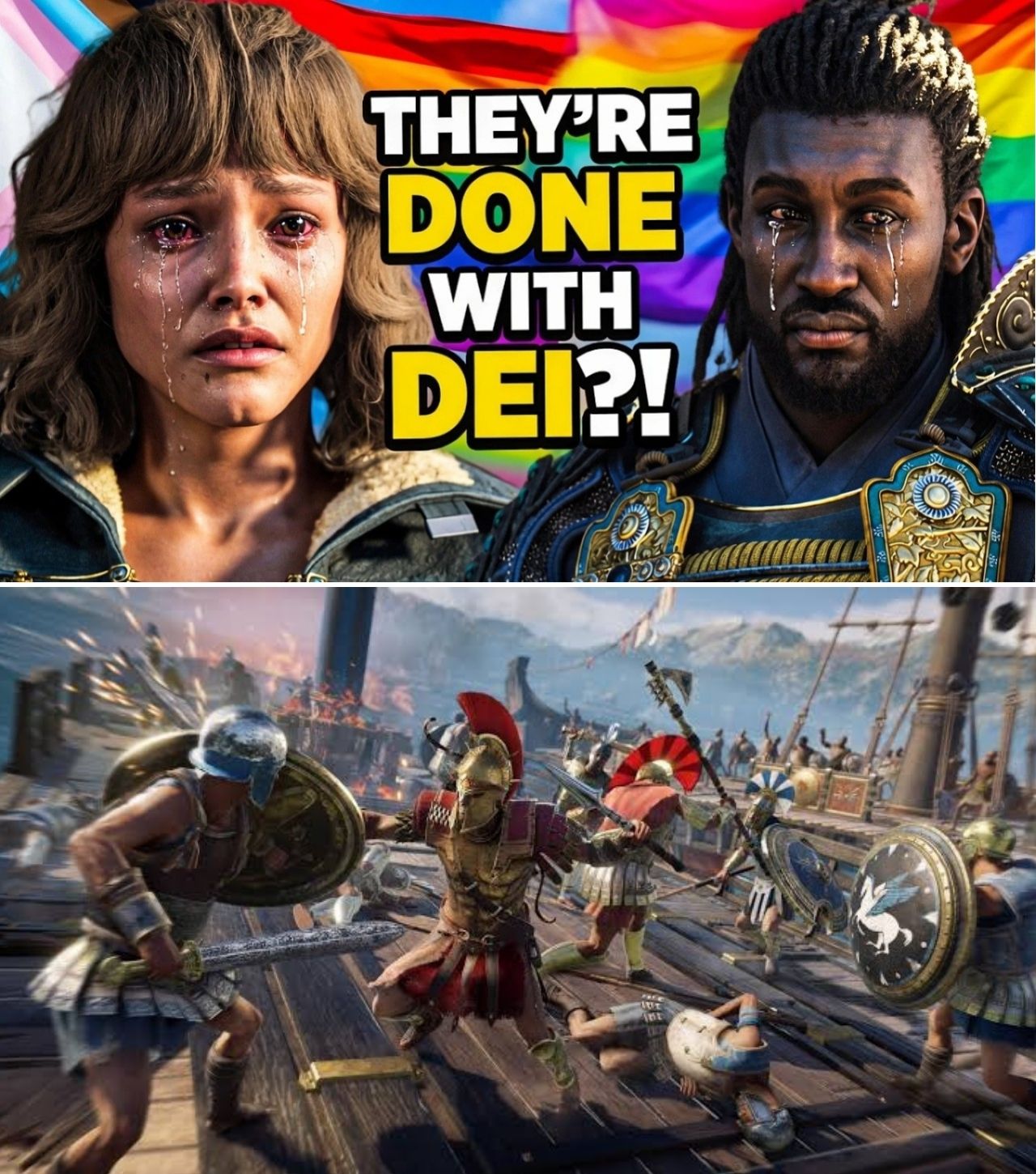
The video game industry is undergoing a violent, high-stakes ideological and structural correction. In what many industry analysts are calling the most ironic corporate pivot of the decade, French video game giant Ubisoft has officially overhauled its executive leadership, transitioning away from heavily emphasized corporate social engineering and diving headfirst into artificial intelligence automation.
At the center of this industry earthquake is Rasha Sika, Ubisoft’s former Chief Diversity and Inclusion (DEI) Officer, who has officially been promoted to Chief AI Enablement Officer after a five-year tenure with the company. The move has sent shockwaves through social media channels, igniting fierce debates across Reddit, X (formerly Twitter), Discord, and specialized gaming forums regarding the future of creative labor, corporate accountability, and the sustainability of modern blockbuster game development.
The Anatomy of a Pivot: From “Flavor of the Week” to Hard Economics
For nearly a decade, the AAA video game landscape has operated under a specific corporate framework characterized by massive, ballooning budgets, expanded headcounts, and an intense focus on ideological compliance and diversity hiring metrics. However, mounting economic pressures, skyrocketing development costs—frequently reaching upwards of $400 million per title—and shrinking profit margins have forced major publishers to re-evaluate their operational models.
Industry commentators and cultural observers, including recent breakdowns by digital media platforms like Clownfish TV, have pointed out that the current economic squeeze is acting as a brutal filter. “This just shows that the DEI stuff is not the flavor of the week anymore,” media analysts noted during recent industry broadcasts. “Gaming going forward is going to be about getting things done more efficiently and cheaper, and we’re not going to have these $400 million bloated messes with a bunch of people that don’t need to be there.”
Sika herself addressed the monumental transition on professional networking platforms, stating that artificial intelligence is poised to be “one of the biggest shifts across tech, culture, and society,” and emphasizing that her new goal is to ensure teams feel equipped and confident to navigate a changing technological landscape. Yet, the juxtaposition of a former top DEI executive stepping in to spearhead an aggressive AI rollout has fueled intense skepticism from both sides of the political aisle. Critics argue that the administrative class responsible for managing corporate culture initiatives is now pivoting to oversee the very technology threatening to make traditional support roles obsolete.
Enter “Mother Brain”: Ubisoft’s Generative AI Strategy
The executive shuffle closely follows internal disclosures regarding Ubisoft’s sweeping generative AI initiative, ominously and knowingly codenamed “Mother Brain”—a deliberate homage to the rogue supercomputers featured in classic sci-fi franchises like Metroid and Phantasy Star.
Initially developed as an internal experiment, Ubisoft officially announced on October 7th that Mother Brain is transitioning into a dedicated global corporate entity tasked with embedding generative AI directly into core gameplay experiences across every single internal development team.
While corporate leadership has publicly reassured writers, designers, and actors that generative AI is intended as a creative tool rather than a wholesale replacement for human talent, skepticism remains high. Internal documentation indicates that Mother Brain’s implementation will span multiple tiers of development:
-
Dynamic Character Interactions: Crafting reactive squadmates and non-player characters capable of adapting intelligently to player strategies in real time.
-
Procedural World-Building: Powering living, breathing game worlds that evolve independently of scripted pathfinding.
-
Under-the-Hood Optimization: Streamlining complex behavior trees, enhancing personal onboarding systems, and automating accessibility features.
Despite corporate assurances, veterans of the creative arts are sounding alarms. Critics argue that while AI tools can successfully optimize repetitive production pipelines, code faster, and alleviate the grueling crunch culture plaguing modern game development, over-reliance on automated generation risks flooding the market with homogenized “slop” devoid of genuine human artistic vision.
Industry-Wide Friction: Unions, Resistance, and Corporate Darwinism
Ubisoft is not alone in its aggressive embrace of automation. Major Japanese publishers like Capcom have similarly announced plans to repurpose proprietary engines—such as the acclaimed RE Engine—to leverage AI-driven development tools. However, the cultural reception differs starkly between regions. While Japanese studios have generally integrated automation to support stable, highly profitable development cycles without massive structural collapses, Western studios are facing severe labor friction.
A prime parallel to Ubisoft’s internal turbulence can be seen across the tabletop and digital gaming sectors. Recent unionization efforts at companies like Wizards of the Coast (subsidiary of Hasbro) have brought underlying labor grievances to light. Beyond traditional demands for better pay, job security, and manageable working hours, union organizers have fiercely contested corporate mandates requiring the integration of AI tools into game design, Magic: The Gathering card development, and Dungeons & Dragons expansions.
Industry insiders note a fundamental philosophical deadlock within entertainment workspaces. A significant portion of creative professionals harbor a deep moral aversion to generative AI computing, drawing a sharp line between traditional digital tools like Photoshop or 3D modeling software and automated intelligence engines. Commentators have characterized this resistance through the lens of economic natural selection: “If you are so anti-AI that you will not touch anything using AI, good fucking luck… because everybody’s using it now and it’s going to become an expectation.”
As publishers answer to boards of directors and shareholders demanding fiscal responsibility in the wake of multi-million-dollar studio closures and mass layoffs, companies are increasingly unwilling to subsidize bloated payrolls. The economic reality is stark: when independent studios can produce highly profitable, critically acclaimed titles with fraction-of-the-budget teams utilizing modern technological efficiencies, traditional AAA publishers can no longer justify maintaining oversized administrative and support structures.
The Road Ahead: A Streamlined, Automated Future
As the dust settles on Ubisoft’s executive restructuring, the broader implications for the entertainment sector are becoming clear. The era of unchecked corporate expansion and ideological staffing quotas is rapidly drawing to a close, replaced by a ruthless pursuit of operational efficiency, technological integration, and financial sustainability.
Whether Rasha Sika’s transition from championing corporate inclusion to directing AI enablement will successfully steer Ubisoft away from financial distress remains to be seen. What is certain, however, is that the resistance to automation is giving way to widespread adoption. As generative AI embeds itself into the foundation of game production, the future of interactive entertainment will belong strictly to those adaptable enough to wield the tools—leaving traditionalists facing an unforgiving economic reality.

Leave a Reply