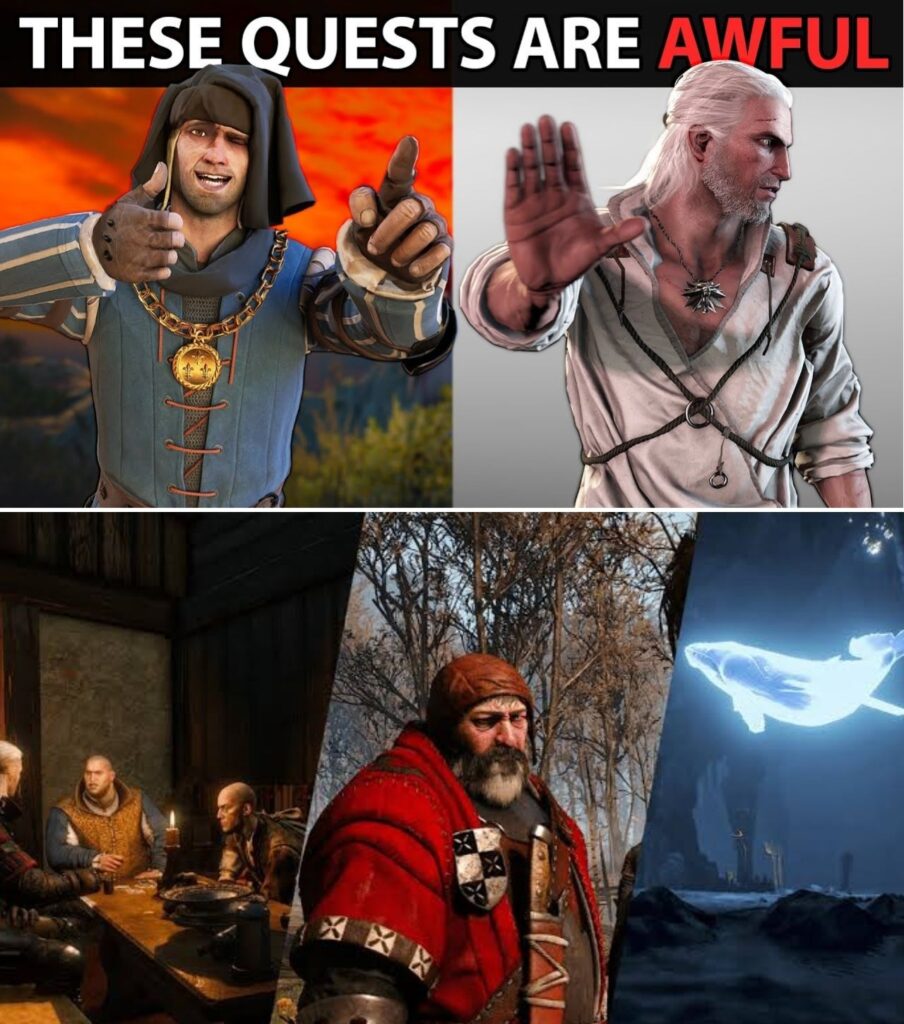



🚨 CD PROJEKT RED’S GREATEST SIN? THE ONE WITCHER 3 QUEST THAT ALMOST RUINED A MASTERPIECE! 🚨
How did a game praised for near-flawless narrative design end up delivering a quest so bafflingly broken that millions of players are still screaming on Reddit years later? 🤬💥
We all know The Witcher 3: Wild Hunt set the gold standard for RPGs. But buried inside the Next-Gen experience lies a sequence of missions so painful, so infuriating, and so fundamentally flawed that even die-hard fans are begging CDPR to scrub them from existence. From NPC escort missions with suicidal AI like Albert in Bitter Harvest, to grueling 2-hour fetch-fest nightmares like Wine Wars in Toussaint… one quest stands above them all in sheer, unadulterated community hatred.
And no, it’s not just about annoying mechanics—it’s about a catastrophic character betrayal that turned one of the smartest criminal masterminds in the Northern Realms into an absolute room-temperature IQ amateur. 🧠📉
Why did Sigismund Dijkstra suddenly lose every single brain cell at the climax of Reason of State? Why did CDPR force players into an impossible choice that completely broke the lore, forcing Geralt of Rivia to watch his closest allies get slaughtered or butcher a fan-favorite mastermind? The truth behind CDPR’s rushed development deadlines and scrapped Nilfgaard content is finally exploding back into the spotlight, and the fandom is completely divided! 💣
Which quest made you rage-quit your Next-Gen playthrough? Drop your thoughts, or click below to uncover the full breakdown of the 7 most hated quests in Witcher history! 👇🔥
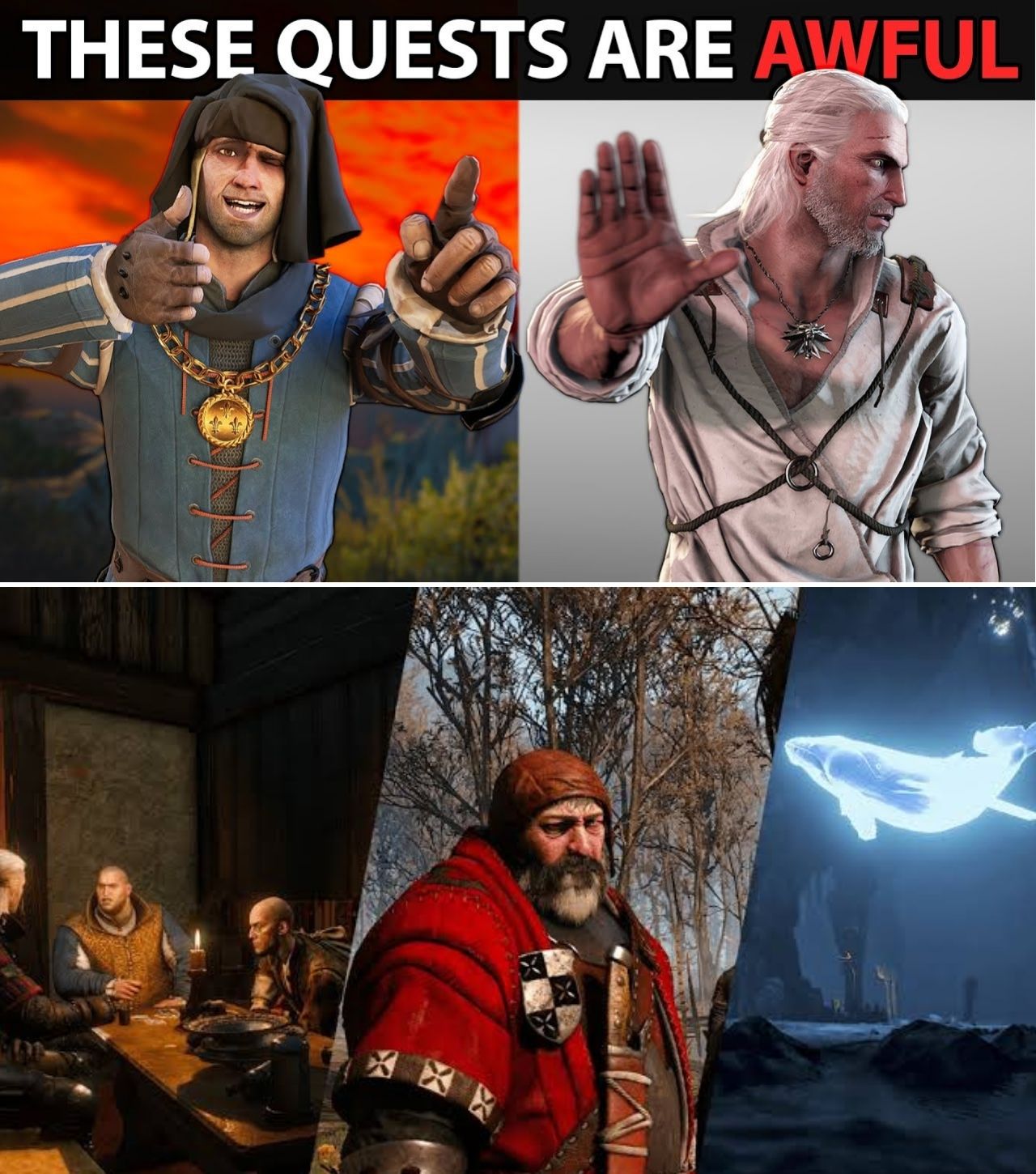
Even a decade after its original release and following its critically acclaimed Next-Gen Update, CD Projekt Red’s The Witcher 3: Wild Hunt remains widely recognized as one of the greatest accomplishments in modern role-playing video games. Boasting nearly 400 meticulously crafted quests, the title revolutionized open-world storytelling by treating side missions with the same narrative gravity as its main storyline. Yet, across forums like Reddit, Discord servers, and YouTube commentary, a persistent controversy lingers among millions of players: the existence of a select group of quests so universally despised that they stand out like glaring blemishes on a masterpiece.
A deep dive into community sentiment, featured prominently in analysis by prominent Witcher creator Neon Knight, reveals a fascinating divide between player expectations and development realities. While CD Projekt Red managed to make 99% of its content feel organic, tight deadlines, escort mechanics, and rushed narrative conclusions ultimately birthed quests that test the patience—and sanity—of even the most loyal Witchers.
The Controversial Community Polarizers: ‘Broken Flowers’ and ‘Wandering in the Dark’
Before diving into the objective bottom of the barrel, community discussions on r/witcher and the official CDPR forums frequently highlight two major early-game quests that divide the player base: Broken Flowers and Wandering in the Dark.
Broken Flowers, an early-game Novigrad main quest where Geralt of Rivia and Zoltan Chivay search for the missing bard Dandelion by interviewing a long line of his former lovers, is routinely slammed by players for its tedious structure. Critics point out that the quest forces players into an overwhelming barrage of dialogue with virtually zero combat to break up the pace. However, game analysts defend the mission, noting that it serves a critical narrative purpose for newcomers to the franchise. CDPR structured the quest to re-introduce Dandelion’s chaotic charisma while subtlety showcasing his character growth through Priscilla. Furthermore, many players remain unaware that several sub-objectives—such as speaking to the tailor Elihal or the schoolteacher—are entirely optional, allowing veteran players to streamline the sequence significantly on subsequent playthroughs.
On the other hand, Wandering in the Dark, the sprawling subterranean crawl alongside the sorceress Keira Metz in Velen, earned its notorious reputation due to its atmospheric claustrophobia and punishing difficulty spikes for under-leveled players on Death March difficulty. Forums are filled with accounts of players becoming trapped in gargoyle and Wild Hunt boss fights without adequate potions or health items. Yet, despite spawning endless memes about player frustration, the quest remains praised by narrative purists for the top-tier banter between Geralt and Keira and its haunting visual design.
The Escort Nightmares: ‘Bitter Harvest’ and ‘For Fame and Glory’
When shifting from narrative pacing to purely mechanical frustration, two side quests immediately draw the ire of the player base due to fragile NPC health pools and flawed AI behavior: Bitter Harvest and For Fame and Glory.
In Velen, near the Border Post bridge leading into Redania, players encounter Bitter Harvest, a quest where Geralt must defend a group of scavengers from waves of Necrophages (Devourers and Ghouls). The core issue stems from the quest’s primary target, a foreman named Albert. On any difficulty—even Story Mode—Albert possesses virtually no defense and dies in a single hit from an enemy swipe. Should Albert perish, the player loses out on a crucial discount for the Transit Pass needed to enter Novigrad, forcing countless players into frustrating quick-load cycles. Compounding the issue is the quest’s bizarre pacing; between each enemy wave, players are forced to wait up to two minutes in total silence while the game engine slowly trickles in the next set of monsters, leading many first-time players to assume the mission has bugged out entirely.
A similar catastrophe occurs in Skellige during For Fame and Glory, an unmarked quest where Geralt meets two Skellige warriors outside a cave filled with Devourers. Upon accepting the quest, the two warriors recklessly charge inside, instantly getting killed by exploding necrophages before Geralt can even draw his silver sword. Players have resorted to bizarre workarounds—such as casting the Axii Sign on their own allies to stun them while Geralt runs ahead to clear the cave—to prevent the quest from automatically failing.
The Fatigue Factor: ‘Wine Wars’ in Toussaint
While the Blood and Wine expansion is frequently cited as one of the greatest DLC packages in gaming history, it is not immune to narrative bloat. The prime offender is Wine Wars, a long-form side quest involving two rival vineyard owners, Liam de Coronata and Matilda de Vermentino.
On paper, Wine Wars offers an engaging setup: two squabbling aristocrats accuse each other of sabotaging their respective estates, with Geralt hired to investigate. The dialogue and dynamic between Liam and Matilda are undeniably entertaining. However, the mission devolves into a grueling two-hour checklist that exposes the game’s rare instances of artificial padding.
Over 50 percent of the quest involves repetitive travel across the Toussaint map, clearing out identical clusters of Archespores—one of the most annoying plant-based enemies in the game—across 11 separate sub-objectives. Just as players complete the checklist and expect a satisfying narrative resolution, the game unexpectedly hits them with another set of five identical fetch-and-clear tasks. Rather than unfolding a captivating mystery, the sabotages are tied to a dead knight, leaving the player with hours of monotonous busywork that lacks the dynamic storytelling usually associated with CDPR’s contract design.
The Escort Torment of the Main Story: ‘The Isle of Mists’
The emotional climax of The Witcher 3 centers around Geralt finally reuniting with his adopted daughter, Ciri, on the elusive Isle of Mists. The final cinematic sequence of this quest is universally hailed as one of the emotional high points of the entire trilogy. However, the path required to reach that moment is remembered as a agonizing slog.
Upon arriving at the mysterious island, Geralt discovers a locked hut housing four dwarves. Before they will open the door, they send Geralt on a tedious fetch quest across the fog-drenched island to locate their missing companions. This sequence introduces Gaspard, a narcoleptic dwarf stationed at a nearby lighthouse.
What follows is an excruciating escort mission where Geralt must slowly lead Gaspard across hostile terrain while the dwarf falls asleep every ten seconds. Forced to constantly turn around and wake Gaspard up while dodging Tanglers and Foglets, players find the emotional tension of searching for Ciri completely derailed by a mechanic widely considered one of the worst design tropes in action-RPGs.
The Ultimate Sin: ‘Reason of State’ and the Character Assassination of Dijkstra
Standing far above every other entry as the single most hated quest in The Witcher 3 history is Reason of State. While other missions suffer from annoying mechanics or repetitive objectives, Reason of State commits what lore enthusiasts consider a cardinal sin: catastrophic narrative collapse born from rushed development.
Toward the end of the game’s final act, Geralt becomes embroiled in a high-stakes political plot to assassinate the mad King Radovid V of Redania. The quest was tasked with resolving the complex geopolitics of the Northern War—a storyline severely impacted when CD Projekt Red ran out of development time and was forced to cut vast amounts of Nilfgaard-related content and entire storylines from the game’s third act.
While the actual assassination of King Radovid is executed with tension and dramatic flair, the quest’s final five minutes contain a scene that sparked outrage across Reddit, X, and the official Witcher forums.
Following Radovid’s death, Sigismund Dijkstra—the former head of Redanian Secret Service and one of the most brilliant, calculating masterminds in Witcher lore—turns on his co-conspirators, Vernon Roche, Ves, and Thaler. Dijkstra reveals his intention to rule the North himself and orders his henchmen to execute Roche and his team on the spot.
What makes this scene so universally reviled is how fundamentally it betrays Dijkstra’s established intelligence:
-
Physical Presence: Dijkstra is a master spy, not a combatant. Suffering from a permanently crippled leg (courtesy of Geralt in the original novels), Dijkstra would never personally show up to a frontline execution when he could easily send proxies.
-
Tactical Idiocy: Had Dijkstra simply waited five minutes for Geralt to leave the premises, he could have executed Roche and Ves without any interference. Instead, he reveals his betrayal directly in front of a mutated Witcher capable of slaughtering entire armies single-handedly.
-
Flawed Logic: Dijkstra possesses deep personal knowledge of Geralt’s code and history. The idea that Dijkstra would expect Geralt to simply stand aside and watch his long-time comrades be butchered contradicts every piece of lore established across the books and games.
The resulting standoff forces players into a meaningless battle where Dijkstra—a character celebrated for his superhuman political intellect—is casually sliced down in seconds like a common street thug. The moment is widely viewed as a hasty attempt to tie up loose political threads, sacrificing one of the franchise’s best characters on the altar of rushed development schedules.
The Verdict: A Testament to Excellence
The fiery debates surrounding quests like Reason of State, Wine Wars, and Bitter Harvest ultimately highlight a unique truth about The Witcher 3: Wild Hunt. In almost any other action-RPG, minor escort glitches or bloated side quests would pass by unremarked. But because CD Projekt Red set such an impossibly high standard for narrative design, its rare failures stand out in stark contrast.
As players continue to revisit the Next-Gen edition on modern hardware, these seven quests serve as a fascinating historical record of game development—a reminder that even within one of gaming’s greatest achievements, the path through the Continent is rarely without its bumps.

Leave a Reply