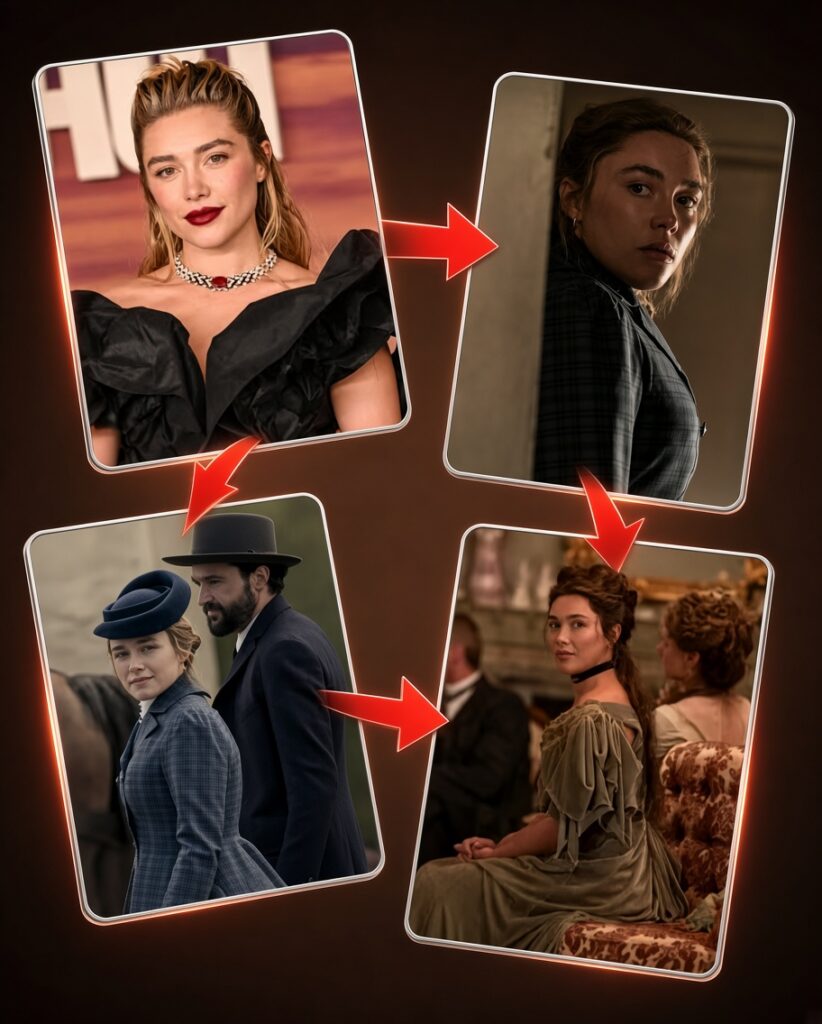



🚨 “SHE IS NOT A MONSTER. YOU JUST DON’T UNDERSTAND HER.” 🚨
Florence Pugh just said the unthinkable about one of history’s most hated female villains—and literary purists are losing their minds! 😱🔥
For over 70 years, John Steinbeck’s Cathy Ames in East of Eden has been branded as pure, unadulterated evil: a cold-blooded sociopath who manipulates, destroys, and abandons everyone in her path. But as Netflix gets ready to roll out its massive new adaptation, Oscar nominee Florence Pugh is BLOWING UP the narrative. 💣👀
In a shocking new interview, Pugh opened up about a deeply personal breakthrough she had while stepping into Cathy’s shoes. She flat-out REFUSES to view Cathy through the same lens as generations of readers before her—and what she unearthed beneath the character’s terrifying darkness will leave you breathless. 🥀😳
Is Florence right to defend a woman who ruined every life she touched? Or did she completely misread literature’s most notorious villain?
The internet argument is reaching a boiling point… 👇💥
🔥 Read Florence Pugh’s full explosive defense, the psychological breakdown, and fan reactions HERE:
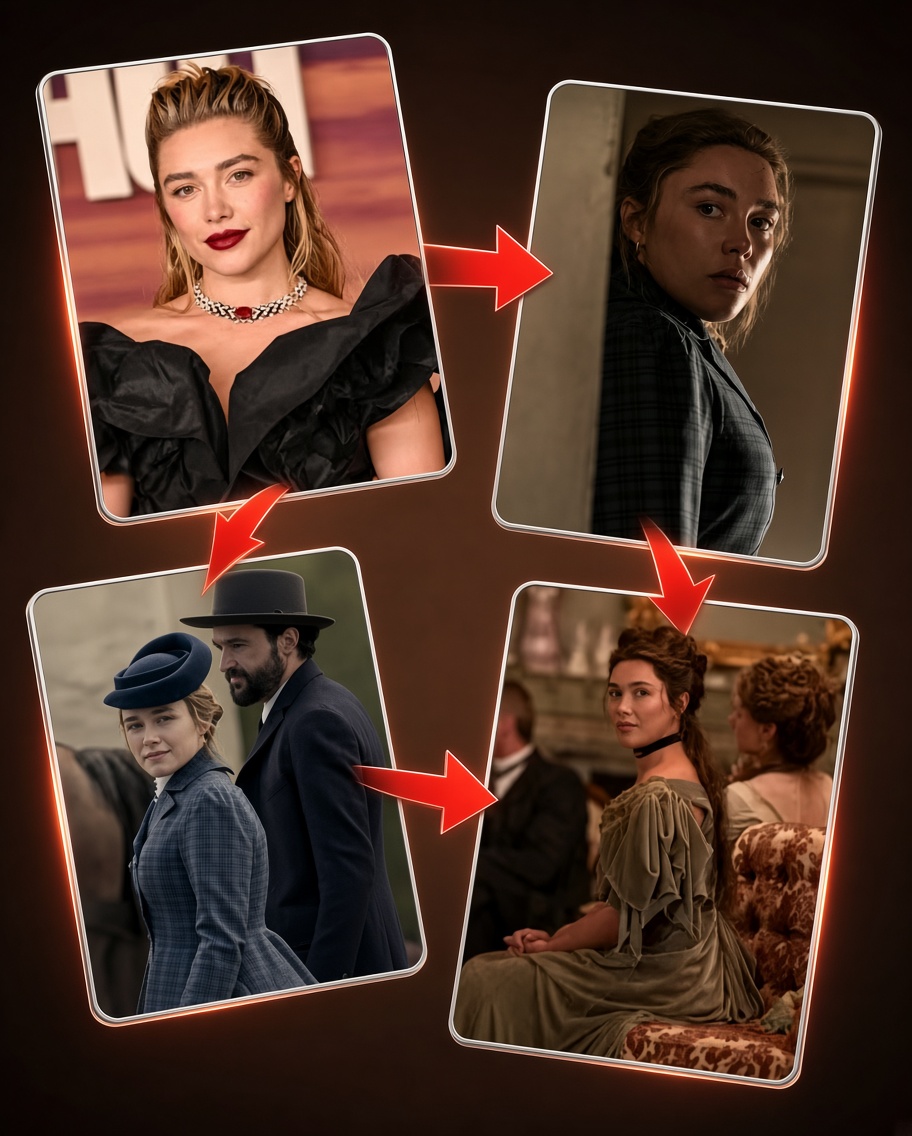
For over seven decades, literary history has rendered a near-unanimous verdict on Cathy Ames: she is cold, remorseless, and pure evil. Since John Steinbeck published East of Eden in 1952, critics and casual readers alike have classified Cathy—who later assumes the moniker Kate—as the archetype of the irredeemable female monster. Even Steinbeck himself explicitly wrote in the novel’s early chapters that Cathy possessed a “malformed soul,” born without the moral architecture that governs human empathy.
Yet, as Netflix prepares to launch its monumental seven-part prestige miniseries adaptation, Oscar-nominated actress Florence Pugh is forcefully challenging 70 years of literary consensus.
Taking on what many consider the most complex and daunting role of her career, Pugh has revealed that she refuses to view Cathy as a flat, villainous sociopath. Instead, her deeply personal, nuanced approach unearths a tragic portrait of survival, agency, and female autonomy operating within a deeply restrictive, patriarchal world—a controversial reinterpretation that is setting off massive debates among literature scholars and streaming audiences alike.
Deconstructing Literature’s Most Hated Woman
In Steinbeck’s original novel, Cathy Ames is introduced as a psychological terror who uses her delicate charm to manipulate, destroy, and exploit the men around her. She burns down her family’s home, shoots her husband Adam Trask (Christopher Abbott) shortly after giving birth to twin boys, and eventually runs a notoriously dark brothel in Salinas, California.
For generations, readers viewed Cathy as a walking theological metaphor for the Serpent in the Garden of Eden—an unnatural force of pure malice. However, when Florence Pugh immersed herself in the script developed by showrunner Zoe Kazan, she discovered something unexpectedly personal within the character’s tragic trajectory.
“If you approach a character deciding they are simply ‘evil,’ you’ve already failed them as an actor,” Pugh noted in a recent behind-the-scenes discussion. “Cathy is terrifying, yes, but her choices are born out of a desperate need for control in a world that constantly seeks to cage, domesticate, and own her. Refusing to look at her through a male lens doesn’t excuse her cruelty, but it humanizes her fight for self-preservation.”
                  ┌──────────────────────────────────────────────┐
                  │       PERSPECTIVE SHIFT ON CATHY AMES        │
                  └──────────────────────┬───────────────────────┘
                                         │
         ┌───────────────────────────────┴───────────────────────────────┐
         ▼                                                               ▼
┌─────────────────────────────────┐                             ┌─────────────────────────────────┐
│     TRADITIONAL LITERARY LENS   │                             │    FLORENCE PUGH'S RE-READING   │
├─────────────────────────────────┤                             ├─────────────────────────────────┤
│ • Born a sociopath/monster      │                             │ • Driven by severe trauma & fear│
│ • Symbol of inherited evil      │     THE EMOTIONAL RE-EVAL   │ • Craves complete self-agency   │
│ • Malevolent force without cause│ ◄─────────────────────────► │ • Rejects patriarchal ownership │
│ • Flat theological antagonist   │                             │ • Trapped product of her era    │
└─────────────────────────────────┘                             └─────────────────────────────────┘
The Personal Connection: Female Agency and Autonomy
What did Pugh find so personally compelling about a woman so universally reviled? According to production insiders, Pugh zeroed in on Cathy’s refusal to surrender to the societal roles forced upon women in the late 19th and early 20th centuries.
In East of Eden, Adam Trask does not fall in love with the real Cathy; he falls in love with his idealized fantasy of a submissive, pious wife. When Adam forcibly moves her to California to live out his suburban dream, Cathy’s violent rejection of motherhood and marriage can be understood not merely as cruelty, but as a horrific, desperate rebellion against emotional imprisonment.
Key Pillars of Pugh’s Interpretation:
-
The Rejection of Ownership: Cathy’s hostility spikes whenever men attempt to save, define, or possess her.
-
Trauma as an Armor: Pugh interprets Cathy’s extreme emotional detachment as a learned survival technique developed after surviving physical abuse in her youth.
-
Control Over Her Fate: Even in running a brothel, Cathy constructs a space where she holds absolute power over the wealthy, hypocritical men of high society.
Internet Firestorm: Fandom and Scholars at War
Pugh’s sympathetic re-evaluation of Cathy Ames has sent shockwaves through online discussion groups, igniting fierce debates across Reddit, X, and TikTok.
Reddit: Revisionist History or Modern Genius?
On r/Books and r/Television, literary purists and modern TV fans are locked in debate. Traditionalists argue that softening Cathy’s edges undercuts Steinbeck’s biblical allegory of Cain, Abel, and the fundamental battle between good and evil.
“Steinbeck literally tells the reader that Cathy was born a monster,” wrote one user on Reddit. “Trying to turn her into a misunderstood feminist anti-hero misses the entire moral thesis of the book.”
Conversely, another top-voted comment defended Pugh’s vision:
“Steinbeck was a male author in the 1950s writing about a 19th-century woman. Florence Pugh and Zoe Kazan aren’t changing what Cathy does; they are giving her internal life and logic. You can be a terrible person and still be a human being.”
TikTok and X: The Rise of the Anti-Heroine
On social media platforms populated by younger audiences, Pugh’s take has turned Cathy Ames into a viral sensation. Video edits framing Cathy alongside other morally ambiguous cultural figures—like Amy Dunne from Gone Girl or Villanelle from Killing Eve—have racked up millions of views, with users celebrating Pugh’s refusal to play “palatable” female characters.
Comparative Matrix: Interpreting Cathy Ames Across Eras
| Dimension | John Steinbeck’s 1952 Novel | Jo Van Fleet (1955 Film Adaptation) | Florence Pugh (2026 Netflix Series) |
| Primary Motivation | Innate malice, sociopathy, destruction | Cold bitterness, tragic regret | Autonomy, survival, extreme psychological control |
| View of Male Characters | Preys to be exploited | Disdained former life | Captors to be outmaneuvered |
| Emotional Core | Sterile, empty | Hardened, defensive | Volatile, traumatic, fiercely protective of self |
| Societal Context | Allegorical monster | Tragic fallen woman | Complex anti-heroine fighting domestic confinement |
Redefining the Literary Villain for Modern Television
By daring to find humanity within literature’s most feared female character, Florence Pugh is doing what the finest actors have always done: refusing to judge the person she plays.
Whether audiences walk away from Netflix’s East of Eden feeling horror, pity, or a disturbing mixture of both, Pugh’s performance guarantees that Cathy Ames will no longer be dismissed as a simple monster. Instead, she stands as a searing, unforgettable mirror reflecting the dark costs of total control, unhealed trauma, and the human fight for freedom.

Leave a Reply