


🚨 THE ‘EAST OF EDEN’ ENDING EXPLAINED… AND YOUR MIND WILL BE COMPLETELY BLOWN. 🚨
Netflix’s brutal prestige drama just dropped its finale, and fans are in absolute freefall over three massive, unanswered questions! 🤯🔥
We all watched Florence Pugh’s chilling portrayal of Cathy Ames, but the final episodes left dark, lingering mysteries that the show refused to spell out for you. What actually happened behind closed doors between Cathy and Charles on that fateful night? Why should a seemingly random, disturbing scene from a five-year-old’s childhood keep you awake at night? And how on earth did Aron—after everything that went down—end up inheriting the entire empire? 🩸🤫
The internet is currently at war over the hidden symbolism, deleted subtext, and the true meaning of Timshel. If you missed the subtle clues buried in the final minutes, you missed the entire point of the saga.
Check the theories tearing up Reddit and TikTok right now… 👇💥
🔥 Uncover the 3 burning finale questions, secret book differences, and the explosive truth HERE:
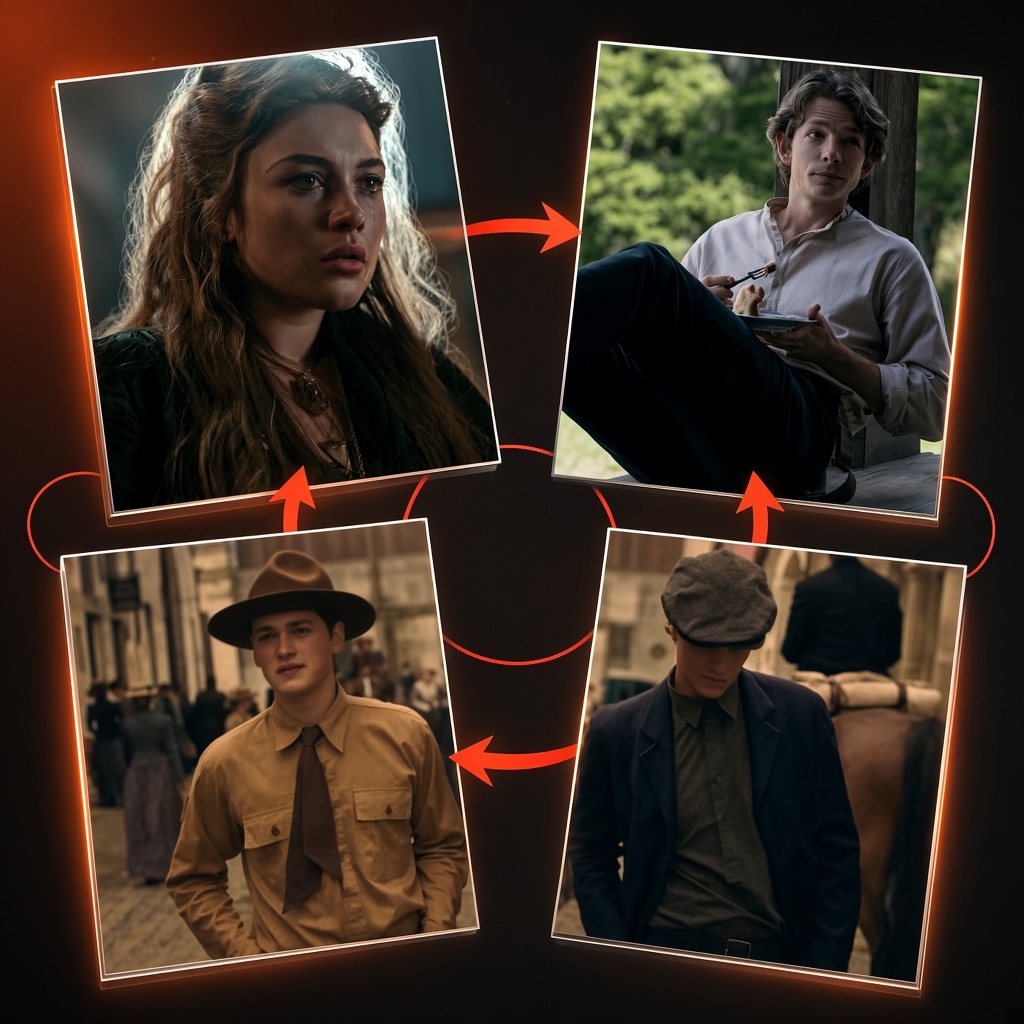
When Netflix greenlit its ambitious, star-studded adaptation of John Steinbeck’s masterwork East of Eden, showrunner Zoe Kazan faced a monumental creative challenge: how to compress a sprawling, generational epic about free will, hereditary sin, and moral decay into a tightly wound television format without losing its psychological depth.
With Florence Pugh leading the charge as the enigmatic, chilling Cathy Ames—alongside Christopher Abbott as Adam and Mike Faist as Charles—the seven-part miniseries concluded its run by trading tidy resolution for haunting ambiguity. Rather than tying up every narrative loose end, the finale deliberately leaves three profound, unsettling questions hanging over the Trask family legacy.
For viewers navigating the aftermath of the series finale, unpacking these three pivotal mysteries reveals layers of tragic subtext that redefine the entire story.
1. What Really Happened Between Cathy and Charles?
The dark, unspoken tension between Charles Trask (Mike Faist) and Cathy Ames remains one of the narrative’s most explosive pressure points. In both Steinbeck’s original novel and Netflix’s adaptation, the exact nature of their dynamic before Cathy’s escape is shrouded in psychological warfare, mutual recognition of depravity, and physical betrayal.
While the series avoids spelling out every explicit detail on screen, the psychological implications are staggering:
-
The Shared Predator Instinct: Charles and Cathy recognize that neither of them is bound by conventional morality or Adam’s idealistic fantasies.
-
The Power Dynamic Shift: When Charles confronts Cathy, it isn’t just about jealousy over Adam—it is a brutal clash of survival instincts. Cathy attempts to exert psychological dominance, but Charles’s unhinged volatility forces her into a corner.
-
The Echo in the Bloodline: What happened behind closed doors permanently fractures Charles’s psyche, leaving him burdened with a secret that feeds his lifelong guilt and alienation. It establishes that Charles was both Cathy’s victim and her reluctant mirror.
2. Why Does the Scene at Age Five Matter so Much?
One of the most debated artistic choices in the finale involves a brief, deeply unsettling flashback sequence focusing on a character at age five—a stylistic echo of developmental trauma that underpins the entire generational curse of the Trask family.
                      ┌──────────────────────────────────────────┐
                      │    THE ROOTS OF INTERGENERATIONAL TRAUMA │
                      └────────────────────┬─────────────────────┘
                                           │
         ┌─────────────────────────────────┴─────────────────────────────────┐
         ▼                                                                   ▼
  [Cyrus Trask's Brutality]                                           [The Five-Year-Old Threshold]
  Authoritarian parenting that                                        The crucial developmental window where
  instilled violent survival instincts                                empathy is either nurtured or permanently
  in both Adam and Charles [1.2.2]                                    severed in a child's psyche [1.2.2]
To casual viewers, the scene may feel like a disjointed artistic flourish. However, literary analysts and fans on discussion forums have pointed out its thematic necessity:
-
The Genesis of Free Will (Timshel): Steinbeck’s core thesis centers on the Hebrew concept of Timshel—”thou mayest” choose to triumph over sin. The childhood scene illustrates the precise moment a child learns to either repeat generational abuse or break the cycle.
-
Explaining the Unexplained: It serves as a psychological key, explaining why adult characters like Adam fall into paralyzing denial while Charles succumbs to destructive rage. Trauma is not merely inherited; it is systematically taught in early childhood.
3. How Did Aron End Up Inheriting Everything?
Perhaps the most bitter pill for viewers in the finale is the ultimate distribution of power and property: how Aron Trask—despite his fragility, his desperate flight from reality, and the catastrophic collapse of his parents’ marriage—winds up inheriting the core of what the Trasks built.
In the sweeping conclusion of the saga, we see the tragic irony of inheritance:
-
The Burden of Purity: Aron was shielded by Adam from the brutal realities of their mother’s true nature and the family’s dark history. This artificial bubble left him profoundly unequipped for the real world, leading to his dramatic unraveling.
-
The Cost of Survival: While Cal (or the adapted equivalent focal heirs) fought tooth and nail through the mud of moral compromise, inheritance often goes to the one who remains legally or symbolically “pure,” regardless of psychological fitness.
-
The Final Irony: Aron’s inheritance is not a reward; it is a gilded trap. Handing the keys of a fractured empire to someone psychologically unmoored highlights the novel’s bleak commentary on generational wealth built on top of unresolved family trauma.
Fandom Discourse: Reddit, X, and TikTok Pick Apart the Finale
The ambiguity of the finale has turned digital spaces into virtual seminar rooms, with audiences dissecting every frame of Pugh’s performance and the series’ chilling final shots.
Reddit: A Masterclass in Ambiguity
On r/Television and dedicated book-adaptation forums, users praised Zoe Kazan’s willingness to trust her audience’s intelligence rather than forcing a Hollywood happy ending.
“Leaving the Cathy-Charles dynamic murky was a brilliant move,” wrote one prominent Reddit reviewer. “If the show spelled it out, it would rob the characters of their complexity. They are monsters forged by trauma, and monsters don’t give you clean closure.”
TikTok and X: Emotional Fallout and Edits
Meanwhile, TikTok creators have flooded the platform with video essays analyzing the final voiceovers, contrasting the bright, deceptive idealism of the Salinas Valley with the cold, sterile reality of the characters’ fates.
Comparative Matrix: Book vs. Netflix Finale Themes
| Thematic Element | John Steinbeck’s Novel (1952) | Netflix Adaptation Finale (2026) |
| Cathy’s Fate | Explicit moral reckoning and suicide | Lingering psychological shadow and open-ended trauma |
| The Sibling Dynamic | Clear theological allegory of Cain & Abel | Nuanced, modern psychological exploration of shared damage |
| The Core Message | Timshel: The power of human choice | The crushing weight of inherited family environments |
Final Verdict: A Triumph of Prestige Drama
Netflix’s East of Eden has cemented itself as one of the defining television events of 2026. By refusing to offer easy answers to the fates of Cathy, Charles, and the Trask heirs, the series respects its audience, leaving three questions hanging not as narrative flaws, but as permanent, thought-provoking scars.

Leave a Reply