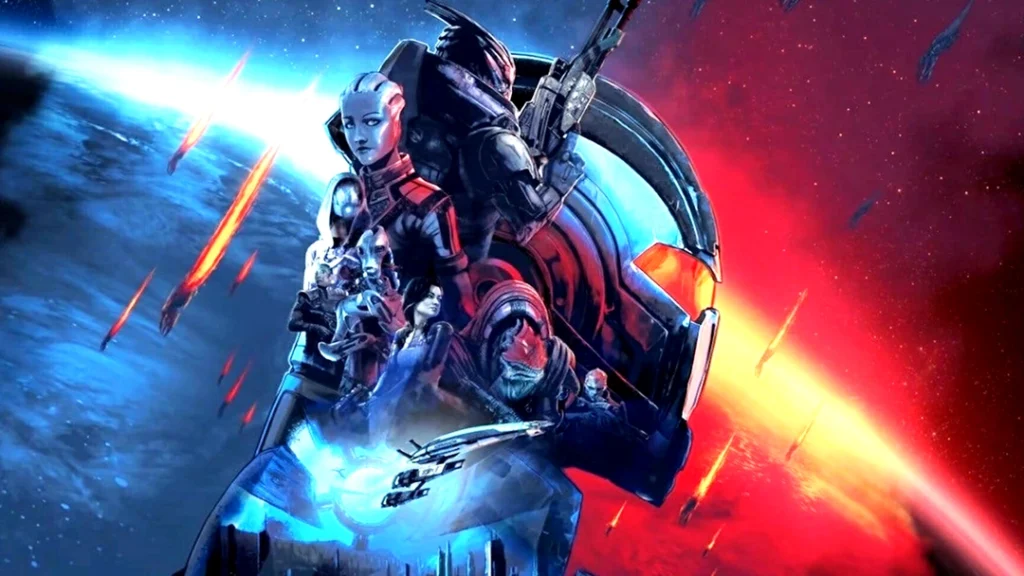



The video game industry was just hit by a nuclear-level shockwave, and the fate of the Mass Effect franchise is setting the entire gaming community on absolute fire! 🚀💥
After more than three decades of defining RPG history, legendary developer BioWare has officially shut its doors for good—and early development on Mass Effect 5 was instantly killed along with it. Fans were plunged into total despair as details leaked about the cancelled sequel, revealing an ambitious concept set 600 years after the Reaper War that was being built purely for die-hard RPG veterans.
But just when millions of players thought Commander Shepard’s universe was permanently dead, an unexpected development surfaced that completely flipped the narrative! 🌌🔥
While Electronic Arts officially pulled the plug on BioWare and cancelled game development, insider reports confirmed that the long-awaited Mass Effect live-action adaptation at Amazon MGM Studios is NOT facing the chopping block. In fact, it is aggressively moving forward with Hollywood heavyweights attached—and fans are realizing this Hollywood expansion might actually be the single lifeline that keeps the entire Mass Effect universe alive…
Can Amazon’s prestige series succeed where modern EA failed, or is this the absolute final chapter for sci-fi’s greatest universe? The full breakdown of BioWare’s closure, the leaked Mass Effect 5 details, and the unexpected TV revival will leave you speechlessly staring at the stars…
Find out how Mass Effect is surviving the death of its original creator 👇🔥
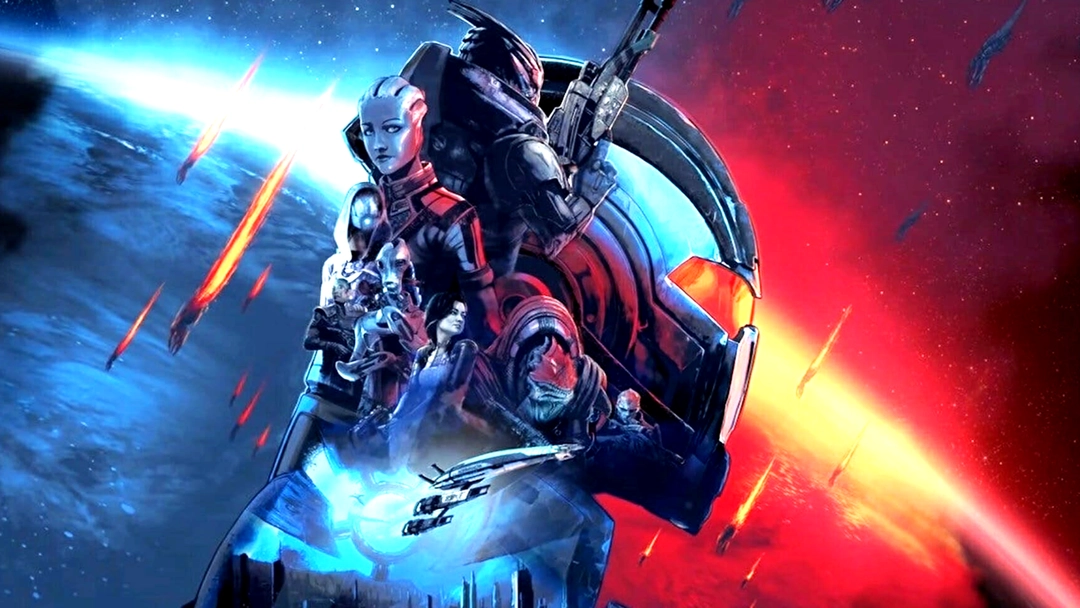
October 2026 will go down as one of the darkest months in the history of interactive entertainment. In a tragic, earth-shattering announcement that sent shockwaves across the global gaming community, Electronic Arts officially shut down BioWare after more than 31 legendary years. The Edmonton-based studio—responsible for defining RPG storytelling through iconic masterpieces like Star Wars: Knights of the Old Republic, Dragon Age, and Mass Effect—was permanently dissolved, resulting in hundreds of job losses and the immediate cancellation of early development on Mass Effect 5.
For millions of sci-fi enthusiasts and RPG veterans, the shuttering of BioWare felt like the definitive death knell for Commander Shepard’s beloved universe. As grief flooded subreddits like r/MassEffect, r/gaming, and r/Games, fans began preparing eulogies for a franchise that helped define modern gaming narrative design.
However, just as the dust began to settle on the wreckage of BioWare’s closure, an unexpected development emerged from Hollywood. Reports confirmed that while EA may have abandoned the video game development pipeline, the Mass Effect intellectual property is far from dead—surviving through an ambitious, high-budget multimedia venture at Amazon MGM Studios that has suddenly become the brand’s primary torchbearer.
The End of an Era: How BioWare Collapsed
The closure of BioWare represents the end of an era for narrative-driven RPGs. Founded in 1995 by medical doctors Ray Muzyka and Greg Zeschuk, BioWare spent two decades setting the gold standard for player agency, companion relationships, and morality systems.
However, following a tumultuous decade marked by commercial stumbles like Mass Effect: Andromeda and Anthem, along with a long, fraught development cycle for Dragon Age: The Veilguard, parent publisher Electronic Arts ultimately decided to pull the plug on the legacy developer.
In a brief, emotional farewell post on their official website, BioWare leadership stated: “For more than 30 years, BioWare has been more than a studio. It has been a home for storytellers, developers, and the players who brought our worlds to life… Now, after more than three decades of shared adventures, BioWare is closing and early development on the next Mass Effect project is ending.”
With EA closing the Edmonton workspace and reallocating resources toward immediate high-margin titles, Mass Effect 5—first teased with a cryptic trailer at The Game Awards in 2020—was officially cancelled.
Leaked Dreams: What Mass Effect 5 Could Have Been
Within days of the studio’s shutdown, the tragedy was compounded when extensive insider details regarding the cancelled project—reported under the internal working title Mass Effect: Universe—began circulating across gaming media and social platforms.
According to industry leaks and insider reports, Mass Effect: Universe was being designed as a direct love letter to hardcore fans who felt alienated by recent industry trends. The game was reportedly set more than 600 years after the events of the original trilogy, bridging the narrative gap between the Milky Way Galaxy and the Andromeda Initiative.
Key leaked features included:
-
Timeline Save Integration: A complex choice-tracking framework designed to read save files across parallel timelines, honoring choices made during the original trilogy.
-
Deep Space Lore: Exploration mechanics centered around giant megastructures constructed by the Geth, alongside a terrifying new “shadowy adversary” operating on the fringes of known space.
-
Protagonist Customization: Players would step into the boots of a fully customizable N7 operative, balancing political diplomacy across Citadel races with heavy tactical combat.
“From what was shown internally, BioWare was making Mass Effect for us—the core fans,” shared one prominent community commentator following the leaks. “It looked incredible, and knowing we will never get to play it makes the studio’s closure hit twice as hard.”
The Unexpected Lifeline: Amazon’s TV Adaptation Survives
While EA’s gaming division closed the book on BioWare, a parallel corporate track was unfolding in Hollywood. Reports from major entertainment trade outlets confirmed that the live-action Mass Effect television series—produced by Amazon MGM Studios—remains in active development and was unaffected by the game studio’s closure.
First announced on N7 Day in 2024, the prestige series features high-profile talent, including showrunner Doug Jung (Star Trek Beyond, The Cloverfield Paradox) and executive writer Dan Casey (F9: The Fast Saga). Unlike traditional video game adaptations that simply rehash existing game scripts, the Amazon series is being crafted as an expansive, original narrative set within the established lore of the Mass Effect universe.
Why the TV Series Matters
Following the massive global success of Amazon’s Fallout adaptation and HBO’s The Last of Us, television networks have realized that rich video game universes carry immense cinematic value. With BioWare no longer producing games, Amazon’s high-budget series has suddenly shifted from a side-spin-off into the primary flagship vehicle for the entire IP.
If the television series lands with critics and audiences, it creates an unprecedented scenario: a video game franchise kept culturally relevant and commercially profitable entirely by Hollywood, laying the groundwork for EA to eventually license or assign future game development to an external studio down the line.
Community Reaction: Grief, Gratitude, and Hope
Across Reddit, Discord, and X (formerly Twitter), the dual news of BioWare’s death and Amazon’s ongoing TV production has created an emotional roller-coaster for the fanbase.
On r/MassEffect, memorial posts honoring the studio’s 31-year run sit alongside heated debates regarding how Amazon should handle Citadel politics, the Korgan Genophage, and alien prosthetics. Fans have also mobilized to preserve the legacy of the original games, triggering a massive surge in sales for Mass Effect Legendary Edition across digital storefronts as new and returning players replay the definitive trilogy.
“It’s bizarre to realize that the future of Mass Effect no longer belongs to BioWare,” noted a top-voted comment on Reddit. “The studio that built our favorite childhood memories is gone, but the universe they created is simply too big to die. If a prestige TV show is what keeps the Normandy flying, then we’re holding out hope.”
The Verdict: A Legacy Beyond the Studio
The death of BioWare is a somber reminder of the volatile nature of the modern video game industry. Yet, the survival of Mass Effect through Hollywood adaptation proves that truly great storytelling transcends the medium in which it was born.
BioWare as a physical studio may be gone, but the galaxy they built—populated by Garrus, Liara, Wrex, and Commander Shepard—remains immortal. As Amazon MGM Studios prepares to bring the Citadel to life on television screens worldwide, sci-fi fans can take comfort in one simple truth: the Normandy may have lost its original creators, but its journey across the stars is far from over.

Leave a Reply