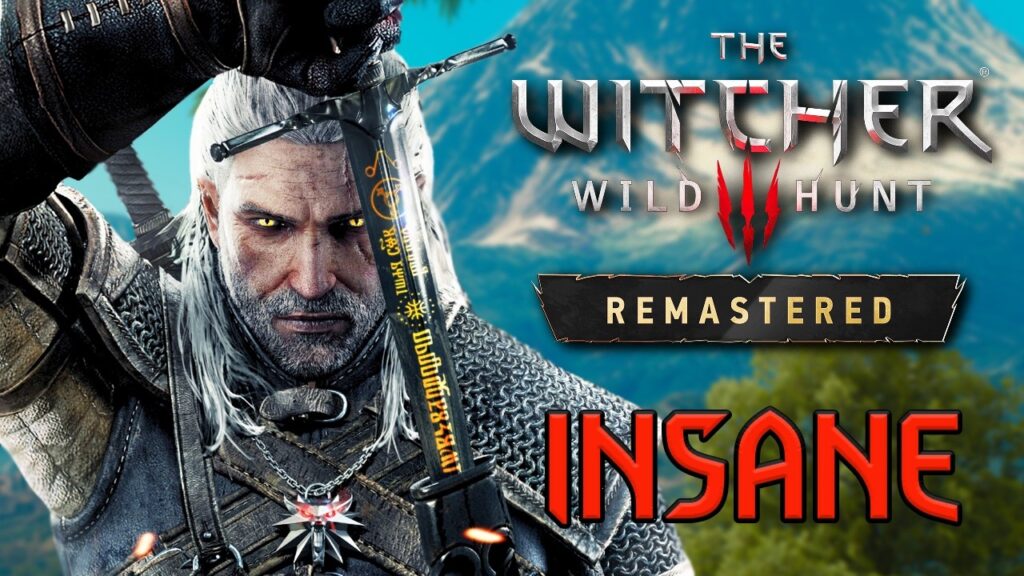



🚨 HAS THE GAMING INDUSTRY COMPLETELY FORGOTTEN HOW TO MAKE GOOD GAMES? 🚨
Look around at today’s landscape of overpriced live-service garbage, microtransactions, half-baked optimization, and AI-generated filler. It’s no secret that triple-A gaming feels like it’s rotting from the inside out. But then, CD Projekt Red did the unthinkable: they dropped a massive, free remaster for an 11-year-old masterpiece (The Witcher 3: Wild Hunt), and it instantly took the entire gaming world by storm.
Breaking concurrency records on Steam, pulling down near-perfect Metacritic scores, and putting modern releases to absolute shame, this remaster isn’t just an update—it’s a massive, glaring wake-up call to the entire industry.
When fans see cloth physics, dynamic AI, and handcrafted worlds from 2015 outperforming modern multi-million dollar flagships, the question everyone is asking online isn’t just about Geralt anymore. It’s about whether modern developers have lost their soul entirely, turning art into corporate spreadsheets.
…BUT is a free remaster enough to save an industry obsessed with short-term stock profits and season passes? Or are we watching the golden age of gaming officially crash and burn?
👇 Read the full wake-up call and see why everyone is furious with modern game developers right here:

When looking back at the trajectory of modern video games, players are frequently confronted with a stark paradox. Technology advances at a blistering pace, yet the soul of the medium feels increasingly hollowed out. Optimization failures, crunch deadlines, aggressive microtransactions, and an over-reliance on procedural, AI-generated assets have become the rotten pillars upholding a multi-billion dollar industry.
Enter The Witcher 3: Wild Hunt Remastered.
Released as a completely free upgrade to owners of the base game, the 11-year-old masterpiece did something few expected in 2026: it took the gaming world by storm. Achieving soaring review scores, dominating critical roundups, and surging to the top of Steam’s concurrent player charts, the remaster has sparked an industry-wide conversation. Far beyond a simple technical touch-up, The Witcher 3 Remastered has served as an undeniable wake-up call, laying bare the widening chasm between corporate profit-driven development and genuine artistic creation.
Fixing What Was Weak, Preserving What Was Masterpiece
In evaluating how CD Projekt Red handled the remaster, community analysts and retrospective critics have pointed to a golden rule of game design that modern studios routinely violate: fix what is broken, and leave greatness alone.
When The Witcher 3 originally launched in 2015, its storytelling, quest design, and atmospheric world-building were universally praised as generation-defining. However, elements of its core gameplay—specifically combat fluidity, enemy scaling, and horseback navigation—were often viewed as functional rather than stellar. Players on higher difficulties could frequently coast through mob encounters by spamming fast attacks and refreshing healing potions without deeply engaging with monster stats or vulnerabilities.
The remaster aggressively addresses these historical weak points without touching the sacred narrative core. Enemy artificial intelligence has been visibly sharpened, making standard mob fights and boss encounters on higher difficulties genuinely demanding. Combat mechanics benefit from tightened responsiveness, expanded alchemy integrations, and fluid talent trees that make swordplay feel dynamic and engaging.
Even Roach—infamously prone to getting stuck on fences or pivoting unpredictably in the original release—now handles with a smooth, predictable control scheme that makes traversing the Continent feel like a natural extension of the journey. By elevating the gameplay mechanics up to the pristine standard of the narrative, CDPR demonstrated how a masterclass remaster should be executed.
The Community Backlash: Are Modern Games Regressing?
The seismic success of the remaster has triggered a broader existential reckoning among players. Across Reddit, X, and community Discord servers, gamers are sharing side-by-side comparisons of cloth physics, dynamic vegetation, and open-world density, asking a blunt, uncomfortable question: Have we actually forgotten how to make beautiful games?
Critics within the community argue that while graphical fidelity numbers on paper continue to climb, modern game design has regressed. In pursuit of super-profits and accelerated timelines, studios have largely abandoned handcrafted design. Where developers once spent countless hours manually placing assets and sculpting immersive ecosystems, modern pipelines increasingly rely on randomized algorithmic generation to cut costs.
The contrast is jarring. An 11-year-old title running on hardware two generations past routinely outperforms contemporary flagships in environmental storytelling, immersion, and raw player engagement. The industry’s shift toward live-service monetization models and constant microtransaction loops has transformed video games from artistic expressions into sterile corporate revenue generators.
The Economic Irony: Reputation vs. Short-Term Stock Value
One of the most telling indicators of modern corporate pathology occurred on the exact day CD Projekt Red announced the free remaster. In the immediate wake of the announcement—a masterstroke of consumer goodwill designed to build community hype ahead of upcoming projects like The Witcher 4—CDPR’s stock price temporarily dipped.
In the eyes of short-term Wall Street investors obsessed with immediate quarterly margins, giving away a massive, high-value upgrade for free made little financial sense. Why gift content when you can monetize it via a season pass or a paid expansion?
Yet, this short-sighted obsession with perpetual hyper-growth is precisely what is alienating the player base. CD Projekt Red’s enduring loyalty stems from their willingness to balance financial viability with profound respect for the average gamer. When studios treat players as wallets to be emptied rather than audiences to be captivated, trust evaporates. The success of The Witcher 3 Remastered proves that consumer goodwill and artistic integrity remain commercially viable—if management has the courage to prioritize long-term reputation over immediate exploitation.
The Pillars of a Shaky Industry
The video game industry currently rests upon three rotten pillars: optimization shortcuts, profit-driven deadlines, and live-service extraction.
While masterclasses like Baldur’s Gate 3, Elden Ring, and The Witcher 3 Remastered prove that souls still exist within the medium, such projects are becoming terrifyingly rare anomalies. The overwhelming majority of the market is flooded with risk-averse, focus-grouped products designed to minimize expenditure while maximizing digital storefront engagement.
If major publishers continue down this path, the inevitable result is creative stagnation and consumer fatigue. The industry needs fewer algorithmic shortcuts and more creative passion.
The Verdict: A Standard That Cannot Be Ignored
The Witcher 3 Remastered is much more than a nostalgia trip for veteran witchers. It is a mirror held up to the modern gaming industry, reflecting both what video games used to achieve and how far astray commercial development has wandered.
By proving that an 11-year-old open-world RPG can outshine modern multi-million dollar releases, CD Projekt Red has once again disrupted the industry status quo. Whether other studios possess the humility and vision to heed this wake-up call remains to be seen. But for millions of players returning once more to the Path, the message is crystal clear: true masterpieces never age—they simply outlive their imitators.

Leave a Reply