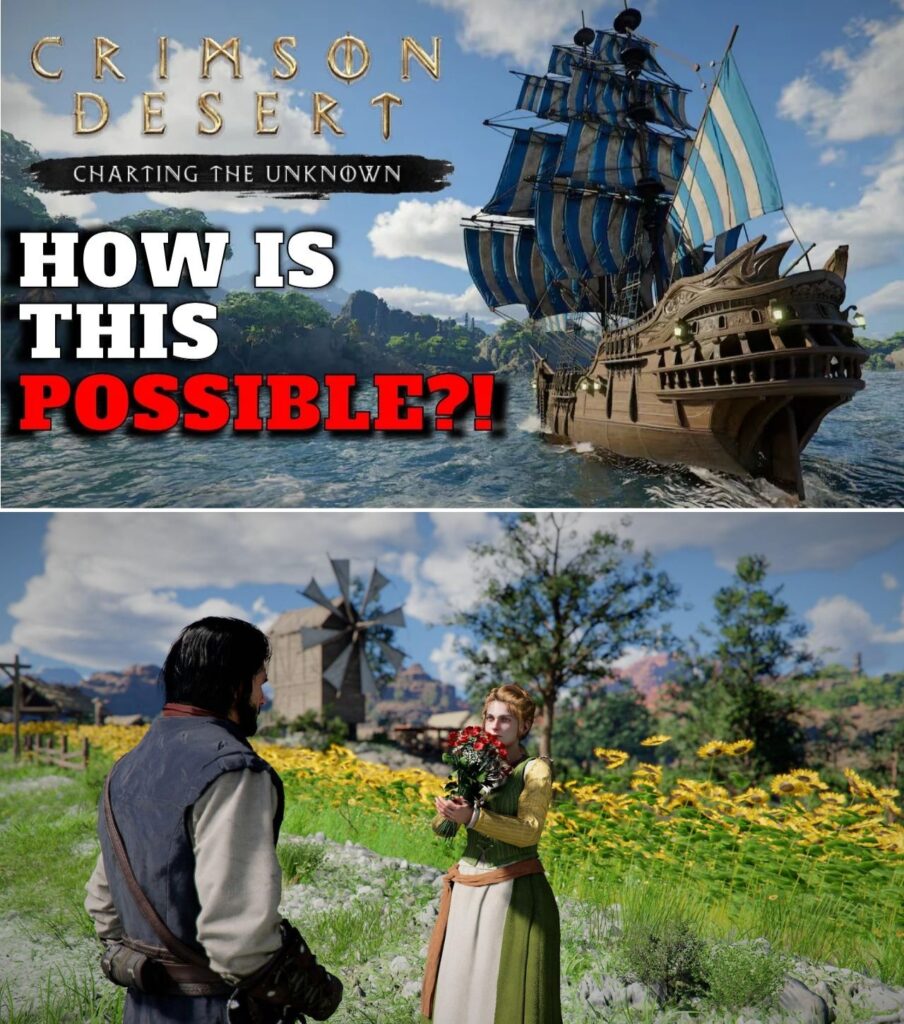



🚨 PEARL ABYSS ARE LITERALLY BREAKING THE ENTIRE GAMING INDUSTRY RIGHT NOW! 🚨
Industry standards? Forget about them. For a decade, massive expansions like The Witcher 3: Blood and Wine or Elden Ring: Shadow of the Erdtree were considered the absolute ceiling of what a studio could deliver. But Pearl Abyss just completely shattered the rulebook with the upcoming Charting the Unknown DLC for Crimson Desert, dropping an expansion that isn’t just an add-on—it’s five brand-new games crammed into one $25 package! 🤯
Think about this: they’ve packed in a full-blown BlackFlag-style naval combat and ship-building system, a Subnautica-level deep-sea exploration mechanic complete with underwater traversal, The Sims-style dialogue options, NPC romances, full marriage, customizable home construction, and an entire corporate business management simulator (Restaurant and Tailor Tycoons!) where you run your own strongholds! Oh, and let’s not forget they completely rewrote and overhauled the entire 50-hour campaign story for free because fans complained about the narrative.
Are other triple-A studios completely out of touch, or is Pearl Abyss single-handedly rewriting what players should expect for their money?
👉 Read the full breakdown of how they are changing gaming forever before the servers melt: 🔥
For nearly a decade, the benchmark for what constitutes a legendary video game expansion has remained remarkably static. Ever since CD Projekt Red released Blood and Wine for The Witcher 3: Wild Hunt in 2016—followed years later by FromSoftware’s monumental Shadow of the Erdtree—gamers and developers alike accepted an unwritten rule: expansions add more of the same core blueprint. You get a new region, a fresh batch of bosses, a continuation of the narrative, and roughly ten to twenty hours of additional playtime. It was a reliable formula, albeit one that came with years of waiting and hefty price tags.
Enter Pearl Abyss.
With the announcement of the upcoming Charting the Unknown DLC for Crimson Desert, the developer has not simply moved the needle; they have blown the entire gauge off the dashboard. Priced aggressively at just $25—shattering the modern trend of inflated expansion costs—this upcoming release has sent shockwaves across Reddit, X, and industry Discord servers. Far from being a standard regional add-on, Charting the Unknown introduces entire gameplay mechanics and genres that operate as self-contained video games housed within Pywel’s massive open world.
As industry analysts and veteran players grapple with the sheer scale of what is being delivered just six months post-launch, a central question emerges: Are Pearl Abyss redefining the limits of game development, or are they biting off more than they can chew?
The Death of Traditional Expansion Limits
To understand why the gaming community is currently in a state of euphoric disbelief, one must examine the staggering breadth of features packed into Charting the Unknown. Historically, when an open-world action-RPG expands, it stays firmly within its lane. When players explore Pywel as Kliff, Oongka, or Damiane in the base game, they experience high-octane melee combat, cinematic traversal, and vast wilderness exploration.
Pearl Abyss, however, has decided that boundaries are meant to be obliterated. The expansion introduces features that span entirely different pillars of interactive entertainment:
-
The Black Flag Treatment (Naval Combat & Exploration): Players gain access to a fully fleshed-out shipbuilding system. You can construct a vessel from scratch, customize its design, gather materials, manage a crew, engage in deep-sea naval battles, and conquer tropical islands to establish forward-operating bases and faction strongholds. For all intents and purposes, it mirrors the core loop of Ubisoft’s beloved pirate epics, embedded seamlessly into an action-RPG.
-
The Subnautica Depth (Underwater Exploration): While the base game restricted movement to terra firma and aerial gliders, the DLC introduces specialized diving suits, submarine piloting, and an entirely rich underwater ecosystem filled with sunken ruins, forgotten shipwrecks, and marine fauna traversal ranging from giant stingrays to whales.
-
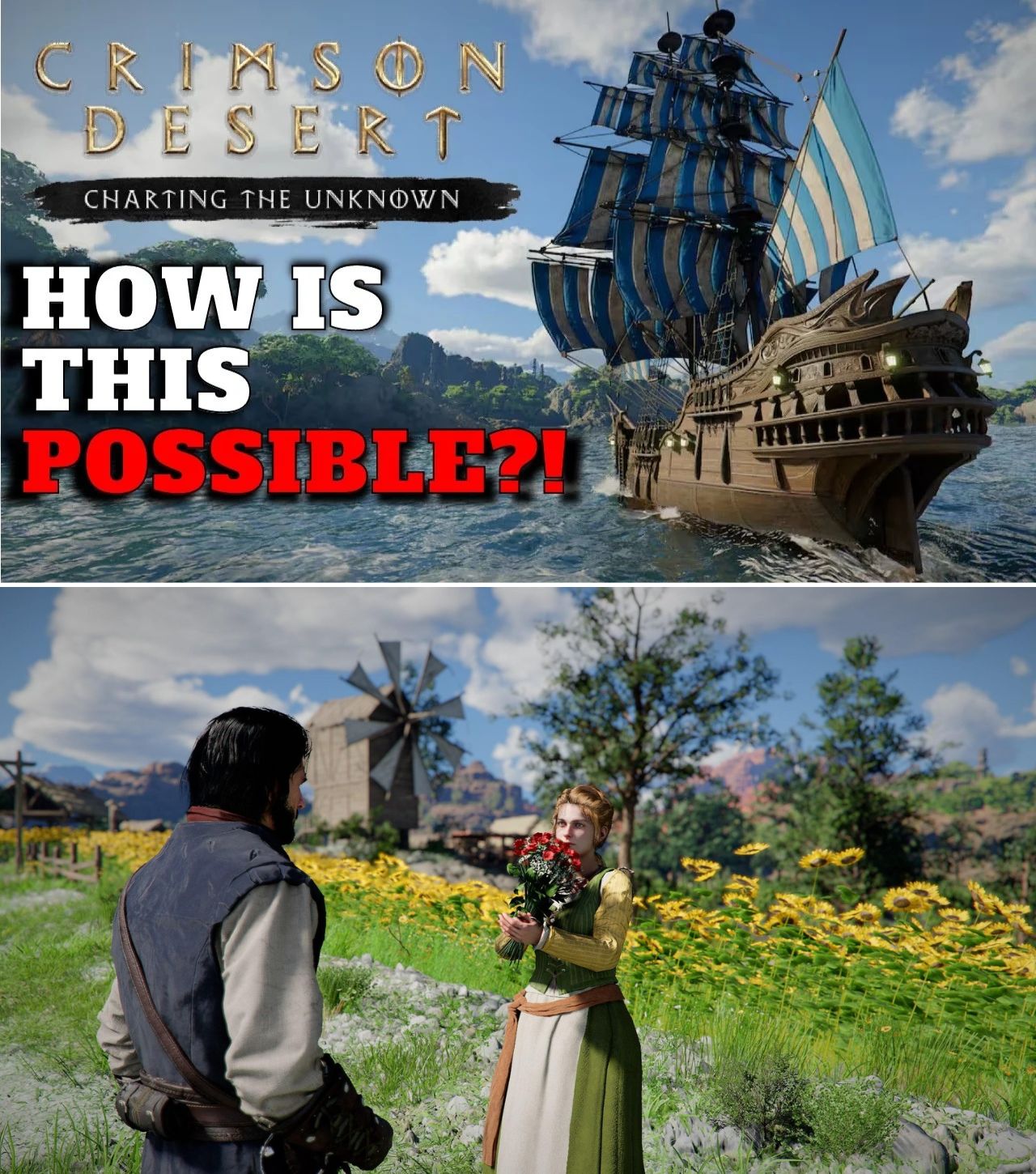
The Sims and RPG Mechanics (Dialogue & Romance): Responding directly to early community critiques regarding static NPC interactions—where players were previously limited to greeting, threatening, or giving gifts—the expansion introduces branching dialogue trees, deep relationship building, romance pathways, marriage ceremonies, and domestic integration where partners visit your encampments.
-
The Fallout & Tycoon Systems (Home & Business Management): Building upon basic settlement mechanics, players can now construct properties from the ground up, choosing walls, windows, flooring, and wallpapers. Furthermore, captured strongholds can be transformed into operational businesses—such as restaurants and tailor shops—where you hire staff, dictate uniforms, set pricing structures, manage menus, and strive for elite community reputation ratings.
When stacked side by side, these additions represent distinct genres—naval sandboxes, survival exploration games, social life-simulators, and business management tycoons—bundled into a single $25 piece of downloadable content.
Rewriting the Rules of Studio Responsiveness
What makes Pearl Abyss’s trajectory unprecedented is not merely the sheer volume of content, but the studio’s radical philosophy regarding post-launch adaptation. In traditional AAA development, a game’s narrative foundation and structural design are cast in stone upon release. If a community dislikes a protagonist’s arc or finds a story disjointed, studios typically offer minor retcons in sequels or dismiss criticisms as artistic intent.
Pearl Abyss broke this convention in spectacular fashion earlier this year. Following widespread community feedback noting that the base game’s 50-hour campaign suffered from narrative pacing issues and disjointed storytelling, the studio quietly and aggressively overhauled the entire narrative architecture. Without charging a dime, they implemented new dialogue, redid cutscenes, restructured missions, and transformed a forgettable narrative into a cohesive, highly praised adventure.
Veteran gamers have noted that no other modern studio—whether Capcom with Dragon’s Dogma 2, CD Projekt Red with Cyberpunk 2077, or Bethesda with Starfield—has ever completely overhauled a multi-hour campaign story in response to player critiques post-launch.
Defying the “Game for Everyone” Paradox
For decades, game designers have adhered to the foundational adage: “A game for everyone is a game for no one.” The philosophy dictates that trying to please every demographic inevitably dilutes a game’s identity, resulting in a bland, unfocused product.
Yet Crimson Desert is aggressively defying this axiom. By layering disparate gameplay loops onto a robust action core, Pearl Abyss is systematically capturing audiences that would otherwise ignore the genre. Hardcore simulation fans who adore The Sims or Two Point Museum are now looking at Crimson Desert because of the robust home-building and business management mechanics. Naval combat enthusiasts who skipped the land-based launch are diving in for the pirate exploration systems.
This hyper-accommodating update strategy has shifted public perception from skepticism to fierce brand loyalty. Where other developers respond to niche complaints with polite indifference, Pearl Abyss answers with comprehensive system redesigns.
Looking Forward: A New Industry Standard or an Unsustainable Peak?
As the gaming landscape looks toward heavy-hitting releases like Grand Theft Auto VI, conversations within online forums increasingly pivot toward Pywel’s relentless evolution. Ten years after Blood and Wine set the gold standard for expansions, Charting the Unknown threatens to raise the bar to an altitude few competitors can physically reach.
Naturally, skepticism lingers within certain cynical corners of the community. Critics question whether packing five distinct genres into a single expansion will lead to mechanical bloating or superficial execution. Can a business management minigame truly rival dedicated tycoon titles, or will it remain a clever gimmick?
Regardless of how these individual systems perform upon release, the broader cultural impact is undeniable. Pearl Abyss is proving that the only true limitations in game development are institutional inertia and a lack of ambition. As the October 2026 launch approaches, one thing is certain: the rules of the industry have changed, and the rest of the gaming world is scrambling to catch up.

Leave a Reply